

Social media, which has become an inseparable part of our lives, has turned into a platform where people share every moment of their daily lives. Experts point out that this situation, along with privacy issues, brings to the agenda new generation violations of personal rights, known as 'stalking' and meaning 'covert following,' arising from unconscious use. Associate Professor Aylin Tutgun Ünal, calling for particular caution in sharing content related to children, also emphasizes the importance of conscious media literacy.
Content
New Generation Violation of Rights: 'Stalking'
Experts warn against 'covert following'!
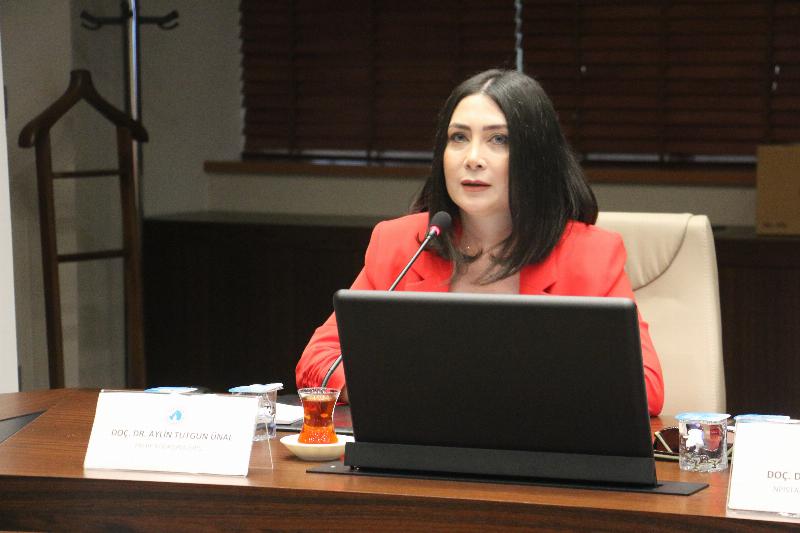
Associate Professor Aylin Tutgun Ünal, faculty member at Üsküdar Üniversitesi Faculty of Communication, Department of New Media and Journalism, made evaluations regarding rights violations on social media, which has become an important part of our lives. Associate Professor Aylin Tutgun Ünal stated that people sharing every moment of their lives on social media also brings to the agenda new generation violations of personal rights, known as 'stalking' and meaning covert following.
Stalking can also be done to disturb peace
Associate Professor Aylin Tutgun Ünal, stating that the term 'stalk,' frequently used among social media users, means one person researching, observing, and examining another person's social media accounts, said, 'Although perceived as an innocent behavior by some, stalking can also be carried out on social media with the aim of disturbing peace, and the dimensions of the danger further increase.'
Covert monitoring can constitute various crimes
Associate Professor Aylin Tutgun Ünal noted that social media has become a platform where people share every moment of their daily lives, and stated, 'Places visited, anniversaries, celebrations, meals, events – everything in daily life is shared moment by moment on social media. Along with privacy issues, violations of personal rights such as 'stalking,' which means digital persistent following arising from unconscious use, come to the agenda. Caution should be exercised as the act of stalking (covert monitoring) has the potential to constitute various crimes on social media.'
Stalking victimization affects a person's life
Ünal pointed out that stalking, or covert monitoring, is an issue that can be considered a violation of personal rights on social media, and said, 'The word 'stalking' is included in the legislation of most European Union member countries. For a person to be a victim of stalking, situations such as experiencing serious difficulty in performing daily tasks, reduced productivity at work, deterioration of physical or mental health, changes or suspension of social habits, being forced to take additional security measures, or sending family members to pick up children from school instead of doing so themselves, must occur.'
Penal sanctions can be applied in some countries
Associate Professor Aylin Tutgun Ünal noted that when a person sets the visibility setting of their shares to 'public,' they can be monitored by wider audiences, and stated, 'Thus, much of their information, such as last seen time, online hours, total online duration (daily), status message, and profile picture history, can be tracked by others. Intensive covert following by one person can also lead to problematic situations like obsession. The penal sanctions for stalking (covert following), which comes to the agenda more frequently with unconscious usage patterns, are a subject of debate.'
Up to 3 years imprisonment can be imposed in Germany
Associate Professor Aylin Tutgun Ünal stated that according to Article 238 of the German Criminal Code, stalking is a crime in Germany, and said, 'It has been classified as a crime since 2017 and is subject to penal sanctions. A perpetrator who follows, observes, persistently attempts to contact a person by phone or other means, and significantly restricts and harms the life of the person they harass, is subject to a fine or imprisonment for up to 3 years, and in cases constituting a serious offense, imprisonment for up to five years, according to Article 238 of the Criminal Code.'
Fines or imprisonment are imposed in the UK
Ünal stated that in the UK, two distinct situations applicable only to cases of persistent following were defined as crimes and subjected to penal sanctions under Article 11 of the Protection from Harassment Act, which came into force in 2012, and added, 'Accordingly, it is reported that in cases of persistent following that cause serious fear or distress regarding experiencing violence, the perpetrator can be fined 5,000 British Pounds. Or, in some cases, it is stated that they can be sentenced to a judicial fine or short-term imprisonment of six months, or imprisonment for 5 years, or both imprisonment and a fine.'
Measures are also implemented in our country
Associate Professor Aylin Tutgun Ünal noted that when stalking sanctions in our country are examined, they are included in Law No. 6284 on the Protection of Family and Prevention of Violence Against Women, which came into force on March 20, 2012, and said, 'Although the law's name primarily refers to family and women, its provisions can also be applied in cases of persistent following (stalking). In line with the decision taken, certain measures can be implemented, such as the stalker not approaching the victim's residence, school, workplace, or the victim's relatives, and not disturbing the victim through communication tools.'
Associate Professor Aylin Tutgun Ünal continued her words as follows: 'Again, it can lead to the formation of crimes regulated under the title of crimes against private life and the secret sphere of life within the scope of the Turkish Penal Code. For example, Article 132 of the Turkish Penal Code addresses the crime of violating the confidentiality of communication. Penal sanctions are applied to individuals who disclose the content of communication between persons without the consent of the other party. If stalking is carried out with the aim of disturbing peace, the Turkish Penal Code also comes into play in this regard.'
Caution must be exercised in sharing content related to children
Associate Professor Aylin Tutgun Ünal, stating that parents should be particularly careful about social media shares, warned, 'Although individuals may share some of their information through voluntary disclosure, materials such as audio, images, and written information seized by malicious individuals can be used for nefarious purposes. Specifically, information about children shared by their parents can also fall into the hands of malicious individuals, inviting digital bullying. The concept known as 'Sharenting' (derived from the English words 'Parenting' and 'Share'), which focuses on parents sharing their children on social media in various ways, primarily concerns the violation of children's rights. Although sharing the joys and challenges of parenthood and documenting their lives has become a social norm worldwide, parents need to consider many issues when sharing their children's pictures.'
Children's photos and personal information should not be shared!
Associate Professor Aylin Tutgun Ünal stated that children's pictures can be used maliciously by others, and said, 'Furthermore, it should be considered that pedophilia is quite widespread today. There is a possibility that pictures of children shared nude, diapered, or partially clothed may be placed on pedophilia sites. Likewise, along with shares, situations such as providing the child's full name and surname, and sharing information like date of birth, carry the risk of identity theft for children. Additionally, tagging locations in shares and providing information about the child's kindergarten or school online can lead to abduction or abuse of the child by malicious individuals.'
Dangers in the virtual world should not be ignored!
Associate Professor Aylin Tutgun Ünal concluded her words by drawing attention to the importance of conscious media literacy: 'While parents teach their children not to talk to strangers, not to open the door to visitors if they are home alone, and not to give information to unknown people on the phone, they can overlook these warnings in the virtual world for both themselves and their children. They often share information, photos, and videos of themselves, their children, and their spouses, thereby inviting danger. Alongside the danger, violations of personal rights also benefit from this ease. In conclusion, there is a need for the formation of a societal opinion regarding privacy and personal rights concerning social media usage.'
Share
Update Date: March 01, 2026
Creation Date: January 11, 2023
Request a Call
Other News
- Experts warn: 'Instead of memorizing letters, teach pencil grip, scissor use, and coloring'
- School fear and school love both start in the family!
- Family is not merely transforming, it is being battered under a serious assault
- Artificial intelligence opens the door to early diagnosis in autism!
- Artificial intelligence doesn't end engineering, it transforms it!