

Experts state that since the 2000s, the attitude and perception that immigrants pose a socioeconomic and security threat in various parts of the world have increased, and they note that far-right parties in Europe, especially, contribute to polarization with their exclusionary rhetoric using social media. Sociologist Prof. Dr. Ebulfez Süleymanlı points out that Muslims, and those from the Middle East or Africa, are easily branded with labels like 'terrorist' or 'radical element', adding that the same situation does not apply to Ukrainian immigrants, who are described as “white, Christian, one of us”. Süleymanlı said, “States need to protect immigrants within legal frameworks, add multiculturalism courses to education curricula, and organize programs involving immigrants and local people for a healthy integration process.”
Content
Muslim, Middle Eastern, and African immigrants are being branded as terrorists…
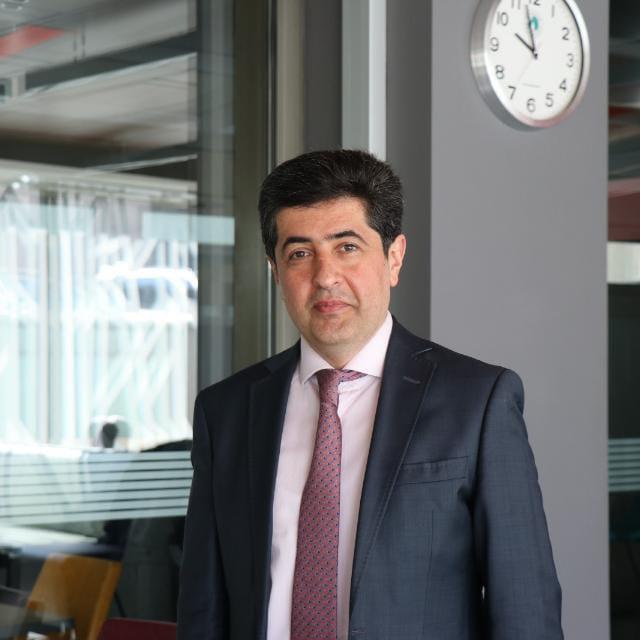 States must protect immigrants within legal frameworks
Prof. Dr. Ebulfez Süleymanlı, faculty member in the Department of Sociology at Üsküdar Üniversitesi Faculty of Humanities and Social Sciences, touched upon the negative situations faced by immigrants and shared his evaluations regarding the responsibilities of states to transform societal perceptions about immigrants into positive ones.
“Immigrants are seen as a threat”
Prof. Dr. Ebulfez Süleymanlı stated that especially since the 2000s, the attitude and perception that immigrants pose a socioeconomic threat to their host countries have increased in various parts of the world, and he added, “We can say that many factors contribute to this situation. Today, anti-refugee, anti-asylum seeker, and generally anti-immigrant attitudes are most often expressed through economic reasons. This situation becomes more pronounced, especially in countries with a relatively high number of immigrants, when the economy deteriorates. It is possible to say that the economic difficulties in the post-pandemic period have taken this problem to a different dimension. Those negatively affected by the economic downturn blame immigrants for taking away their prosperity.”
“Muslims are branded as terrorists”
Prof. Dr. Ebulfez Süleymanlı drew attention to the fact that immigrants are also portrayed as security threats by countries and continued his words as follows:
“It is often stated that immigrants, who constitute a significant portion of the population especially in Europe, fragment Europe's cultural unity due to their religious and cultural lives, fail to integrate into European society, and are therefore responsible for social insecurity and unrest. Furthermore, the exclusionary rhetoric of rising far-right parties in Europe, claiming that immigrants pose problems for public and national security, further fuels this issue and leads to polarization. There is also a racist approach built upon security threats and anti-Islam sentiment. Muslims, and those coming from the Middle East or Africa, are easily branded with labels like 'terrorist' or 'radical element'. In contrast, the use of descriptions such as 'white, Christian, one of us' for Ukrainian immigrants creates a kind of racialized hierarchy among immigrants, while also casting a shadow over the tragedy in Ukraine.”
Multiculturalism projects suspended
Prof. Dr. Ebulfez Süleymanlı stated that the changes in strategy models applied for immigrant integration have also been effective in this process, saying, “For a long time, multiculturalism projects, especially in the West, which included harmonious coexistence with immigrants, are unfortunately now being seen as dangerous and suspended, giving way to tendencies that fuel discrimination. In other words, the re-questioning and abandonment of multiculturalism in Europe, particularly by the far-right, is one of the reasons for exclusionary and discriminatory policies targeting second and even third generations born in these countries.”
Xenophobia escalated on social media
Prof. Dr. Ebulfez Süleymanlı emphasized that the influence of media, especially digital communication, has also come to the fore in this process in recent years, stating, “In many countries, xenophobia is being escalated by nationalist and far-right populist political actors via social media networks. As immigrant groups do not remain silent against the discrimination and attacks directed at them but respond, an increase in violent acts, which we frequently encounter in various parts of the world recently, is observed. All these developments fuel discrimination against immigrants, complicate their integration process, and pave the way for new conflicts.”
States must legally protect immigrants
Prof. Dr. Ebulfez Süleymanlı continued his words by stating that the integration of immigrants into society is a multi-layered process:
“In this process, the duty of states and governments is both to legally protect immigrants and to determine and implement the necessary policies for coexistence. In this context, defining the legal status of immigrants, carrying out the necessary infrastructure work for economic and political integration, ensuring immigrants' participation in education, housing conditions, language education support, and access to health services are all parts of these policies. When forming these policies, universal principles such as inclusiveness, democracy, and rights-based approaches should be taken as a basis. Ensuring that local governments and NGOs take initiative in solving problems related to immigrants on the basis of rights and equality in this process will yield extremely positive results. Furthermore, states, through their relevant institutions, need to make efforts to replace incorrect and distorted information about immigrants in the minds of the host society with accurate information in the fight against xenophobia specifically regarding immigrants. Thus, changes in the emotional and behavioral dimensions towards immigrants can also be created.”
Programs for healthy integration should be organized
Prof. Dr. Ebulfez Süleymanlı stated that feelings such as insecurity, hopelessness arising from the deepening economic crisis in the post-pandemic period, and disappointment due to governments' failure to fulfill their social and economic promises have caused extreme reactions from local populations towards immigrants in many countries. He added, “Globally, there is a perception among people that immigrants, asylum seekers, and refugees take away their jobs, cause house prices to rise, and place an excessive burden on infrastructure and social services. For a healthy integration process, it is important to organize programs involving immigrants and local people, and to conduct awareness campaigns for the local population regarding the cultural diversity that comes with migration. The best thing states can do is to create an impact that can yield positive socio-economic outcomes for both immigrants and local people. Therefore, the demands of both the local population and immigrant individuals and communities should be taken into account.”
Immigrants also have the right to life
Prof. Dr. Ebulfez Süleymanlı stated that an communication environment should be created to emphasize the positive images of differences and migration in order to eliminate negative perceptions towards immigrants. He said, “At this point, it is especially important to establish a qualified communication strategy supported by state and public authorities between immigrants and the local population. For this, it is essential to have a very serious awareness, ethical principles, and a control mechanism on this issue in both conventional media and social media platforms. Every country should include multiculturalism and diversity education in its curricula, and civil society cooperation should be mobilized in the development, implementation, and monitoring of anti-discrimination standards. The fact that immigrants also have the right to life must be taken into consideration.”
Share
Request a Call
Other News
- The book that read today's digital threats in 2014: Being a Conscious Family
- Experts warn: 'Instead of memorizing letters, teach pencil grip, scissor use, and coloring'
- School fear and school love both start in the family!
- Family is not merely transforming, it is being battered under a serious assault
- Artificial intelligence opens the door to early diagnosis in autism!