

Experts state that with the Industrial Revolution in 1750, global gas levels began to change, emphasizing that human-created modern technology has destroyed the world and its ecosystems. Experts note that much more negative problems could arise if temperature increases cannot be halted at 1.5 degrees, and they state that Prophet Muhammad described the Earth as 'a mosque,' but as Muslims, we have not been able to create environmental awareness.
Content
Modern Technology Destroyed the World's Ecosystem
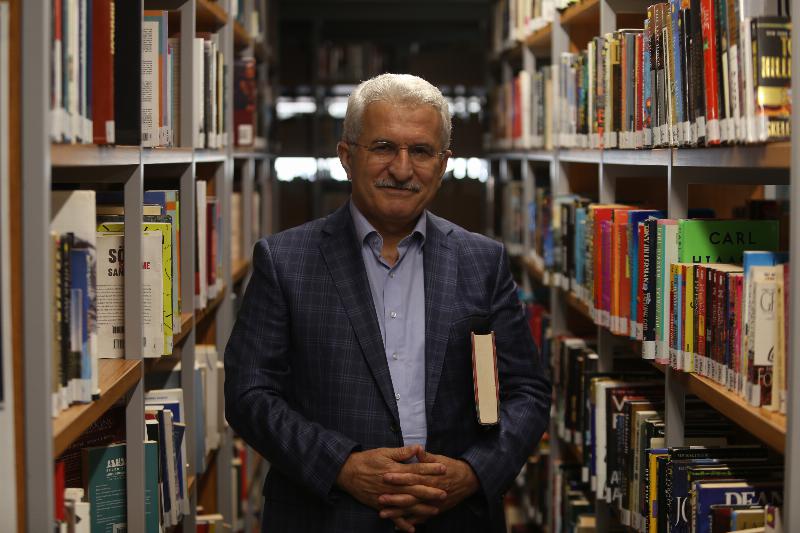
Prof. Dr. İbrahim Özdemir, Head of the Philosophy Department at Üsküdar Üniversitesi's Faculty of Humanities and Social Sciences, made important evaluations regarding the factors causing environmental pollution and climate change.
The slightest change on the planet affects the entire system
Prof. Dr. İbrahim Özdemir stated that when human history is considered as a whole, the world was created to operate with very delicate balances. He said, 'We have begun to understand since the 1960s that the slightest change on the planet affects the entire system. The concept of the butterfly effect is used to explain this. For example, it is said, 'If a butterfly flaps its wings in China, a hurricane or storm could occur in America.' I believe this effect is better understood after seeing and experiencing what an invisible virus originating in Wuhan, China, has done to the world.'
The Earth is a giant greenhouse
Prof. Dr. İbrahim Özdemir stated that environmentalists liken the atmosphere to a greenhouse, saying, 'When you visit a greenhouse, you see how it works and experience how important it is to maintain the internal balance of the greenhouse during climate changes. Our planet, called Earth, is also a giant greenhouse. The slightest change in this greenhouse affects everyone and everything living in it. At this point, we can talk about climate change. Although our planet is vast, like every greenhouse, it has limits. Today, we clearly and unequivocally know that these limits have been exceeded, and our lifestyle, meaning our economic development and associated consumption patterns, negatively affect the greenhouse's intended natural effect.'
Industrialization changed gas levels
Prof. Dr. İbrahim Özdemir pointed out that climate changes occur over very long periods. He said, 'The year 1750 is generally accepted as the beginning of the Industrial Revolution. With industrialization, the proportion of gases in the Earth's greenhouse, where we live, also began to change. However, initially, this change, which provided economic prosperity and political power, was viewed positively.'
Global temperature increases must be stopped at 1.5 degrees
Prof. Dr. Özdemir highlighted that if average global temperature increases cannot be halted at 1.5 degrees, the effects of the climate crisis will continue to be experienced as extreme weather events, rising sea levels, difficulties in accessing food and water, and loss of biodiversity. He stated, 'Moreover, all these changes are occurring at a rate measurable within a human lifespan. The events we frequently experience in our country and simply call natural disasters have increased. We can see the natural disasters we experienced in our country, particularly in İzmir, over the last year, which we had not witnessed before, as concrete examples.'
The effects of global warming are intensified by humans
Prof. Dr. İbrahim Özdemir stated that the Intergovernmental Panel on Climate Change (IPCC), established by the United Nations, is the highest authority on this issue. He said, 'Through its studies and published scientific reports, this panel has revealed that global average temperatures are increasing due to the negative impacts in the atmosphere resulting from human activities. This, in turn, affects the entire system. 97% of all scientific research published on climate change shows that global warming is real and a major problem for our planet, and that the problem is further exacerbated by human activities.'
Human impact plays a significant role in climate change
Prof. Dr. İbrahim Özdemir listed the human impacts on climate change, also emphasized by the IPCC, as follows: 'We can talk about human impacts such as agricultural activities, increased greenhouse gases due to the burning of fossil fuels, aerosols and particles released into the atmosphere due to agricultural waste and the burning of fossil fuels, changes in the Earth's surface's ability to reflect sunlight due to deforestation and desertification, cloud formation and chemical changes in the atmosphere caused by aircraft and ship exhaust trails. According to the IPCC, 56% of human-caused greenhouse gas emissions in 2004 were due to carbon dioxide from fossil fuel use.'
Human life depends on nature
Prof. Dr. İbrahim Özdemir pointed out that humanity has benefited from nature since ancient times and that its survival depends on nature. He said, 'However, modern humans, by destroying this balance, have actually begun to destroy their own lives. We can say that modern technology has destroyed the world and its ecosystems. Here, instead of blaming technology, the human being who creates and shapes technology, or rather, the human worldview, needs to be questioned. One of the first to draw attention to the toxic and destructive seeds contained within modern technology was the German philosopher Martin Heidegger. In his short treatise 'The Question Concerning Technology,' philosopher Heidegger compares a water mill on the Rhine River with a modern hydroelectric power plant, revealing the limiting, dominating, and destructive dimension of technology shaped by the modern mind.'
Industrial enterprises disrupted the environmental ecosystem
Prof. Dr. İbrahim Özdemir said, 'When humans see nature as an object to be used and exploited, they themselves create the tools needed to carry out this exploitation to the greatest extent possible,' and continued: 'Before environmental awareness emerged, industrial enterprises did not incur any additional costs to reduce the impact of toxic waste. They kept their expenses to a minimum to maximize their profits; they released toxic waste directly into rivers, lakes, seas, or nature. As a result, ecosystems in rivers, lakes, and seas were destroyed. Fish disappeared in rivers and lakes. Toxic fish reached us through the food chain, and many diseases, especially cancer, emerged. The view that the COVID-19 virus, whose true cause we do not yet understand, is related to the food chain is very widespread. In short, technology can be environmentally friendly or environmentally hostile depending on the worldview that shapes it. The whole issue is how we perceive ourselves and the world, and how we base our human-world relationships.'
As Muslims, we failed to build environmental awareness
Prof. Dr. İbrahim Özdemir stated that Prophet Muhammad described the Earth as a mosque, saying, 'As Muslims, we failed to build environmental awareness. A place of worship must be clean, protected, and a place that unites and brings everyone together. We stood by idly while the Earth's place of worship was plundered and polluted by greedy local and foreign capitalists. To overcome the mindset that is the source of today's problems, we must discover the wisdom of the East.'
Share
Update Date: February 27, 2026
Creation Date: April 19, 2021
Request a Call
Other News
- Experts warn: 'Instead of memorizing letters, teach pencil grip, scissor use, and coloring'
- School fear and school love both start in the family!
- Family is not merely transforming, it is being battered under a serious assault
- Artificial intelligence opens the door to early diagnosis in autism!
- Artificial intelligence doesn't end engineering, it transforms it!