

Prof. Dr. İbrahim Öztek, Head of the Medical Pathology Department at Üsküdar University Faculty of Medicine and President of the Anatolian Intellectuals' Hearth, issued a message on the occasion of March 14 Medical Day.
Content
Message from Prof. Dr. Öztek on Medical Day
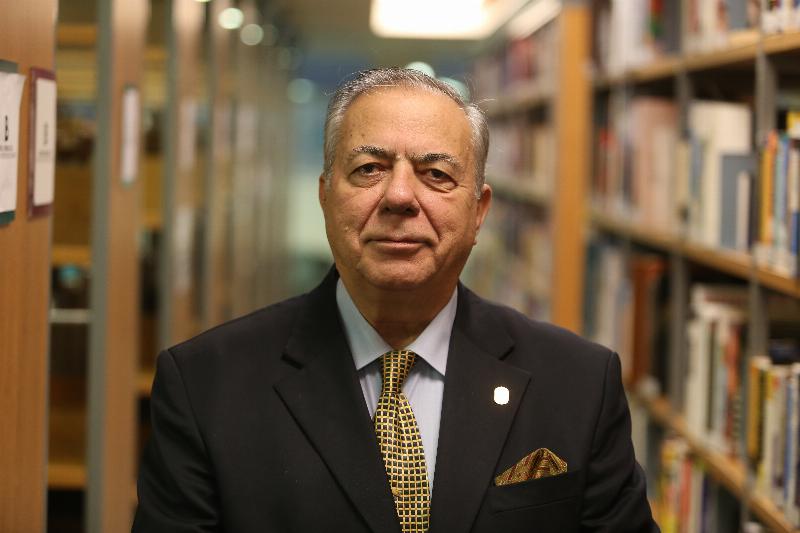
In his message published on the occasion of March 14 Medical Day, Dr. İbrahim Öztek mentioned Tıbbiyeli Hikmet (Boran) and included the following statements: "Just as many innovations entered our country through the doors of medical schools, the first intellectuals of our country and those who would give their first lives for their countries were medical students. Due to all of our medical students who collectively participated in the Gallipoli campaign in 1915 being martyred, the medical school did not graduate students for 6 years. I wish God's mercy upon all of them. On March 14, 1919, in our occupied Istanbul, the giant Turkish flag hung by Tıbbiyeli Hikmet between the medical school towers in Haydarpaşa became an event.
During the Sivas Congress days, one of the three representatives chosen from Istanbul to attend the congress to be opened by Gazi Pasha was Tıbbiyeli (3rd-year student) Hikmet. Tıbbiyeli Hikmet said to the Pasha: 'Pasha, the medical students I represent sent me here to achieve our cause of independence. We cannot accept a mandate. We strongly reject those who would accept it. Even if you, yourself, accept the idea of a mandate, we will reject you. We will declare Mustafa Kemal not the savior of the homeland, but its destroyer, and we will vehemently oppose him!' Gazi Pasha was not angry at these words. On the contrary, he was very happy; 'Be at ease, my child, I am proud of the youth. Even if we remain a minority, we will not accept a mandate. Our motto is one: EITHER INDEPENDENCE OR DEATH.' Is it possible not to admire the courage of Tıbbiyeli Hikmet Boran?"
Öztek stated, "As Turks flowed from east to west, they also carried the culture and science of the east to the west," and continued: "Chief among these were medicine, mathematics, astronomy, and philosophy. For hundreds of years, Westerners referred to Ibn Sina's 'Canon of Medicine,' enthroning him as the sultan of medicine, while placing Hippocrates and Galenus at his feet as his attendants/assistants. While the Seljuks carried 40 camel-loads of surgical equipment during wartime, the Ottomans also attached great importance to medical science during both war and peace. Numerous physicians, surgeons, imperial surgeons, and chief surgeons were trained.
During the reigns of Yıldırım Bayezid, Fatih, and Kanuni in the Ottoman Empire, comprehensive medical education was provided in the madrasahs opened, and thousands of hospitals were established in every region of the empire. Until 1800, Turkish physicians were at the forefront of serving the army and the public, but after this date, Christian and Jewish doctors came to prominence. From the 1800s onwards, Western medicine advanced, and Turkish physicians began to fail with old methods. Following this, chief court physician Mustafa Behçet Bey, with a petition presented to the sultan on January 13, 1827, highlighted the importance of learning foreign languages and medical education in the Western sense. Thus, the innovative Sultan Mahmud II established TIBHANE on Wednesday, March 14, 1827. This institution, founded in Şehzadebaşı, is the first medical faculty in the modern sense.
For the progressively developed medical education, a CERRAHHANE (surgery school) was established in 1832, and MEKTEBİ TIBBİYE (medical school) was founded in 1839 in the building where Galatasaray High School is now located. Dr. Bernard was brought from Vienna. İstefanaki was appointed as his assistant. Abdulhak Molla became the chief physician. The school was named 'DARÜL ULUMÜL HEKİMİYEİ OSMANİYE VE MEKTEBİ TIBBİYEİ ADLİYEİ ŞAHANE'.
Sultan Mahmud II issued the following edict at the opening ceremony: 'Children, I have organized these high buildings as a Medical School and named it MEKTEBİ TIBBİYEİ ADLİYEİ ŞAHANE. As it will serve human health, I have prioritized this school above others. Since Turkish medical books are written in Arabic and contain old information, education will be in French and within the scope of medical innovations. Later, you shall publish this science in the Turkish language. I am not pleased with many unidentified individuals settling in our country as foreigners and physicians, and practicing charlatanry here and there. I would like to state that, by the grace of Allah, after you finish your school and receive your diplomas, you will attain high ranks and all your needs will be met. Your food will range from hot kebabs to cold strawberries. This week, I will also send you the insignia I had specially made for you. I wish you success from Almighty Allah. To ask is yours, to give is ours.'
We see how great the importance the Sultan gave to the Medical School and medical students 194 years ago. Furthermore, modern Turkish medicine, whose foundations were laid 182 years ago, has trained many doctors worldwide. My classmates and I have been serving Turkish Medicine for 60 years with the same enthusiasm as the first day and with the awareness of Dr. Hikmet. We believe that with the service we have provided to our country for 60 years, we have healed millions of people and honorably fulfilled our duty. The work of future Turkish physicians will progressively strengthen and achieve greater success with appreciative administrators. Greetings to Sabuncuoğlu Şerefettin, Hulusi Behçet, Gazi Yaşargil, Aziz Sancar, Uğur Şahin, and Özlem Türeci. I extend my most sincere wishes to all our physician and healthcare professional colleagues on Medical Day and wish our patients a swift recovery. With infinite greetings, love, and respect."
Share
Update Date: February 27, 2026
Creation Date: March 15, 2021
Request a Call
Other News
- Prof. Nevzat Tarhan: “Those with a mental filter are not afraid of the digital”
- Artificial intelligence doesn't eliminate the translator, it transforms their expertise!
- Social responsibility courses moved to the field
- Erasmus+ Orientation Week completed at Üsküdar
- Prof. Nevzat Tarhan: “Brain secretes ‘dark glue’ in social media lynchers!”