

The relationship between mother and baby mental health was evaluated at the 3rd Mother-Baby Mental Health Symposium organized by the Üsküdar Üniversitesi Mother and Baby Application and Research Center. Psychiatrist Dr. Alain Gregoire, who conducts studies in the field of mother and baby mental health, stated that approximately 13 million women worldwide suffer from perinatal depression, emphasizing that poor maternal mental health negatively affects the child's mental health. Gregoire stated that mental health problems during pregnancy can be passed on to children, drawing attention to the importance of investing in parental mental health for children's mental health. Psychiatry Specialist Assoc. Prof. Dr. Barış Önen Ünsalver warned that early attachment problems can lead to significant issues in children in the future, saying, “Difficulty in bonding with a newborn can result in physical and neuropsychiatric developmental problems for the baby.”
Content
Mental health problems during pregnancy can also affect the child!
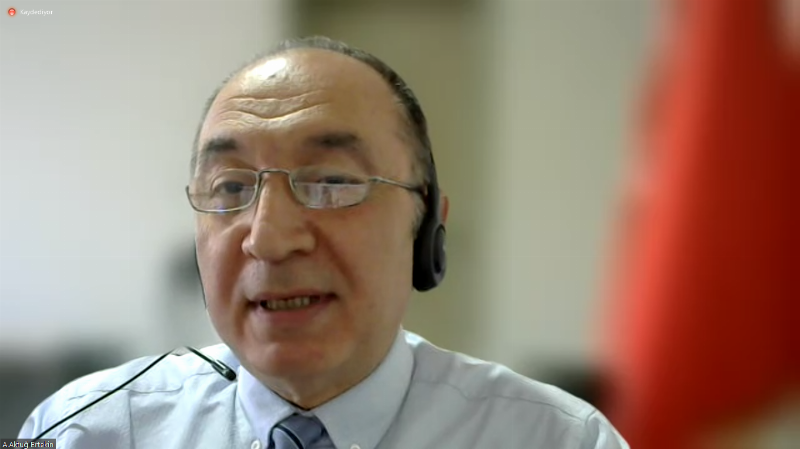
Investment in parental mental health for children's mental health…
At the 3rd Mother-Baby Mental Health Symposium, organized by the Üsküdar Üniversitesi Mother and Baby Application and Research Center, experts addressed mother and baby mental health from all aspects. The online symposium, with the theme “Stronger Together,” was moderated by Lecturer İdil Arasan Doğan from Üsküdar Üniversitesi.

Assoc. Prof. Dr. Hüseyin Ünübol delivered the opening speech
The symposium president, Assoc. Prof. Dr. Hüseyin Ünübol, Director of Üsküdar Üniversitesi Institute of Social Sciences, delivered the opening speech of the symposium, pointing out the importance of mother and baby mental health and stating that the mental health of mother, father, and baby actually forms the basis of community mental health. Noting that the birth process is often overlooked, Assoc. Prof. Dr. Hüseyin Ünübol stated that women should be supported during this period, emphasizing the importance of the father's support during this time.
Dr. Alain Gregoire, Senior Perinatal Psychiatrist and Honorary Senior Lecturer at the University of Southampton, UK, who was awarded an Honorary Doctorate by Üsküdar Üniversitesi in 2019, addressed the relationship between mother and baby mental health in his opening speech titled “Awareness of Maternal Mental Health.”
Alain Gregoire: “13 million women worldwide suffer from perinatal depression”
Dr. Alain Gregoire stated that there are approximately 131 million births each year in 196 countries worldwide, adding, “Approximately 131 thousand people each year suffer from postpartum psychosis, which is among the most serious mental health disorders. Around 13 million women worldwide suffer from perinatal depression. Unfortunately, these women's illnesses are often overlooked or undiagnosed. These women are typically found in low and middle-income countries.” Dr. Alain Gregoire noted that perinatal depression, which occurs during pregnancy, is one of the most common problems and pointed out that women do not receive sufficient mental health support. Dr. Alain Gregoire stated that studies show that one-third of women experience a psychological problem during the prenatal period.
Dr. Alain Gregoire stated that post-traumatic stress disorder emerges as a result of exposure to negative emotional states and traumas during childhood, adding, “It is one of the very common disease conditions. It is particularly important for us in the context of perinatal mental health.”

Dr. Alain Gregoire: “Poor maternal mental health negatively affects children’s mental health”
Dr. Alain Gregoire said that mental health problems affect fathers as much as mothers. Dr. Alain Gregoire noted that poor maternal mental health, both during pregnancy and postpartum, negatively affects children's mental health. Dr. Alain Gregoire said, “We can see that mental health problems during pregnancy are also passed on to the child. It is very important for the mother's mental health to be at an adequate level. Investment in parental mental health should be made for children's mental health. Parental mental health is important for infant and child mental health.” Dr. Alain Gregoire noted that investing in mental health in the prenatal period will also create a significant positive impact on the economic development of both children and the family.
Assoc. Prof. Dr. Barış Önen Ünsalver: “Maternal mental health affects baby's development”
The first session of the symposium, which consisted of two sessions, addressed “Medical Support for Mother/Baby.”
In the first session, Assoc. Prof. Dr. Barış Önen Ünsalver, from Üsküdar Üniversitesi Faculty of Medicine, Mental Health and Diseases, and NP Feneryolu Medical Center Psychiatry Specialist, provided examples of maternal mental health support efforts in the world and Turkey in his presentation titled “Why Is Maternal Mental Health Important?”
Assoc. Prof. Dr. Barış Önen Ünsalver noted that the perinatal period can extend from pregnancy to two years after birth, emphasizing that a mother's mental health problem is very important for the woman in every aspect. Assoc. Prof. Dr. Barış Önen Ünsalver said, “Maternal mental health is very important for the mother herself, for women, for children, for society, and for marriage. When there is a problem with the mother's mental health, she may experience difficulty bonding with the newborn. Difficulty in bonding with a newborn can lead to physical and neuropsychiatric developmental problems in the baby, and as a result, the mother's mental health problem will increase further.” Assoc. Prof. Dr. Barış Önen Ünsalver stated that problems in maternal mental health can also lead to deterioration in marital harmony, quality of support provided by the spouse, or a change in the hierarchy in the marital relationship, and the emergence of marital problems.
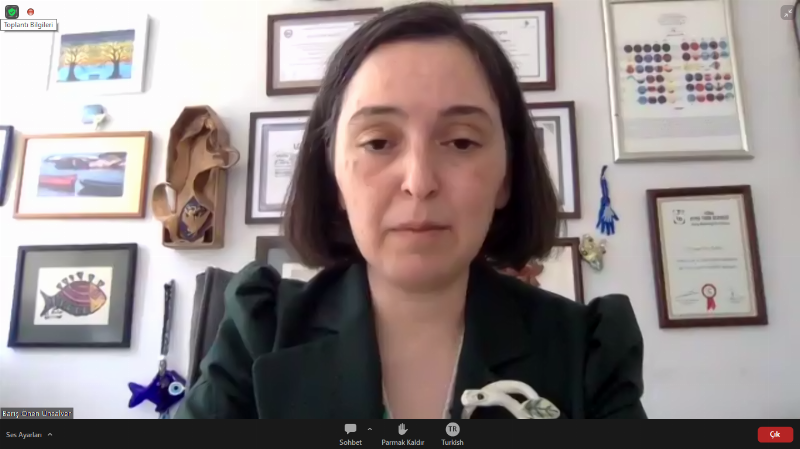
Assoc. Prof. Dr. Barış Önen Ünsalver: “Early attachment problems can lead to future problems”
Assoc. Prof. Dr. Barış Önen Ünsalver also touched upon the effects of the attachment system on the baby's development, stating, “The attachment system is a regulatory system present in the child and interacting with the complementary caregiver system in the mother. The baby hopes to find security, protection, and safety by approaching its mother. This search for closeness can be through eye contact with the mother or through physical contact.” Assoc. Prof. Dr. Barış Önen Ünsalver warned that early attachment problems can lead to significant problems in children in the future. Ünsalver stated that the reflections of early attachment problems include the development of reactive attachment disorder in early childhood, borderline personality structure in adulthood, substance abuse problems in adults, anxiety disorders, and depressive disorders.
Prof. Dr. Arif Aktuğ Ertekin, Dean of Üsküdar Üniversitesi Faculty of Health Sciences, provided information on problems that may arise during the prenatal, postnatal, and delivery periods and their solutions in his presentation titled “Medical Support for Pregnancy, Birth, and Postpartum.”
Dr. Lecturer Ayça Demir Yıldırım from the Midwifery Department of Üsküdar Üniversitesi Faculty of Health Sciences emphasized the importance of support given to expectant mothers during pregnancy in her presentation titled “Antenatal Support: Home Visits.”
Lecturer Fatma Tuncer from the Nutrition and Dietetics Department of Üsküdar Üniversitesi Faculty of Health Sciences presented on nutrition during pregnancy and lactation. In the second session titled “Psychological Support for the Baby,” Lecturer Kudret Eren Yavuz from Üsküdar Üniversitesi participated with her presentation titled “Attachment and Good-Enough Parenting.” Dr. Lecturer Demet Günaldı from the Child Development Department of Üsküdar Üniversitesi Faculty of Health Sciences pointed out the importance of supporting mothers with disadvantaged babies.
Share
Request a Call
Other News
- The book that read today's digital threats in 2014: Being a Conscious Family
- Experts warn: 'Instead of memorizing letters, teach pencil grip, scissor use, and coloring'
- School fear and school love both start in the family!
- Family is not merely transforming, it is being battered under a serious assault
- Artificial intelligence opens the door to early diagnosis in autism!