

Experts state that digital media technologies change and transform society much more effectively than traditional media, attributing this to the interactive structure of new media. Dr. Gül Esra Atalay drew attention to the existence of fake news, misinformation, and disinformation problems in social media channels, which are uncontrolled and unsupervised platforms. Atalay emphasized that social policies should be developed to increase new media literacy levels in all segments of society.
Content
Media is not just a mirror to society, it also shapes it…
Literacy Level in Society Must Be Increased…
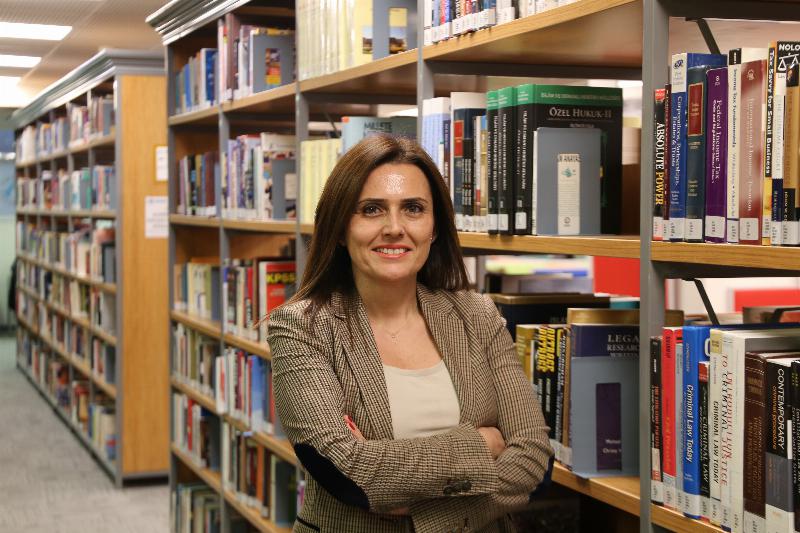
Assoc. Prof. Dr. Gül Esra Atalay, a faculty member at Üsküdar Üniversitesi Faculty of Communication, Department of Journalism, made evaluations on the relationship between digital media, society, and social events.
Society and Media Influence Each Other
Dr. Gül Esra Atalay stated that society and media are mutually influencing systems, saying, “Media addresses social events and society from its own perspective and affects the public’s perception of reality. We acquire a lot of information and ideas about what kind of place the world we live in is, and about social issues, through the media. Especially today, mass communication tools play a very important role in the daily lives of modern people living in complex social structures. Therefore, we can say that society is influenced by the media in many aspects. The phrase ‘media is a mirror of society’ is used, but this phrase overlooks the fact of how much media shapes human life. Media is not merely a mirror reflecting what happens in society, but an institution that shapes the social.”
Social Media Has Become a Routine
Dr. Gül Esra Atalay stated that digital media technologies change and transform society much more effectively than traditional media, and continued her words as follows:
“The most important reason for this is the interactive nature of new media. The use of new media channels, especially social media, has become an indispensable routine in daily life. With the widespread use of mobile devices, we access new media channels or use social media anytime, anywhere. Social media is interactive, allowing people to stay constantly connected with each other and is based on user-generated content. Therefore, these platforms, where all users constantly produce content, share their ideas and opinions, and sometimes express their reactions, affect society in many ways. At this point, it is possible to say that digital media affects society both positively and negatively.”
New Media Literacy Level Must Be Increased
Assoc. Prof. Dr. Gül Esra Atalay stated that media has positive aspects such as quick access to information at all times, the ability to communicate without time and space barriers, and the ability to quickly perform banking, shopping, and similar transactions online. She added, “On the other hand, there are problems of fake news, misinformation, and disinformation on social media platforms, which are uncontrolled and unsupervised channels. Individual measures that can be taken against disinformation include verifying information obtained from new media channels, confirming the accuracy of information from several different sources, and identifying and using reliable platforms in the online environment. In general, there is a need to develop social policies aimed at increasing the new media literacy level of all segments of society.”
Social Norms Are Learned from the Media
Assoc. Prof. Dr. Gül Esra Atalay stated that from the perspective of communication sociology, media is a tool of socialization, saying, “This means that individuals learn the norms of the society they live in—that is, what is acceptable and what is unacceptable—from the media. They also communicate with the rest of society through the media, and change by being influenced by what they see and hear. For this reason, media is a very important institution within social systems. Media representations interpret social reality by reflecting different segments of society in various ways. Therefore, it is important that media messages are pluralistic, impartial, and serve the proper functioning of society.”
Face-to-Face Communication Was Much More Important
Assoc. Prof. Dr. Gül Esra Atalay, a faculty member at Üsküdar Üniversitesi Faculty of Communication, Department of Journalism, reminded that face-to-face communication held a much more important place, especially before the development of electronic communication technologies, and concluded her words as follows:
“Relationships were largely conducted face-to-face. Feedback was quite limited in mass communication tools like newspapers. Information flow occurred unilaterally. However, today, with new media channels that allow interactive and user-generated content, enabling synchronous and asynchronous communication, information flow has become much more complex. Opportunities have increased. Today, a development in a remote corner of the country or the world can be heard and seen everywhere instantly. Therefore, the nature of interaction is also changing. Networked publics are forming, to use Danah Boyd’s term. The permanence, searchability, and replicability features of new media channels, and their ability to reach an unknown, invisible, and infinite audience/reader base, lead to change and transformation in every area, from social relationships to self-presentation, from economy to health, from trade to politics.”
Share
Update Date: March 01, 2026
Creation Date: September 28, 2022
Request a Call
Other News
- The book that read today's digital threats in 2014: Being a Conscious Family
- Experts warn: 'Instead of memorizing letters, teach pencil grip, scissor use, and coloring'
- School fear and school love both start in the family!
- Family is not merely transforming, it is being battered under a serious assault
- Artificial intelligence opens the door to early diagnosis in autism!