

Psychiatrist Prof. Dr. Nevzat Tarhan stated that attachment is a fundamental neuropsychological need, and said, “The need for attachment is biological, attachment behavior is cultural, it occurs through learning.” Prof. Dr. Nevzat Tarhan noted that family is very important in attachment, and stated that attachment problems are most frequently observed in broken families. Tarhan emphasized the importance of the trust a mother gives to her child in attachment, and warned that if maternal deprivation syndrome lasts for a long time, it can turn into autism. Underlining that the age of 2-3 is very important in the mother-child relationship, Tarhan advised, “A permanent, consistent, and continuous relationship is needed between the child and the mother or the person acting as the mother.”
Content
Maternal Deprivation Can Turn into Autism!
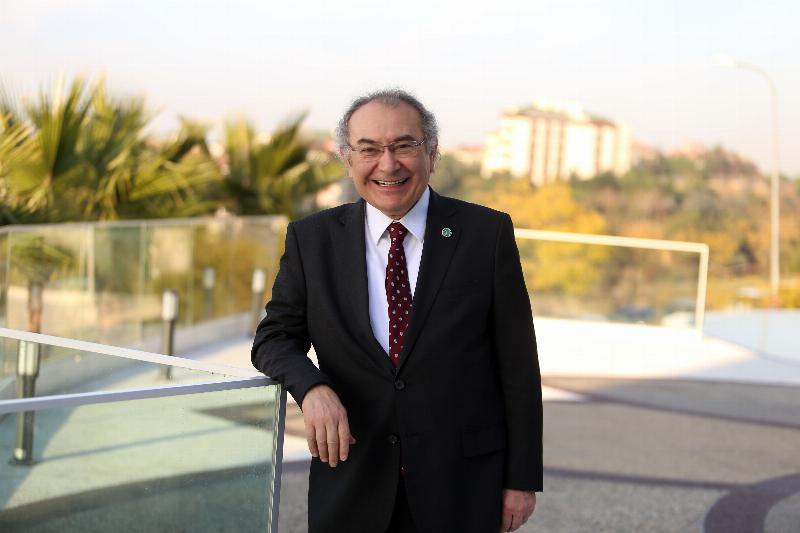
Üsküdar Üniversitesi Founding Rector, Psychiatrist Prof. Dr. Nevzat Tarhan, evaluated the impact and importance of the attachment phenomenon on infant development and in later years of life.
Attachment, a fundamental need
Prof. Dr. Nevzat Tarhan emphasized that the phenomenon of attachment must be addressed in child development, and said, “Attachment has a neuropsychological dimension. The attachment hormone has been identified in hormones. Oxytocin hormone, this hormone is secreted most in breastfeeding mothers. Experiments are being conducted on monkeys regarding the oxytocin hormone. Male monkeys given oxytocin hormone show more interest in various things, more interest in their offspring, and more interest in their mates. We have innate genetic codes in the brain related to attachment. Attachment is a fundamental need, like eating, drinking, and shelter.”
The first step of secure attachment is the mother's lap
Prof. Dr. Nevzat Tarhan stated that attachment is considered a psychological need but is a neuropsychological need, and said, “Humans are born with the need for attachment. When a baby is first born, what is the first thing it encounters? Its lungs suddenly take in cold air and it feels fear. Immediately it seeks a harbor to take refuge, and this becomes its mother's lap. This is the first step of secure attachment. The baby takes refuge with the mother, smells the mother, the mother breastfeeds, and thus the baby relaxes.”
Prof. Dr. Nevzat Tarhan emphasized that the attachment relationship with the mother has a very important place in the formation of the basic trust relationship, and said, “In human genetic codes, there is a tendency to expect closeness and a feeling of security when someone is beside them. This exists in all humans. When this is not met, one of their most fundamental needs remains unmet.”
The need for attachment was proven by Harlow’s experiment
Prof. Dr. Nevzat Tarhan noted that the need for attachment has also been demonstrated by scientific studies, drawing attention to the experiment conducted by American psychologist Harry Harlow: “Harlow, with a series of experiments he conducted in the 1960s, showed how powerful the effects of love, and especially the absence of love, are. In his most well-known experiment, Harlow gave young rhesus monkeys two different surrogate mothers. One was wrapped in soft cloth and did not provide any food, while the other was made of wire but carried a bottle that provided food. Harlow separated the infant monkeys from their real mothers a few hours after birth and gave them to these surrogate mothers to raise. The experiment showed that the infant monkeys spent more time with the soft cloth mother, even though she did not provide food, compared to the wire mother. As a result, something like this emerged: Infant monkeys can attach to a monkey with a passive food supply. This reveals the need of these infants for a safe area.”
It is very important for the mother to give the child trust
Prof. Dr. Nevzat Tarhan noted that the infants sought a safe area in moments of fear, seeing a fluffy toy as a refuge even though it was not real, and stated that the situation observed in this experiment yielded similar results in studies conducted with humans. Drawing attention to attachment experiments conducted with children, Tarhan said, “A mother, child, and a stranger participate. The mother goes to the child, meets the child's needs, and leaves. There is a stranger with the child. While the mother is present, the stranger also comes and interacts with the child. Sometimes only the stranger comes and interacts with the child. At the end of the experiment, the child's reactions are observed. If the mother leaves telling the child she will return, the child accepts it, even if sad. But if the mother disappears silently, that is, leaves without saying goodbye, the child becomes more anxious. When the mother returns, the child hits the mother and cries. If the child also has avoidant attachment, when the mother returns, the child reacts by being distant and cold towards the mother. The mother's attitude affects the child's reaction.”
The main reason for babies crying is attachment issues
Prof. Dr. Nevzat Tarhan stated that currently, in some countries around the world, there are clinics solely for crying babies, and said, “This is just for crying babies to come. 70-80% of the main reasons for babies crying stem entirely from attachment problems related to the mother. We always commonly think they cry due to gas or illness. In reality, the problem is their need for their mother.
Mothers cannot provide comfort with maternal warmth. Mothers also approach the child with fear of making mistakes or have a very clingy relationship with the child. In such situations, basic needs should be met, and the baby should engage in exploratory behavior. They should be interested in new toys. Children do not do this and live in fear.”
In anxious attachment, the child is dependent on the mother
Prof. Dr. Nevzat Tarhan noted that in anxious attachment, the child never wants to leave their mother's side, and said, “If there is anxious attachment between mother and child, the child goes to school but their mind is at home, with the mother. It's as if school is a foreign planet. School phobia develops. This means the mother has made the child overly protective, overly dependent on herself. The child always seeks approval from the mother; in such cases, self-confidence has not developed. Comfort has always developed by taking refuge in the mother, whereas the child begins to individuate as they start walking. The mother needs to support the child's individuation. When the child experiences a problem, they immediately go to the mother, and that's how the child finds comfort. As they grow, they need to learn to deal with their own problems and calm themselves down independently. This needs to be taught to the child. Some mothers cannot teach this. In that case, secure attachment does not occur, but anxious attachment does. It is also called insecure attachment.”
In avoidant attachment, the child has been neglected
Prof. Dr. Nevzat Tarhan noted that another type of attachment is avoidant attachment, and said, “Here, the child has both love and hate for the mother. They love the mother when she is far away, but treat her badly when she comes near. There is both love and anger; this is avoidant attachment. In such situations, mother-child conflicts are very common. Generally, in early ages, there are things the mother does with good intentions. That is, the child has basic needs, and even though these are met, their emotional needs are not, there is emotional neglect. The child has grown up alone, the child thinks no one loves them. This continues in later years.”
Maternal deprivation can turn into autism
Prof. Dr. Nevzat Tarhan noted that in maternal deprivation syndrome, which occurs in some children, the child cries continuously, stops crying when someone approaches, thinking it's their mother, and continues to cry if the person is not their mother, and said, “If it is their mother, they accept it. If this continues for a long time, maternal deprivation turns into autism in the child. Therefore, the age of 2-3 is very important in the mother-child relationship. A permanent, consistent, and continuous relationship is needed between the child and the mother or those acting as the mother. Some mothers who cause avoidant attachment behave inconsistently. In the morning, they kiss the child profusely. In the afternoon, they scold them saying 'Why did I give birth to you?' When this happens, the child cannot understand whether they are loved or not, and personalities with mood disorders develop. This is a learned behavior.”
Attachment problems are most frequently observed in broken families
Prof. Dr. Nevzat Tarhan said, “The need for attachment is biological, attachment behavior is cultural, it occurs through learning,” and added, “Therefore, family is very important. We most frequently encounter attachment problems in broken families.
The mother and father come together for the child's well-being. When the child sees this, their fear related to attachment disappears. The child's ability to laugh and relax shows that this need for attachment has been met. For example, when the mother goes to work in the morning, she should pat the child's head and say, 'I'm going to work, but I'll be back in the evening,' and keep her promise. If she leaves silently, dropping the child off with a caregiver without saying anything, this situation turns into anxious attachment in the child, and trust in the mother weakens. Therefore, a determined, consistent, and continuous relationship is actually the foundation, the magic concept, of attachment.”
Share
Request a Call
Other News
- The book that read today's digital threats in 2014: Being a Conscious Family
- Experts warn: 'Instead of memorizing letters, teach pencil grip, scissor use, and coloring'
- School fear and school love both start in the family!
- Family is not merely transforming, it is being battered under a serious assault
- Artificial intelligence opens the door to early diagnosis in autism!