

Psychiatrist Prof. Dr. Nevzat Tarhan, emphasizing that burnout syndrome has been widely discussed in recent years and is now even observed in children, states that a ‘root cause analysis’ is necessary to find the reason for the syndrome, which occurs on emotional, mental, and physical levels. Tarhan, noting that humor is a very good strategy against burnout syndrome, said, “Being extroverted also reduces the syndrome. Burnout occurs later in individuals whose behaviors, emotions, and thoughts are consistent. Burnout begins when a person loses hope. One of the reasons for the increase in burnout today is that people are constantly in the public eye.”
Content
Loss of hope brings burnout!
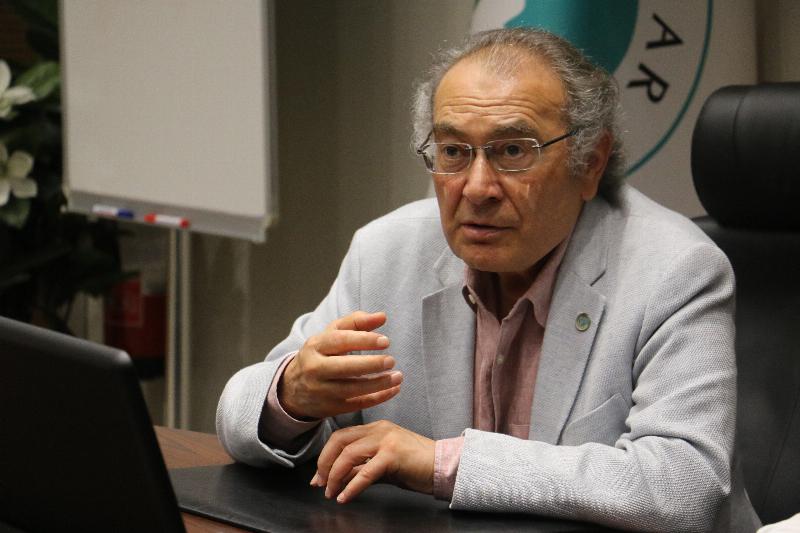
Humor is good for burnout…
Üsküdar Üniversitesi Founding Rector, Psychiatrist Prof. Dr. Nevzat Tarhan, made important evaluations and shared his recommendations regarding the frequently discussed burnout syndrome.
Burnout syndrome is becoming globally widespread
Prof. Dr. Nevzat Tarhan stated that burnout syndrome has been discussed extensively in recent years, adding, “There is a global spread. 30 years ago, it was rarely talked about, but now we even see it in children. ‘Why has it increased? What should we understand when we say burnout syndrome?’ It needs to be evaluated carefully. Not every loss of energy should immediately be called burnout syndrome. Burnout syndrome was defined in the 80s. It was defined as an occupational hazard related to an individual's professional inadequacy. So, when a person exhausts their internal resources and character strengths due to professional inadequacy, inability to perform professionally, failure, exhaustion, loss of energy, or inability to work efficiently, the situation is clear.”
It reduces productivity in the workplace
Prof. Dr. Nevzat Tarhan stated that when a person exhausts their internal resources, other symptoms of depression can also be mentioned, saying, “Symptoms appear according to stages such as inability to enjoy anything, sluggishness, cheerlessness, or anger, irritability. If burnout syndrome is organizational, meaning it occurs within an institution, it leads to mistakes. If it's in the workplace, it reduces quality and productivity. If it's in society, it's a sign of a major transformation. If it becomes widespread, it can also become a way of expressing sociological reactions. If burnout syndrome is common among people in a company, it is necessary to conduct a root cause analysis there, find the reason, and produce solutions. This applies to managers as well as individuals.”
It occurs on emotional, physical, and mental levels
Prof. Dr. Nevzat Tarhan stated that burnout syndrome usually begins emotionally with the thought and discourse of ‘I can't do this job, I can't manage it,’ saying, “Everything seems to get bigger in the person's eyes. When going to work, it feels as if their feet are moving backward. It first starts emotionally, then reaches a physical dimension as a loss of energy. Then it becomes mental. The brain's comprehension and perception process is perceived as working slowly. If a person experiences uncontrollable stress, they behave unusually. Controllable stress keeps one going, develops them, and thus the person does not see it as a danger.”
Hopelessness leads to exhaustion
Prof. Dr. Nevzat Tarhan said that in stress perceived as danger, an alarm state first occurs, and continued his words as follows:
“In alarm, the brain gives a fight or flight response. If the brain gives a fight response, it pumps all the energy-boosting blood sugar and fat stores in the body into the blood. Blood sugar rises. Or it just says 'flee', falls, and faints. The body reacts physically like this. This is referred to as ‘Sympathetic Activation’ in literature. The brain activates the sympathetic part of the autonomic nervous system. It pumps backup energy stores for a few hours. However, if this lasts too long, since resources are depleted, it starts to stop reacting after a while. Indifference begins. But when it activates the parasympathetic nervous system with ‘Relax, the danger has passed, you are in a controllable situation. This can be overcome,’ if the person has a high sense of hope, resistance increases. It becomes a stress alarm. Burnout does not occur. For burnout to occur, the person needs to lose their sense of hope. If there are trust-weakening feelings such as losing hope that their expectations from the institution they work for will not be met and that they will not be treated fairly there, burnout emerges.”
Smart managers can develop motivation techniques
Prof. Dr. Nevzat Tarhan stated that alarm and resistance usually occur, and said, “If the person overcomes resistance, they emerge stronger from that overcome alarm. In fact, stress factors also have benefits. We call these developing stress. It strengthens the person by developing them further. But the moment it turns into burnout, destructive stress emerges. For it not to turn into burnout, the person must not fall into despair. In burnout, there is a veiled reaction. Burnout may not appear to be present, but there is desensitization. Indifference, sarcastic attitudes, unwillingness, and not caring about the job occur. The institution becomes a community of intelligent and lazy people. By laziness, we are actually talking about the indifference and desensitization during the resistance phase of burnout syndrome. At that moment, burnout syndrome has already reduced work efficiency. In such a situation, a smart manager immediately notices this and can find the cause and develop new motivation techniques.”
Burnout occurs later in consistent individuals
Prof. Dr. Nevzat Tarhan stated that individuals can also easily produce solutions individually, saying, “For example, if we hold a glass of water in our hand for 5-10 minutes, we don't notice it at all. But after half an hour or an hour, our arm starts to ache. When it lasts too long, we become unable to hold the glass. When tired, a person asks for help from their other hand. A similar approach occurs in mental stress. When a person experiences excessive overload on a subject, they think from another area of their brain, changing their focus of attention and interest. When they do this, the person immediately recovers the tired part of their brain. Burnout is harder and occurs later in individuals who are emotionally consistent, who know how to behave, where to get angry, and where not to get angry. Of course, for this to happen, the person needs to learn stress management from an early age. These people are emotionally stable and can withstand burnout.”
Stress is not eliminated, it is managed
Prof. Dr. Nevzat Tarhan emphasized that it is possible to manage stress rather than eliminate it, saying, “Stress is managed and converted into energy. Like riding a bicycle, it takes the person to their goal. But when overloaded, it tumbles. It usually occurs more often if the person's expectation level is high and the institution's expectation level from the person is also high. It also occurs more if the family structure and social support are weak. Not only in Turkey but also worldwide, the new generation is a conformist generation. Older generations matured in scarcity. They were exposed to stress at a young age and managed to survive in scarcity despite that stress. Current generations mature in abundance. This is more difficult. Someone who is always accustomed to ease and comfort feels as if something they deserve is being taken away when their comfort is lost. In such a situation, they cannot accept it. Desensitization and negative behaviors appear more frequently.”
Being extroverted reduces the syndrome
Prof. Dr. Nevzat Tarhan noted that being extroverted reduces burnout syndrome, stating, “Burnout syndrome is more common in incompatible individuals. There are people who argue with the doorstep. Also, if a person is not open and transparent, performs their duties with deceit, cannot create a safe environment wherever they go, does not feel safe in the workplace, and constantly thinks they will be tripped up, then burnout is very common there. The feeling of fear dominates. Where fear increases, trust decreases. Where trust decreases, anxiety rises. As a result, peace is disturbed.”
A person who feels safe has increased motivation
Prof. Dr. Nevzat Tarhan stated that workplace productivity also increases in an environment with honesty, transparent relationships, and trust, saying, “Feeling safe increases a person's motivation. Internal resources are utilized more. Therefore, it is not a coincidence that developed countries insist on open, transparent relationships and freedom of expression, focusing on self-confidence rather than fear. In cultures of fear and oppression, there is passive burnout. It is experienced as laziness. In communities with a high sense of trust, dissenting opinions are not excluded. People feel more secure about not being wronged. In such societies, it is easier to produce solutions.”
Humor is a very good strategy against burnout
Prof. Dr. Nevzat Tarhan said, “One of the reasons for the increase in burnout today is that people are constantly in the public eye,” and concluded his words as follows:
“Because people are in the public eye, their ideals and expectations in society are high. Their tendencies to be conformist are also high. Being pointed out in a society requires constant vigilance to avoid making mistakes. Since this feeling creates danger, people cannot relax. They cannot go out and walk freely. They suddenly feel exhausted against a small criticism. When one is in the public eye, being a person pointed out, that individual also needs to have resilience to criticism. Fatigue, lack of energy, insomnia are truly difficult things. Interestingly, humor is a very good strategy against burnout syndrome. We can say that humor increases resilience.”
Share
Update Date: March 01, 2026
Creation Date: January 30, 2023
Request a Call
Other News
- Social responsibility courses moved to the field
- Erasmus+ Orientation Week completed at Üsküdar
- Prof. Nevzat Tarhan: “Brain secretes ‘dark glue’ in social media lynchers!”
- Prof. Nevzat Tarhan: “Every segment of society should be able to say, ‘This constitution is my constitution!’”
- OHS releases guide for safe operation of industrial robots