

Üsküdar University Vocational School of Health Services Emergency and Disaster Management Department held a “Basic Disaster Awareness” seminar. The seminar, held via Zoom, was moderated by Assoc. Prof. Dr. Mesut Karahan, Director of the Vocational School of Health Services, while the speaker was Lecturer Ayşe Aydemir. Aydemir shared important information on basic disaster awareness with the participants.
Content
Lecturer Ayşe Aydemir: “Disaster Is a Result, Not a Cause”
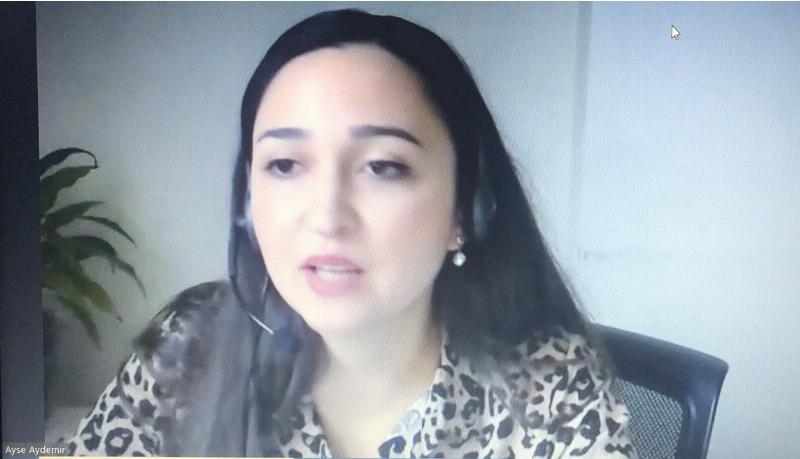
“Disaster is a result, not a cause”
Aydemir, providing information on what a disaster is, said: “Disasters are natural or human-made events that encompass all or a specific part of society, halt or interrupt human life, cause physical, social, and economic losses, and are beyond our ability to cope. A disaster is a result, not a cause. For an event to be considered a disaster, very serious consequences must arise. Earthquakes are natural phenomena; we cannot prevent or stop earthquakes from occurring, but we can prevent them from turning into disasters. Not every earthquake is a disaster. For earthquakes to be considered a disaster, they must cause very significant damage to that region.”
“Four stages of the disaster management system”
Aydemir, making evaluations regarding the disaster management system, stated: “Disaster management encompasses a process that plans, coordinates, and manages all efforts to be made before, during, and after disasters to prevent them and mitigate their harms. The disaster management system consists of four stages: The first and most important stage is risk and damage reduction, followed by the preparedness stage, and then the response and recovery stages.”
Expected outcomes of a potential Marmara earthquake!
Aydemir, continuing her speech, shared the estimations made by Kandilli Observatory for a potential Marmara earthquake as follows: “According to Kandilli Observatory’s estimations, in a potential 7.5 magnitude earthquake in the Marmara Sea off Istanbul, 50-60 thousand heavily damaged buildings and 500-600 thousand homeless people are expected. Additionally, 70-90 thousand fatalities and 120-130 thousand seriously injured people are anticipated. Furthermore, infrastructure systems are also expected to collapse. We must take our precautions before these disasters occur. Unnecessary phone calls should not be made after an earthquake, so as not to overload the lines. Buildings should be constructed by architects and experts, and buildings built before the 1999 earthquake should be inspected.”
Share
Update Date: February 27, 2026
Creation Date: January 07, 2021
Request a Call
Other News
- Prof. Nevzat Tarhan: “Those with a mental filter are not afraid of the digital”
- Artificial intelligence doesn't eliminate the translator, it transforms their expertise!
- Social responsibility courses moved to the field
- Erasmus+ Orientation Week completed at Üsküdar
- Prof. Nevzat Tarhan: “Brain secretes ‘dark glue’ in social media lynchers!”