

Üsküdar University Head of the Department of Neurology, Faculty of Medicine and Lecturer in Speech and Language Therapy, Faculty of Health Sciences, Prof. Dr. Oğuz Tanrıdağ’s article on the topic of ‘Language Network’ was published on the web site of T.C. Ministry of National Education Malatya / Darende- Irmaklı Secondary School.
Content
Language Requires a Special Structure in the Brain
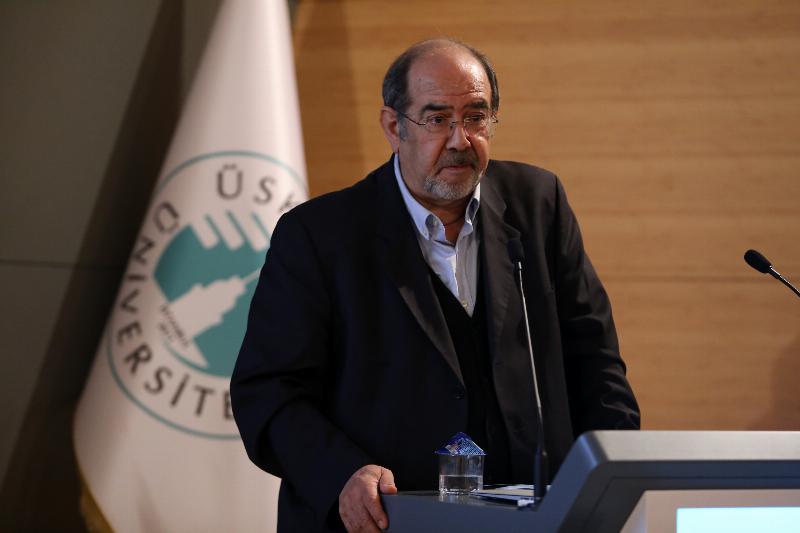
In his article published on the website of T.C. Ministry of National Education Malatya / Darende- Irmaklı Secondary School, Prof. Dr. Oğuz Tanrıdağ pointed out that the location of the language network in the brain varies among individuals, “We generally refer to the functions of speaking, comprehension, naming, writing, and reading as language functions. The special relationship of language functions with the brain has been elucidated one by one starting from the 1860s, and it was ultimately revealed that these functions require a special structure in the brain, being interconnected among themselves. We call this structure the language network in the brain. From these dates onwards, with data provided by autopsy studies, the brain substrates for speech were first identified, then comprehension, and subsequently, reading and writing functions.”
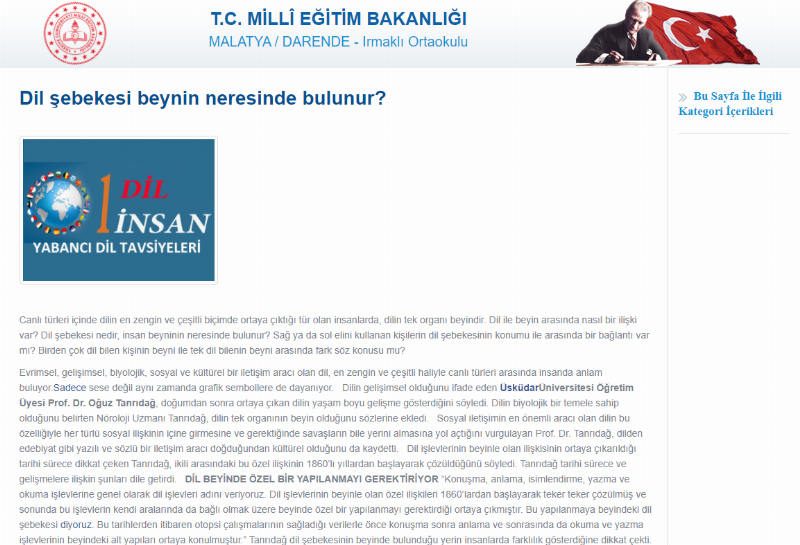
Here is Prof. Dr. Oğuz Tanrıdağ’s article published on the website of T.C. Ministry of National Education Malatya / Darende- Irmaklı Secondary School:
Among living species, in humans, the species where language emerges in its richest and most diverse form, the sole organ of language is the brain. What is the relationship between language and the brain? What is the language network, and where is it located in the human brain? Is there a connection between the location of the language network and whether a person is right-handed or left-handed? Is there a difference between the brain of a person who knows multiple languages and one who knows only a single language?
Language, an evolutionary, developmental, biological, social, and cultural communication tool, finds its meaning in humans, among living species, in its richest and most diverse form. It relies not only on sound but also on graphic symbols. Prof. Dr. Oğuz Tanrıdağ, a faculty member at Üsküdar University, stating that language is developmental, said that language, which emerges after birth, shows lifelong development. Neurologist Tanrıdağ, pointing out that language has a biological basis, added that the brain is the sole organ of language. Emphasizing that language, as the most important tool of social communication, with this characteristic, allows it to enter into all kinds of social relationships and, when necessary, even replace wars, Prof. Dr. Tanrıdağ also noted that language is cultural since written and oral communication tools like literature are born from it. Tanrıdağ, drawing attention to the historical process in which the relationship between language functions and the brain was revealed, said that this special relationship between the two began to be unraveled starting from the 1860s. Tanrıdağ stated the following regarding the historical process and developments.
Language Requires a Special Structure in the Brain
“We generally refer to the functions of speaking, comprehension, naming, writing, and reading as language functions. The special relationship of language functions with the brain has been elucidated one by one starting from the 1860s, and it was ultimately revealed that these functions require a special structure in the brain, being interconnected among themselves. We call this structure the language network in the brain. From these dates onwards, with data provided by autopsy studies, the brain substrates for speech were first identified, then comprehension, and subsequently, reading and writing functions.” Tanrıdağ pointed out that the location of the language network in the brain varies among individuals.
Where Is Your Network?
“The most important feature of the language network in the human brain is that this network is located within the left hemisphere of the brain in a large portion of individuals. The activation centers related to speaking, comprehension, reading, and writing are interconnected within this hemisphere. Research conducted in subsequent years has shown that the laterality of the language network in the brain is closely related to which hand individuals predominantly use. Namely; in almost all individuals who use their right hands more skillfully than their left hands, the language network in the brain is on the left side, while among those who use their left hands more skillfully than their right hands, this situation persists in approximately two-thirds, and in the remaining individuals, this network is located on the right side of the brain. The reasons for this are debatable.” Prof. Dr. Oğuz Tanrıdağ, a faculty member at Üsküdar University, also made evaluations regarding how language develops in the brain, stating that humans are born with a brain mechanism ready for language.
We Are Born With a Brain Mechanism Ready for Language
“Humans are born with a brain mechanism ready for language. This mechanism begins to emerge when the baby is 3-6 months old in the mother’s womb. The period from birth until the child speaks is related to the development of the memory necessary to activate this speech mechanism. If, for another reason, memory cannot collect enough material from the outside world, the child cannot learn to speak.”
Early Speaking Baby Has a Strong Memory
“A child speaking early or earlier than expected indicates a strong memory. Therefore, speech is related to intelligence. The effects of children learning more than one language are debatable. While this is quicker and problem-free in children with high intelligence and memory capacities, it has been suggested that multilingualism can lead to stuttering in some children.” Tanrıdağ also provided information on the effect of knowing multiple languages on the brain, noting that different languages are not associated with different areas in the brain. Tanrıdağ emphasized that research conducted on this topic so far has shown that different languages learned are represented by the same language network in the brain, and that a similar area, not a different brain area, is used for each new language learned.
Different Languages Use the Same Area in the Brain
“For each new language learned, a similar area, not a different brain area, is used. The representation of different languages within the same brain areas is likened to files archived at different times being stored in the same library. Due to the nature of human memory, the language learned first is always the more remembered language. Continued use of this language further strengthens language memory. Indeed, this is why recovery from language disorders in multilingual individuals experiencing speech problems is interrelated. Developments in this area are known as Pitres' Laws. According to this, when a multiple language disorder occurs in an individual; recovery first begins with the native language and the frequently used language. If the native language is also the frequently used language, this recovery is even more pronounced. Furthermore, if the known languages belong to the same language family, for example, if these languages are French, Spanish, and Italian, their recoveries will be similar. However, if the known languages are, for example, Turkish, English, and Japanese, then the native language and usage characteristics play a greater role in their recoveries.”
Share
Update Date: February 28, 2026
Creation Date: September 18, 2021
Request a Call
Other News
- Experts warn: 'Instead of memorizing letters, teach pencil grip, scissor use, and coloring'
- School fear and school love both start in the family!
- Family is not merely transforming, it is being battered under a serious assault
- Artificial intelligence opens the door to early diagnosis in autism!
- Artificial intelligence doesn't end engineering, it transforms it!