

Üsküdar Üniversitesi SHMYO Dialysis Program Head Lecturer Meliha Çakmak moderated a seminar on “Kidney health, nutrition, and lifestyle habits for a healthy lifestyle”. The guest of the program, organized by the Dialysis program, was Ayşe Onat, Projects Coordinator of the Turkish Kidney Foundation.
Content
Kidney health, nutrition, and habits for a healthy lifestyle

“We try to reach audiences of every age group”
Onat, giving information about the Turkish Kidney Foundation, said: “The Turkish Kidney Foundation was established in 1985. We are currently one of the largest foundations representing kidney health in Turkey socially, at both national and international levels. As a foundation, our aim is to combat kidney disease, conduct preventive medicine studies, provide qualified dialysis services to patients with chronic kidney failure, and work to increase cadaveric organ donation as much as possible. With our education project, we have reached 26 provinces, and we will try to reach even more. Unfortunately, the pandemic stopped us, but we reached as many people as possible through platforms like Zoom. We try to reach audiences in every age group by using various media channels as much as possible for what we do. At the same time, we try to support students studying at the Faculty of Medicine who have insufficient financial means. We currently provide scholarships to 78 students, which is very valuable for us. Of course, speaking of the future, we must raise healthy generations; specifically, we have lowered these efforts from primary school level to kindergarten level this year, starting from a five-year-old child and aiming to provide information about kidney health to everyone, regardless of age.”
“Eat what you want, but pay attention to the quantity”
Onat, speaking about the increasing prevalence of obesity in Turkey, said: “Perhaps these are things you hear often in many places, but here we want to approach it a bit more from the perspective of kidney health, a bit more scientifically, and we always say this: nothing is forbidden in our presentation. Eat what you want, but pay attention to the quantity; otherwise, it brings along some problems. Obesity is very, very widespread in Pacific countries, but leave them aside; when we look at countries belonging to the modern world, Turkey is among the top five. If you look at the map, including Turkey, go up to England, encompass all of continental Europe, and we are the fattest country there, and we are getting fatter. On the contrary, our women are getting progressively fatter, and unfortunately, the pandemic process also caused all of us to gain more weight. Work must be done to prevent this.”
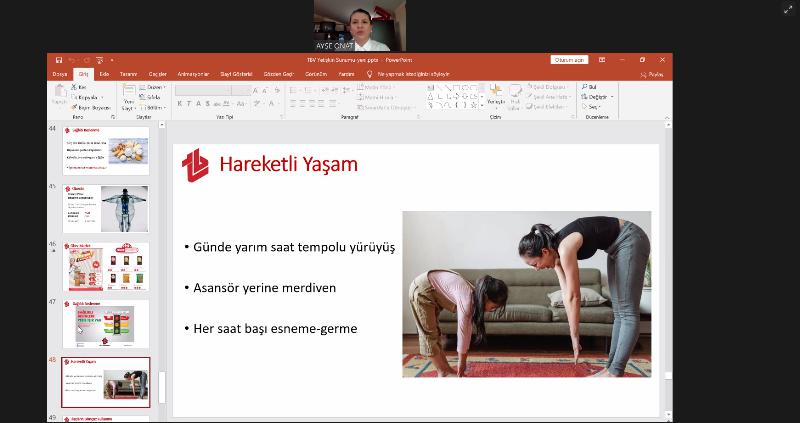
“In our country, the risk of chronic kidney disease threatens a significant portion of our population”
Onat, speaking about the situation of chronic kidney disease in our country, said: “Regarding obesity, while the obesity rate was 22% in all of Turkey in 2010, it has now risen to 34%. This rate is 39% among women. To prevent all of this, we work with other non-governmental organizations like ours. Unfortunately, in our country, the risk of chronic kidney disease threatens a significant portion of our population, and one in every seven adults is at risk. For this reason, our main concern is to bring this rate down to the world average and reduce this risk rate in the population even slightly. Kidney disease is a five-stage disease characterized by kidney damage lasting more than 3 months or a low filtration rate, leading to dysfunction. Under normal circumstances, a healthy individual should complete their life without any problems, but if you have certain hereditary problems or if you were born with a low birth weight, a low number of nephrons can also lead to certain problems. If you held your urine when you were a child engrossed in play, or if you hold your urine for various reasons even as an adult, these emerge as problems that lead to kidney damage over time.”
“Kidneys are also affected by everything that affects the blood vessels”
Onat said that for kidney health and general health, we must eat healthily, exercise, and pay attention to our fluid intake: “Bone development is very closely affected by the hormones secreted by the adrenal glands, which also regulate your body’s blood pressure balance. Since kidneys are made up of vascular glomeruli, they are primarily affected by everything that affects the blood vessels. In cases of anemia, the kidneys must also be checked. The kidneys are burdened with a lot of work, but we are not aware of what they do. When kidney function is impaired, it affects everything from high blood pressure to diabetes and obesity. You see in some movies that they place a dialysis machine in the middle of the house and connect the patient to it, saying, ‘Our patient is also undergoing dialysis.’ Society thinks this way, but in reality, we are trying to continue with a treatment method that requires a very serious infrastructure and very serious scientific knowledge behind it. We wish to proceed with kidney transplantation, but unfortunately, these kidney transplantation rates are low in our country. Currently, around 23 thousand patients are waiting, but we can unfortunately perform only about 4 thousand transplants, which dropped by 50% last year with the outbreak of this pandemic. With patients unable to come for follow-ups and planned transplants not being performed, the condition of some patients worsened, and unfortunately, we lost some of them. All of this once again shows that we must take very, very good care of our kidneys.”
“We recommend eating at home as much as possible”
Onat, addressing fast food habits, stated: “Unfortunately, excessive salt consumption leads to many problems such as high blood pressure, kidney damage, bloating, calcium loss in bones, and headaches. On the contrary, we are going through a period where we are very accustomed to ordering food from outside; we now order high-calorie foods even from where we sit. Unfortunately, 77% of these are our main sources of salt intake. If processed, they contain more salt to extend their shelf life, or flavor enhancers like monosodium glutamate also contain salt, which is not good for our bodies at all. We recommend eating at home as much as possible, and we recommend maintaining salt balance as much as possible. If all these are considered, we can at least be somewhat protected from salt. Of course, there is diabetes. Sugar does not directly affect the kidneys, but it creates some metabolic problems originating from obesity. We know about diabetes, insulin resistance, and so on, but it can also create psychiatric problems. It significantly triggers forgetfulness. It also leads to diseases such as skin conditions, osteoporosis, and weakened immunity.”
“Fruits and vegetables should be consumed in season”
Onat, giving advice on nutrition, said: “Fruits and vegetables should be consumed in season as much as possible. Tomatoes in December are not real tomatoes, eggplants are not real eggplants; they are grown in greenhouses without sunlight, so it is necessary to pay attention to consuming them in season. Although they may be enjoyable, instead of foods like wafers and chocolates, we should consume unsalted and unroasted nuts. Legumes are a good source of protein; consuming them as a main dish, a side dish, a salad, or as a daily dessert will be quite beneficial.”
Share
Update Date: February 28, 2026
Creation Date: December 16, 2021
Request a Call
Other News
- Dr. Ayfer Şirin: “Sea turtles offer us a very fast warning system”
- Ümraniye Family Academy project qualified for support
- Üsküdar University students examined production and distillation processes on-site
- The importance of student clubs in university life highlighted in Üsküdar
- Prof. Süleymanlı introduced the Turkish Barometer 2026 research in Astana