

Üsküdar Üniversitesi organized a commemorative event on the occasion of the 30th anniversary of the Khojaly Massacre that took place during the First Karabakh War. In the panel titled "Khojaly Genocide on its 30th Anniversary from a Human Rights Perspective," attended by esteemed individuals, the history of the Khojaly genocide and the Karabakh Victory achieved in 44 days with the Second Karabakh War were discussed. Notable speakers at the panel included Azerbaijani Member of Parliament Vugar Bayramov, Üsküdar Üniversitesi Values Education Research and Application Center Director Prof. Dr. Sırrı Akbaba, and Turkey Human Rights and Equality Institution Board Member Mehmet Emin Genç.
Content
A Panel on "Khojaly Genocide on its 30th Anniversary from a Human Rights Perspective" Was Held
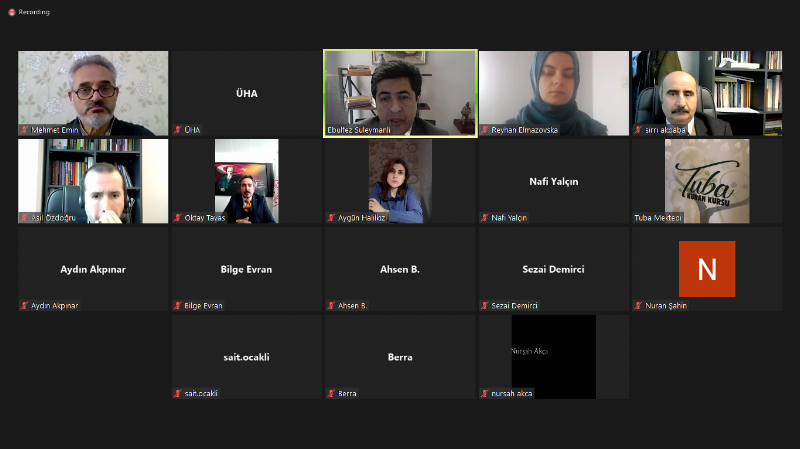
Azerbaijani Member of Parliament Bayramov: "The Khojaly Massacre is the most ruthless and brutal genocide against civilians in the world"
The panel's moderator, Üsküdar Üniversitesi Human Rights Studies Application and Research Center Director Prof. Dr. Ebulfez Süleymanlı, stated that the genocide in Khojaly was a human rights violation and emphasized that the persecutions ongoing for 150 years in the Balkans, Syria, Azerbaijan, and other geographies should not be overlooked.
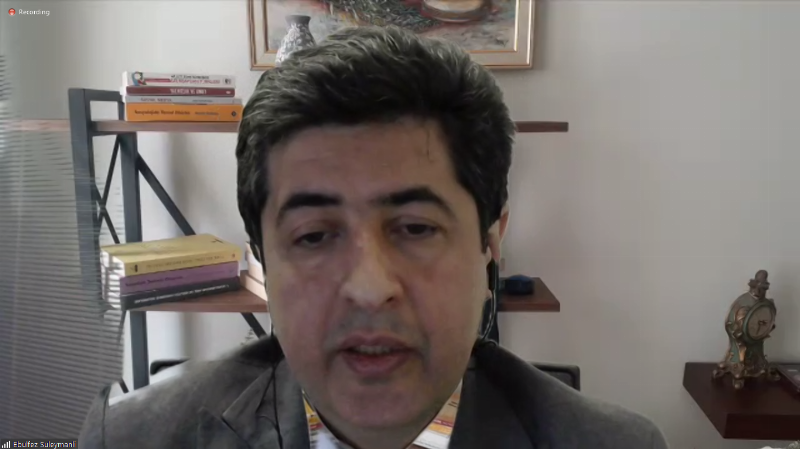
Süleymanlı said, "Remaining silent and indifferent to this great tragedy is, at the very least, being complicit in this crime against humanity. Therefore, holding the perpetrators of Khojaly accountable is a requirement of the civilized world's responsibility."
The first speaker of the panel, Vugar Bayramov, Member of the Milli Majlis of Azerbaijan, participated via video conference. Bayramov addressed the massacre that occurred in Khojaly and Azerbaijan's actions as a state after the Second Karabakh War. Bayramov said: "Turkey has always supported Azerbaijan. The Khojaly Genocide needs to be narrated. The souls of those martyred in the Khojaly genocide are now commemorated worldwide. The Khojaly genocide is the greatest genocide committed against civilians in recent times. It is very important that the genocide experienced by Azerbaijan is voiced in Turkic states and international organizations and institutions. This meeting, which scientifically investigates the genocide, is very important. In this genocide, which is a violation of human rights, civilians were targeted and subjected to genocide by Armenians. Khojaly is a relentless and brutal genocide. With the Second Karabakh Victory, our lands were liberated from occupation, and we can now visit the city of Karabakh. This is the beginning of a new era for Azerbaijan."
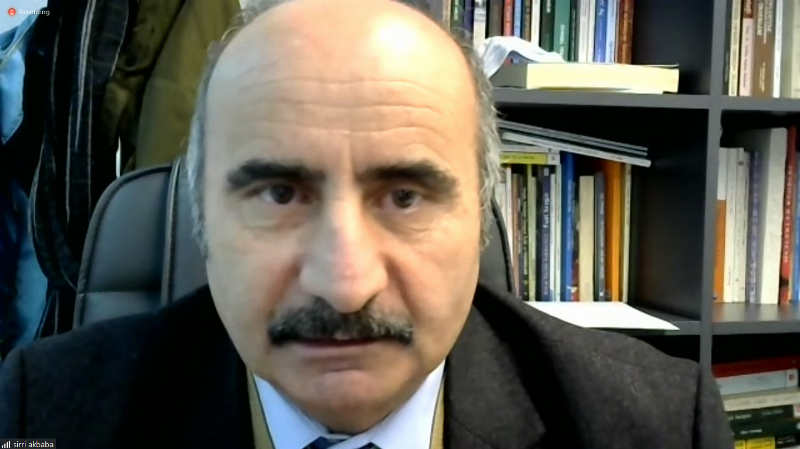
Prof. Dr. Sırrı Akbaba: "Western powers incited Armenia, paving the way for the massacre"
Üsküdar Üniversitesi Values Education Research and Application Center Director Prof. Dr. Sırrı Akbaba addressed the psychological aspect of the Khojaly Genocide and the traumas experienced by people. Akbaba said: "Due to the Ottoman lands dominating a wide geography, Turkish communities exist in many parts of the world. There are hundreds of Turkish villages in Armenia alone, but not a single one of our villages remains. Even our graves have been destroyed. Psychologically, according to aggression models, the first is innate aggression. This is true for both Armenia and Azerbaijan. In addition, there are theories where the environment plays a role. One of these is frustration. A person gets angry when an obstacle appears in front of them while moving towards their goal. At the time, Armenia did not exist; these lands were entirely Turkish. Despite this, the Armenian state was allowed, but this state did not stop and claimed rights over Karabakh, one of the most important regions for Azerbaijan. In this case, the theories become invalid. Turkey has always helped in what happened in Azerbaijan because; a Turk helping a Turk is helping oneself. Another theory is direct provocation. The West incited Armenia, causing it to attack. There is also a type of learned aggression. There is no savagery at the core of Turkish culture; in the Second Karabakh War, it was liberated from occupation without harming any civilians."
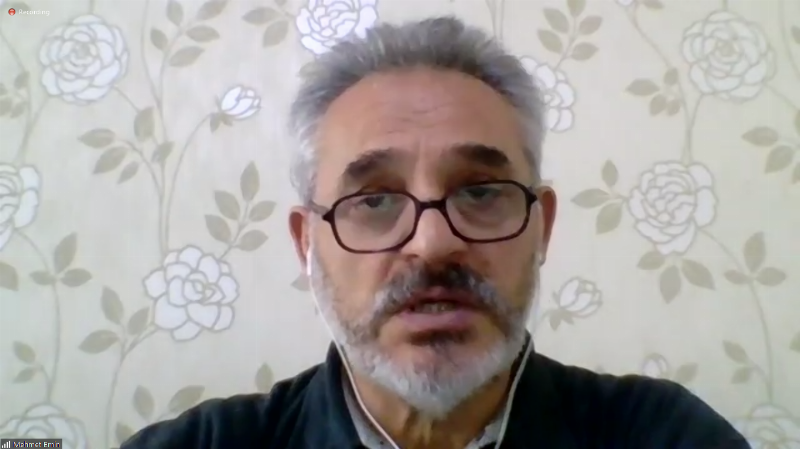
TIHEK Member Genç: "The right to life of people in Khojaly was taken away"
Mehmet Emin Genç, a Board Member of the Human Rights and Equality Institution of Turkey (TIHEK), emphasized that the atrocity in Khojaly was a genocide. Beginning his speech by commemorating those who lost their lives in the First Karabakh War, Genç stated: "From a human rights perspective, the right to life of people in Khojaly was taken away. Torture and inhumane degrading treatments were inflicted, and human dignity was trampled upon through interventions on people's bodies. Human rights are upheld by respecting a person's life, religion, and all human attributes. In terms of human rights violations, the right to property was violated. No one has the right to do this. People's right to form a family was violated, many were taken captive, tortured for years, their right to education was violated, many lost their lives, and many became refugees. This is a genocide. Many countries recognize this situation as genocide. Human Rights Watch recognizes the massacre in Khojaly as genocide. We have experienced many incidents involving Armenians, both in the Karabakh region in Khojaly and in other geographies. Armenians, once known as 'millet-i sadıka,' meaning the most loyal nation to the Ottoman Empire, held high positions such as civil servants in the Ottoman Empire, but with the weakening of the state, they subjected this nation to many persecutions. The reason for this genocide is that people are Turkish and Muslim. We must continue to tell humanity about this and never let it be forgotten."
Üsküdar Üniversitesi Human Rights Club President Elmazovska: "The genocide in Khojaly also happened in Srebrenica"
The last speaker, Reyhan Elmazovska, President of the Üsküdar Üniversitesi Human Rights Club, stated from the perspective of a student from the Balkans that Khojaly was one of the greatest massacres of the 21st century. Elmazovska said: "The foundations of the Khojaly massacres can be seen in history. Russia supported the strategy of increasing the Armenian population in the region. The genocide committed in Khojaly also took place in Kosovo and Srebrenica. The names of the perpetrators of oppression changed, but those who suffered oppression did not. Turkish and Muslim communities have been subjected to genocide and massacres all over the world."
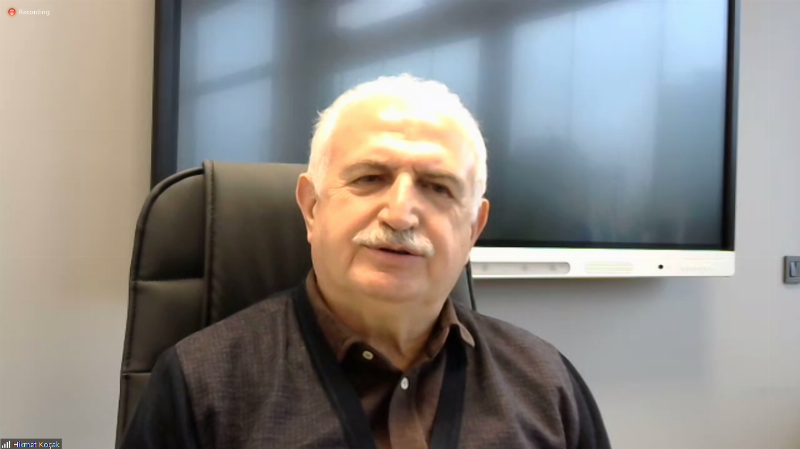
Among the participants, Üsküdar Üniversitesi Vice Rector Prof. Dr. Hikmet Koçak made an assessment regarding the Khojaly atrocity. Koçak, stating that he could not forget the piles of bones found by the river during his visit to the city of Guba, Azerbaijan, said that a great genocide occurred in Khojaly.
Assoc. Prof. Dr. Aygün Halilkızı, one of the witnesses of the war, narrated what happened in Azerbaijan. Finally, the event concluded after the speeches of Dr. Lecturer Zülfikar Özkan from the Üsküdar Üniversitesi Department of Sociology.
Share
Update Date: February 28, 2026
Creation Date: February 25, 2022
Request a Call
Other News
- The book that read today's digital threats in 2014: Being a Conscious Family
- Experts warn: 'Instead of memorizing letters, teach pencil grip, scissor use, and coloring'
- School fear and school love both start in the family!
- Family is not merely transforming, it is being battered under a serious assault
- Artificial intelligence opens the door to early diagnosis in autism!