

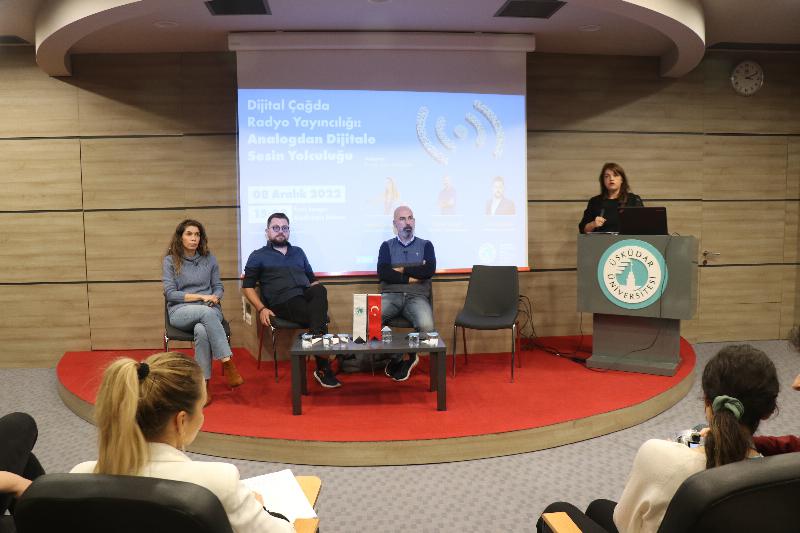
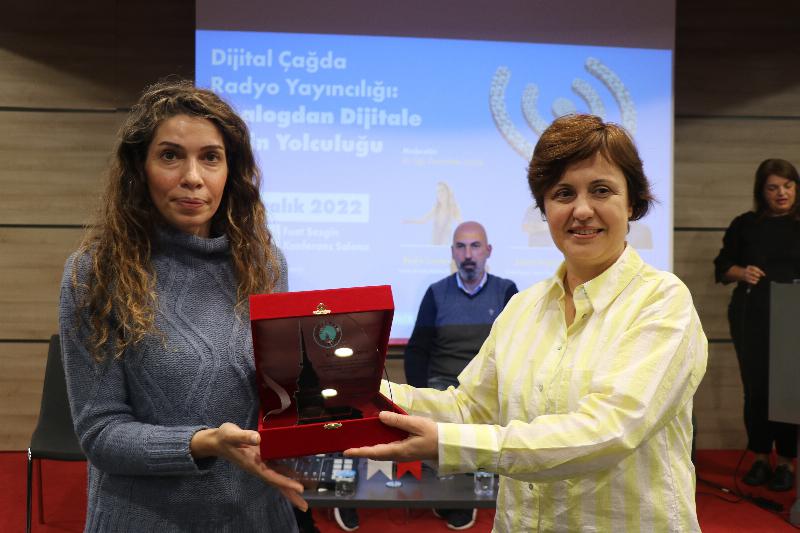
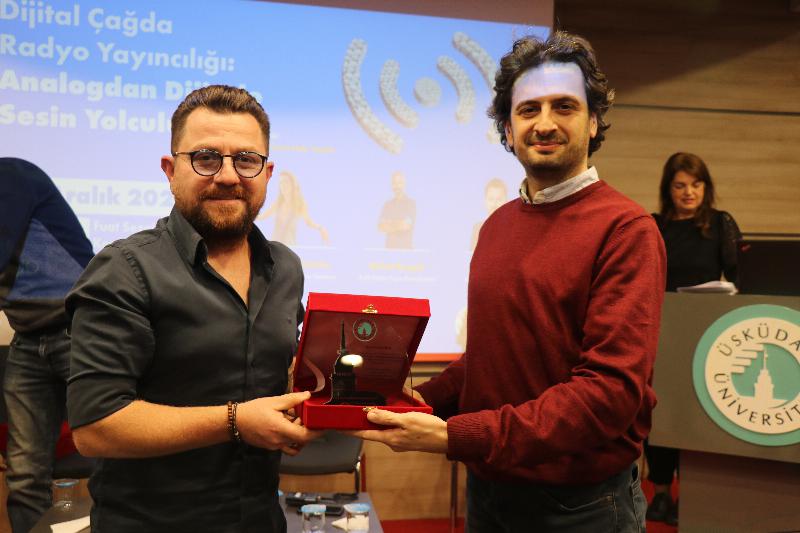
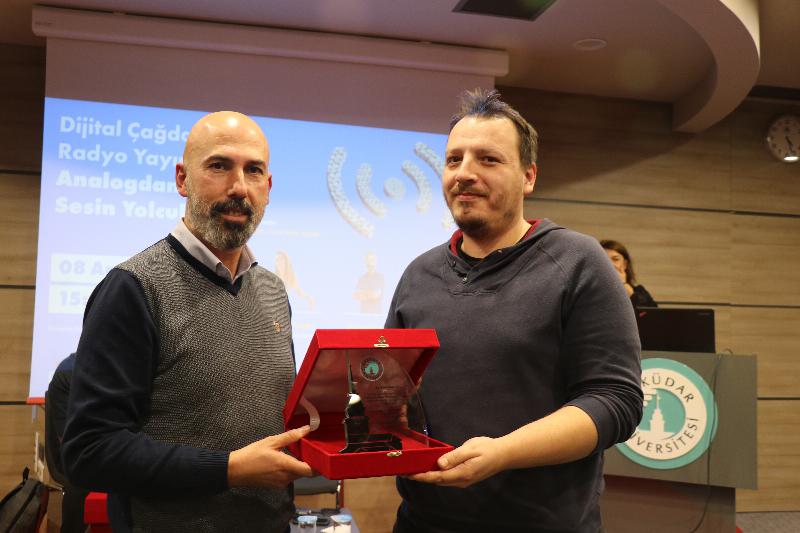
A panel titled “Radio Broadcasting in the Digital Age: The Journey of Sound from Analog to Digital” was held by the Üsküdar Üniversitesi Faculty of Communication, Radio, Television and Cinema Department. The event, moderated by Dr. Lecturer Hale Yaylalı from the Faculty of Communication, Radio, Television and Cinema Department, was attended by Kafa Radyo Broadcast Coordinator Bülent Baygül, Writer and Kafa Radyo Program Producer Bedia Ceylan Güzelce, and Kafa Radyo Technical Manager Murat Seymen as panelists.
Content
The Journey of Sound from Analog to Digital in the Digital Age was Discussed…
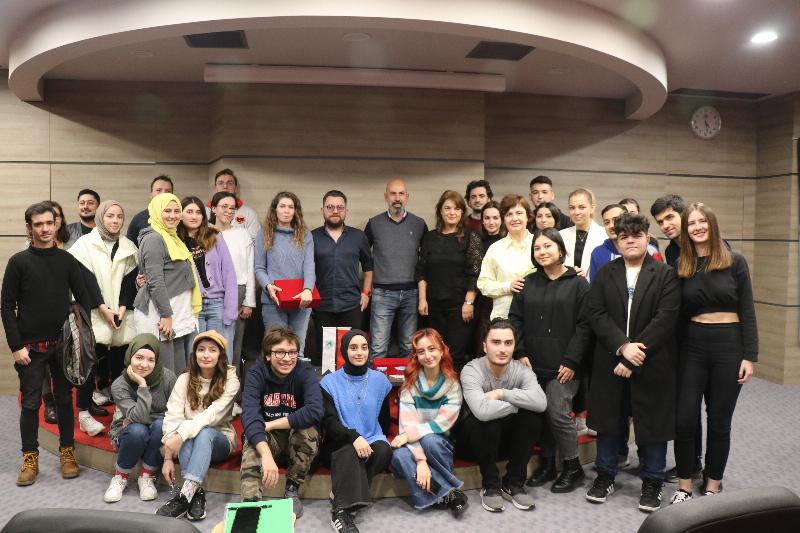
The program, held at Üsküdar Üniversitesi South Campus Fuat Sezgin Conference Hall under the coordination of Dr. Lecturer Hale Yaylalı from the Faculty of Communication, Radio, Television and Cinema, was attended by Dean of the Faculty of Communication Prof. Dr. Nazife Güngör, Associate Dean of the Faculty of Communication Assoc. Prof. Dr. Can Diker, Head of the Faculty of Communication, Radio, Television and Cinema Department Assoc. Prof. Dr. Esennur Sirer, Head of the Faculty of Communication, New Media and Communication Department Assoc. Prof. Dr. Yıldız Derya Birincioğlu Vural, Faculty member of the Faculty of Communication, Journalism Department Assoc. Prof. Dr. Gül Esra Atalay, Dr. Lecturer Denizcan Kabaş from the Faculty of Communication, Radio, Television and Cinema Department, and Research Assistant Yezdan Çelebi from the Faculty of Communication, Radio, Television and Cinema Department.
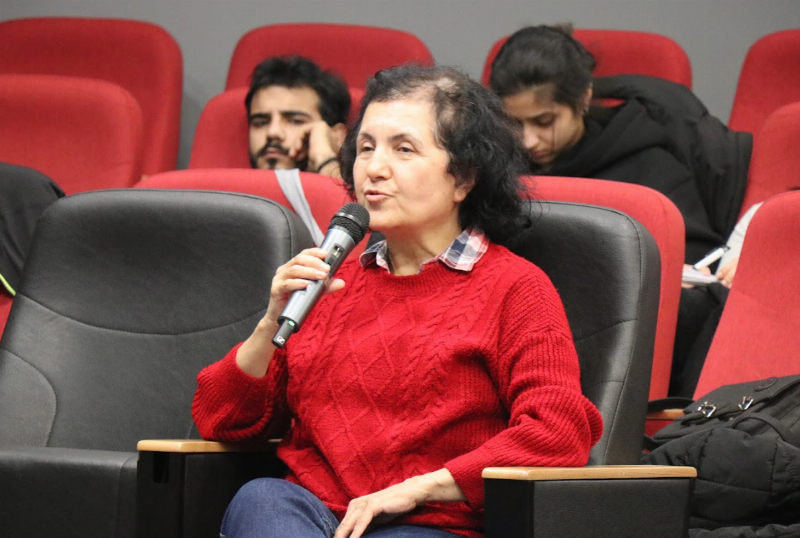
Prof. Dr. Nazife Güngör: 'Your sharing of experience is a great honor for us'
The opening speech of the event was delivered by Prof. Dr. Nazife Güngör, Dean of Üsküdar Üniversitesi Faculty of Communication. Güngör stated: 'We have very valuable guests here. We are truly very happy. Last year, you were also our guests, and you honored us greatly. We have much to learn from you. Your sharing of experience is an honor for us. Personally, I follow Kafa Radyo with great admiration. It will be wonderful for them to share experiences with you. Indeed, especially our radio and television department students, you too will be in this sector when you graduate. It will be very enjoyable for you to meet them now, share their experiences, and breathe the same air as them. So, friends, make the most of these moments, enjoy them. This is already the most enjoyable aspect of studying communication. Our elder brothers and sisters come and share their knowledge with us. So, after their speeches, ask them questions, press them. Show yourselves so they can discover you and, of course, include you in their ranks in the future. For this, you should also try to 'get Kafa Radyo into your head'. I thank them very much once again.'
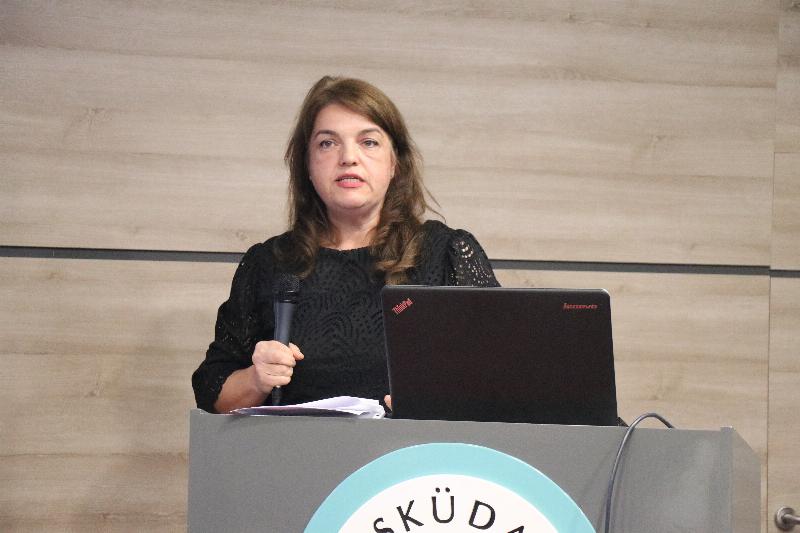
Dr. Lecturer Hale Yaylalı: 'Radio appeals entirely to humanity's instinct for speech'
The panel, which saw significant participation, was moderated by Dr. Lecturer Hale Yaylalı from Üsküdar Üniversitesi Faculty of Communication, Radio, Television and Cinema. Yaylalı, who first provided information about broadcasting, stated: 'Today we will be discussing broadcasting a bit more here. Although radio and television broadcasting students are in the majority here, we also have students from different departments. Radio is very important when we look at it as a tool. In fact, it has the power to carry messages with sound frequencies and, compared to mass communication tools like newspapers and cinema before it, it has the power to deliver messages more instantly, more quickly, and live. At the same time, it has the power to be just as effective on its audience. Because it establishes verbal communication and appeals entirely to humanity's instinct for speech. So, when we look at how the first radio broadcasts were made in Turkey, radio broadcasts in our country, like in the rest of the world, actually began with amateurs in the initial trials. However, after these experimental broadcasts, we see that the official entry of radio, or wireless telephone as it was then known, into Turkey began with the telegraph. This is where the Republican perspective comes into play. Because the Republican cadres have been aware of communication since the years of the War of Independence, that is, they are aware of its strategic importance along with the telegraph. Therefore, these cadres had a great influence on the development of radio as a tool.'
Bedia Ceylan Güzelce: 'Every generation is silent and lost until it finds its own voice'
Writer and Kafa Radyo Program Producer Bedia Ceylan Güzelce spoke about how one cannot speak of expressing oneself powerfully in a world where reading is neglected. Güzelce stated: 'I think you should find your own voice. I cannot know your friends as well as you do. Every generation is silent and lost until it finds its own voice. One of the most common things said about my generation was that they were a lost generation, they had no voice. They were called apolitical, but in Turkey, millions of people gathered in over fifty provinces against internet bans and made their voices heard. I am not telling you to 'go out into the streets' about any issue, but you need to be able to capture the voice of your own generation. After realizing your own sensitivities and producing content related to them, whether you publish it on a podcast or on YouTube, what's important here is what you say. What you put into it. Studying Radio, Television, and Cinema gives you a wonderful technical and historical background. It will provide you with equipment. Like a primer in makeup, we need to take this as a base and decide what color to put on top. For this, as always, follow the world extensively and see what people have done. If you definitely want to express yourself quickly and fluently, you need to read a lot. We cannot speak of expressing oneself powerfully in a world where reading is neglected.'
Murat Seymen: 'It was very primitive compared to this era, but a miraculous technology for that era'
Kafa Radyo Technical Manager Murat Seymen provided information about the advantages and disadvantages between analog studios and digital broadcasting. Seymen stated: 'When I first started in private radio, there were cassettes in the local radio station in Gölcük. Before cassettes, there were reel-to-reel tapes. Working with cassettes is very difficult. We were trying to broadcast without automation, without software, without a computer. We had two decks; those players that played cassettes, they were double-sided. Next to us was a box, behind us a shelf, and as many cassettes as possible. Cassettes would get tangled, break. You had to rewind them because a cassette contained maybe five or six songs from that artist's album, and with the other side, about ten songs in total. You would find the right song with a kind of intuition, with that experience. It was done by taking the cassette out, rewinding it a bit with a finger, and putting it back. There were even times when we inserted commercial breaks using those cassettes. Now, when we think about it, it seems very primitive compared to this era, but it was a miraculous technology for that era. Afterward, CDs started to appear on the market. Artists began releasing their albums on CD. Playing with CDs was easier. At least, while finding a song inside a cassette was difficult, with CDs, you could find the first track, second track with a single button. Later, mini-discs and dub players adapted to the radio sector, especially professional broadcasting. They started to be used. When I first saw them, we said, 'This is the last word in technology, there can be nothing after this.' But it turns out there was. There was a lot more. Now, with computers, tiny laptops, even a simple mobile phone, we can do many things. Therefore, people can easily make their own broadcasts from anywhere with internet access and a small computer.'
Share
Update Date: February 26, 2026
Creation Date: December 09, 2022
Request a Call
Other News
- The book that read today's digital threats in 2014: Being a Conscious Family
- Experts warn: 'Instead of memorizing letters, teach pencil grip, scissor use, and coloring'
- School fear and school love both start in the family!
- Family is not merely transforming, it is being battered under a serious assault
- Artificial intelligence opens the door to early diagnosis in autism!