

Experts emphasizing the importance of addressing issues related to asylum seekers and refugees as a supra-political matter, underline the necessity of adopting an approach based on universal human rights. Prof. Dr. Ebulfez Süleymanlı noted that world states should make efforts to improve the situation in countries that are sources of migration by engaging in global cooperation on global inequalities, poverty, and conflicts, and points out that the conditions causing migration must be eliminated for a safe return.
Content
Is return possible for asylum seekers and refugees?
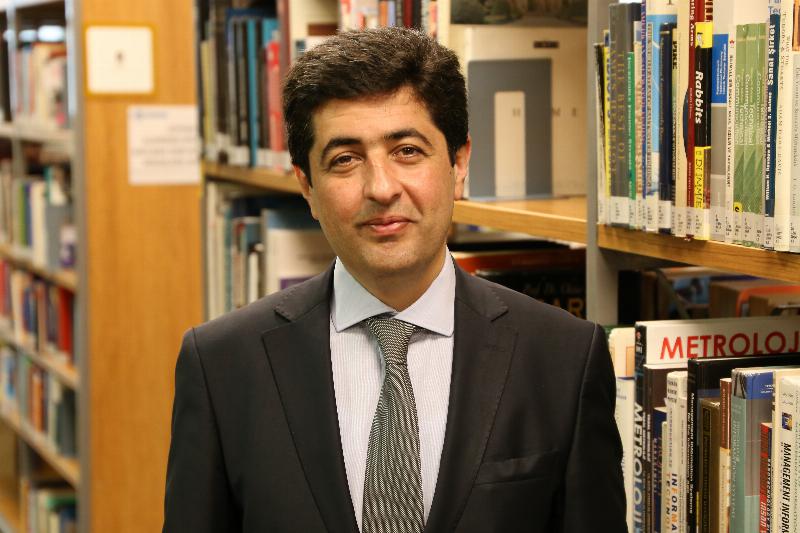
Asylum seeker and refugee problem must be solved with global cooperation
Prof. Dr. Ebulfez Süleymanlı, Head of the Sociology Department at Üsküdar Üniversitesi, evaluated the measures that need to be taken for the integration of asylum seekers and refugees into society.
Turkey is the country hosting the largest number of refugees
Noting that the first group of Syrians arrived in Turkey on April 29, 2011, Prof. Dr. Ebulfez Süleymanlı said, “Since this date, the number of Syrian refugees in Turkey has steadily increased. Within the framework of the open-door policy, no Syrian entering Turkey was sent back, and they were granted temporary protection status. While many European countries closed their borders with wire fences and refused to accept refugees out of concern that their security would be jeopardized, Turkey accepted 3.5 million refugees without any discrimination. This number is further increasing with those coming from other countries such as Afghanistan and Pakistan. In this context, Turkey suddenly rose to the position of the country hosting the largest refugee population in the world.”
A new phase has been entered…
Prof. Dr. Süleymanlı stated that Turkey, both as a state and as a society, has tried to provide all kinds of assistance to the refugees since the beginning of the process, and said, “With this humanitarian policy it has implemented, Turkey has set an example to the whole world. However, as the refugees' stay in Turkey lengthened, the situation concerning refugees entered a new phase, and over time, multi-dimensional issues and problems such as economic, social, cultural, and security concerns began to emerge.”
Temporary policies were produced
Noting that it was not foreseen that the civil war in Syria would last so long and that refugees would remain for such an extended period, Prof. Dr. Ebulfez Süleymanlı said, “For this reason, policies were primarily developed based on temporariness for a long time. Efforts were mostly made to overcome problems through palliative solutions. Turkey, hosting millions of refugees, implemented various practices in response to this migration crisis, which caught it unprepared, and its initiatives in migration management continue today. Similarly, Syrians did not make much effort to integrate into society, thinking, “we will return anyway.””
Societal approaches and attitudes are also effective
Prof. Dr. Ebulfez Süleymanlı stated that another known scientific fact in social adaptation processes related to migration is that the approach and attitudes of the local community play a very important role in this process, and added:
“The local community's approach to social adaptation is largely complicated by concerns related to changes in the quantity and quality of services directed towards them by the countries themselves. Furthermore, common misconceptions and the local population's belief that they will lose their own rights due to the rights offered to refugees negatively affect the social adaptation process. For instance, the most significant impact Syrians have created in the labor market arises from their illegal employment as cheap labor. Syrians' willingness to work for lower wages leads to unemployment for many in various places, which further increases exclusionary and marginalizing discourse against Syrians.”
Accurate information needs to be provided
Prof. Dr. Ebulfez Süleymanlı also stated that asylum seekers becoming a topic of discussion on social media with various examples, especially through social media, further triggers exclusionary attitudes towards refugees. Prof. Dr. Ebulfez Süleymanlı said, “Therefore, accurate information that will increase social knowledge and awareness is gaining importance. Moreover, it is essential for individuals with the potential to guide society to refrain from rhetoric that incites hatred and exclusion towards refugees.”
Return has many dimensions
Stating that return is the most preferred solution method by states for refugee movements, Prof. Dr. Ebulfez Süleymanlı noted that return has many dimensions and said:
“The efforts of states and international actors to send asylum seekers back to specific safe zones in their home countries are seen as the most permanent and effective solution. However, when saying this, we must not overlook the fact that the issue of return is a very serious one. The issue of repatriation first has a domestic law dimension. That is, what do the laws primarily say? There is an international law dimension, meaning Turkey's external obligations. As stated in international conventions to which Turkey is also a party, return should actually take place in conditions that are completely safe, free from war, and where individuals will not be subjected to various punishments or violence. The political dimension is inevitable. That is, the economic dimension of the matter, the social dimension, especially the dimension of intensity in basic services in certain regions. There is a foreign policy dimension. There is a dimension related to the country's image in international public opinion. For example, Turkey has always emerged with the image of a humanitarian aid provider. Some countries stood out with racism, the rise of far-right tendencies, and even cruelty, and they were not bothered by this.”
A safe return environment must be ensured
Prof. Dr. Ebulfez Süleymanlı stated that the extent to which return is possible depends on the elimination of the conditions causing migration and largely on the provision of a safe return environment, adding, “Because the most important expectation of refugees upon return is to live in security and peace. Turkey is making intense efforts to create a safe zone for this purpose.”
Their access to needed support must be ensured
Prof. Dr. Ebulfez Süleymanlı stated that sustainability is also important in return, saying, “Especially for sustainability, it is crucial to ensure that returning refugees have access to the support they need in physical, socioeconomic, and political dimensions. Ensuring not only physical but also economic security and access to rights and services for individuals in the country of origin is important for the sustainability of return.”
Global cooperation should be established
Prof. Dr. Ebulfez Süleymanlı noted that world states should make efforts to improve the situation in countries that are sources of migration by engaging in global cooperation on global inequalities, poverty, and conflicts, and said, “In a structure where income inequality is so sharply intensified, it is not possible to completely stop migration. Furthermore, policies must be conducted transparently and openly. This is essential both for informing the public in Turkey and for refugees to clearly see the situation before them. It is necessary to share what policies are being implemented regarding education, health, and fundamental rights, and what rights and duties exist.”
Should be handled as a supra-political issue
Prof. Dr. Ebulfez Süleymanlı concluded his remarks by saying: “Generally, addressing issues related to refugees as a supra-political matter and adopting an approach based on universal human rights is of great importance. In this context, a civil understanding that will directly address society, make its voice heard by the public, and more actively use existing communication channels sensitive to this issue needs to be established.”
Share
Update Date: March 01, 2026
Creation Date: August 26, 2022
Request a Call
Other News
- Experts warn: 'Instead of memorizing letters, teach pencil grip, scissor use, and coloring'
- School fear and school love both start in the family!
- Family is not merely transforming, it is being battered under a serious assault
- Artificial intelligence opens the door to early diagnosis in autism!
- Artificial intelligence doesn't end engineering, it transforms it!