

Emphasizing the importance of normalization after traumatic events, especially natural disasters like earthquakes, Psychiatrist Prof. Dr. Nevzat Tarhan highlights the significance of individuals gaining problem-solving skills. Noting that one must first define the problem and then determine possible solutions, Tarhan said, “After that, it is necessary to make a decision and proceed on that solution path. We should not repeatedly return to the beginning… Instead of saying 'I'm ruined, I'm dead, I'm finished,' we need to apply this. Pains, difficulties, and troubles are part of growth. Growth emerges at the end of these. Therefore, the worst enemy here is being pessimistic.”
Content
Is psychological normalization possible after an earthquake?
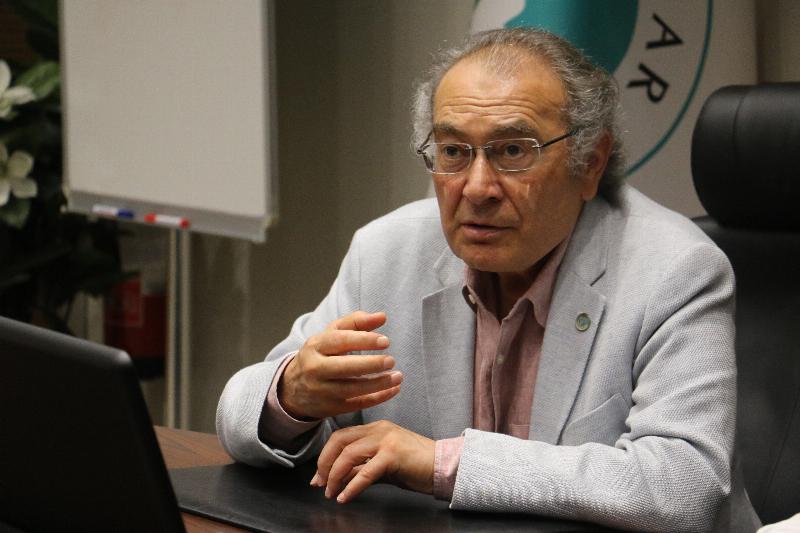
Üsküdar University Founding Rector, Psychiatrist Prof. Dr. Nevzat Tarhan, made evaluations regarding the importance of normalization after an earthquake. Noting that the most important point after natural disasters like earthquakes is meeting basic needs, Prof. Dr. Nevzat Tarhan said, “Firstly, basic needs such as food, drink, and shelter must be met. After basic needs are met, post-traumatic recovery and return to normalcy become easier. Therefore, if basic needs have been met, it is necessary to talk about post-traumatic recovery and returning to normalcy.”
Disaster management planning should be done
Pointing to the importance of disaster management planning regarding what needs to be done before and after a disaster, Prof. Dr. Nevzat Tarhan said, “In the literature related to disasters, there are plans for disaster management, outlining what needs to be done before, during, and after a disaster. It is important for the relevant institutions to make these plans and then implement them stage by stage. According to this plan, there should be a disaster response plan, a recovery plan in the second phase after the disaster, and a reconstruction plan in the third phase.”
We saw that lessons must be learned
Tarhan also emphasized that necessary lessons must be learned from the outcome of the Kahramanmaraş-centered earthquakes that plunged the entire country into mourning. He said, “We have seen all these, and we need to learn certain lessons. A standard, a policy, needs to be established before an earthquake. Deficiencies related to this must be completed. If there is confidence that deficiencies will be corrected, it becomes easier for people to recover after a disaster. After this catastrophe, we need to review our short-term, sudden decision-making, the feeling that 'nothing will happen to us,' and this culture of ours.”
Noting that tasks fall not only to administrators but also to society, especially for the expected İstanbul earthquake, Tarhan said, “Firstly, institutions making a plan and announcing it creates a fundamental sense of trust in people. For this plan to be implemented, society needs to accept it. Society also needs to provide feedback on this matter. Let's not only expect it from the administrators; we all need to be sensitive about this.”
Everyone's coping method differs
Stating that everyone has a coping method after disasters, traumatic and shocking experiences, according to their personality structure, cultural values, and local culture, Prof. Dr. Nevzat Tarhan said, “In Western societies, especially in the USA, among veterans returning from war trauma, the most common post-traumatic cases become alcoholics. That is, alcohol addiction is observed to develop in one-third of these soldiers, meaning alcohol use is used as a coping mechanism. This is not as widespread in our country. Another coping method is avoidance behavior. That is, never talking about earthquake-related issues, never getting into these topics, which is a kind of ignoring. This is also not realistic. Avoiding the realities of life when it comes up, when it comes to mind, or when a child asks, is also not very healthy.”
The third coping method is a mental refuge…
Stating that the third coping method is third-generation psychotherapies, Tarhan said that this is a religious coping method that is also very common in our society. Tarhan noted that in situations beyond human control and power, such as natural disasters, individuals take refuge in beliefs and higher values. He said, “Third-generation psychotherapies have 12 steps. One of these is seeking refuge in a higher power, a higher will, in situations that one cannot control or change. That is, having a mental refuge… One has experienced an event. This is not just a disaster like an earthquake; in unexpected events like traffic accidents, a tremendous sense of anger and revenge also arises. That feeling of hatred, anger, revenge is not something to be carried for a lifetime. The person needs to accept and manage it. They need to accept it in the manner of 'I had to experience this, so it was meant to come my way in my life path' and focus on how to manage it. That is, the person needs to prepare for the worst-case scenario and expect the best-case scenario. Mindfulness suggests this: Take precautions, prepare for the worst-case scenario, but expect the best-case scenario. Have a mental plan, a scenario, for what you will do if the same thing happens again. Then expect the good, don't expect the bad scenario. Take precautions, prepare for winter, expect summer, in that style… These are very beautiful teachings of Anatolian wisdom. In Mindfulness, individuals are taught techniques related to this.”
Problem-solving skills must be acquired…
Emphasizing the importance of individuals gaining problem-solving skills, Prof. Dr. Nevzat Tarhan said, “First, defining the problem is important; after defining it, secondly, determining possible solutions. After that, it is necessary to make a decision and proceed on that solution path. We should not repeatedly return to the beginning. What happens when a person does this? They gain problem-solving skills. This is something that can truly be applied in any life event, trauma, shock experience, or when receiving a low grade in an exam… Instead of saying 'I'm ruined, I'm dead, I'm finished'… Pains, difficulties, and troubles are already part of growth. Growth emerges at the end of these. Therefore, the worst enemy here is being pessimistic.”
It is necessary to focus on the future
Stating that one should not be pessimistic in situations like trauma and that lessons must be learned, Prof. Dr. Nevzat Tarhan said, “In such events, instead of asking 'Why?', one needs to think and focus on 'What should I do next? What should I do to prevent the same thing from happening again? What path should I take with the survivors and my loved ones?' The person needs to take precautions against the bad scenario, write a good scenario, proceed in that direction, and set goals for themselves. Otherwise, 50 minutes out of 60 minutes will be spent thinking about this. No nervous system and no spirit can endure this for a long time.”
We will overcome this difficult period too
Noting that the post-earthquake period is definitely one of the most difficult periods in life, Prof. Dr. Nevzat Tarhan said, “This is a difficult period of our lives. Just as there are autumn, winter, spring, and summer in human life, there are such periods in life. We will overcome this difficult period somehow. Just as we prepare when entering winter and overcome winter comfortably, we will overcome these periods in the same way, but preparation is needed. If you do not prepare and take precautions when winter comes, you will face difficulties, and it is the same in life. There are such difficult periods in this life. It is necessary to overcome these periods somehow.”
Social support is very important during the recovery period
Prof. Dr. Nevzat Tarhan added that if the feelings of hope and trust are kept high in children, recovery will be easy, and that adults also have a post-traumatic recovery period, and social support is very important during this recovery period.
Share
Update Date: March 01, 2026
Creation Date: March 06, 2023
Request a Call
Other News
- Prof. Nevzat Tarhan: “Every segment of society should be able to say, ‘This constitution is my constitution!’”
- OHS Releases Guide for Safe Operation of Industrial Robots
- Prof. Nevzat Tarhan: “Social media is digital fast food”
- 2026-2027 Academic Year orientations completed
- Asst. Prof. İdil Arasan Doğan explained the importance of early intervention in living with dementia