

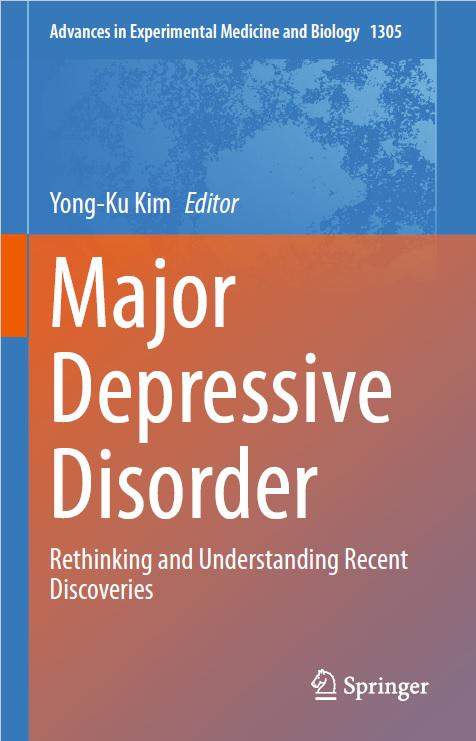
Üsküdar Üniversitesi Department of Psychology Assist. Prof. Dr. Alper Evrensel was among the authors of the reference book titled “Major Depressive Disorder: Rethinking and Understanding Recent Discoveries”. Evrensel authored a chapter in the book titled “Promising Treatments for Depression.”
Content
Is a Vaccine Possible in Depression Treatment?

Published by Springer Nature, an international publishing house, the reference book titled “Major Depressive Disorder: Rethinking and Understanding Recent Discoveries” brought together many scientists from around the world.
Alper Evrensel, who was part of a large team of authors, authored a chapter in the book titled “Vaccination and Immunotherapy for Major Depression (Promising Treatments for Depression).”
In light of recent technological and scientific developments, Evrensel’s article, featured in the work that addresses the causes and treatment possibilities of depression, opens the discussion on whether depression can be treated via vaccination.
“Antidepressant Vaccine Could Be a Hope”
Emphasizing that we are going through a time when the vaccine issue is on the agenda, Evrensel said the following regarding the topic they addressed in the book:
“Classically, vaccines have always been developed against a microbial infection. The possibility of vaccine treatment for a neuropsychiatric disease like depression might initially seem like 'science fiction' or 'pseudoscience'. However, its scientific basis was laid many years ago. It has been approximately 30 years since the idea that depression could be an immune system-related (neuroinflammatory) disease emerged. In light of research conducted in this direction, the question 'Can an antidepressant vaccine be developed?' first came up in 2012. Currently, there are some microorganisms associated with depression. The source of these bacteria is largely the gut microbiota. However, studies in this area are still in their infancy. Once the effectiveness of these bacteria is clearly demonstrated, an 'antidepressant vaccine' could offer hope, especially for cases of recurrent depression and those that do not adequately respond to standard antidepressant medications and treatment methods. We discussed the rationale behind this option in this article,” he said.
Share
Update Date: February 27, 2026
Creation Date: April 16, 2021
Request a Call
Other News
- The book that read today's digital threats in 2014: Being a Conscious Family
- Experts warn: 'Instead of memorizing letters, teach pencil grip, scissor use, and coloring'
- School fear and school love both start in the family!
- Family is not merely transforming, it is being battered under a serious assault
- Artificial intelligence opens the door to early diagnosis in autism!