

Üsküdar University is hosting an important symposium organized by the Asia-Africa Universities Alliance and the Istanbul Science and Culture Foundation, within the framework of the International Day for the Elimination of Violence against Women on November 25. The “International Symposium on Women and Global Issues, Solutions and Recommendations” is being held on November 25 – 26, 2022. Scientists from many countries are attending the symposium, which features Princess Nawal Sabah of the Kuwaiti Emirate as guest of honor. Speaking at the opening of the symposium, Üsküdar University Founding Rector and Head of the Board of Trustees, Psychiatrist Prof. Dr. Nevzat Tarhan, said, “We need education that elevates the resolution of male-female relationships through dialogue.” Tarhan emphasized that the West approaches male-female relationships competitively, adding that Islamic culture views male-female relationships as complementary.
Content
International Symposium on Women and Global Issues, Solutions and Recommendations Held at Üsküdar University
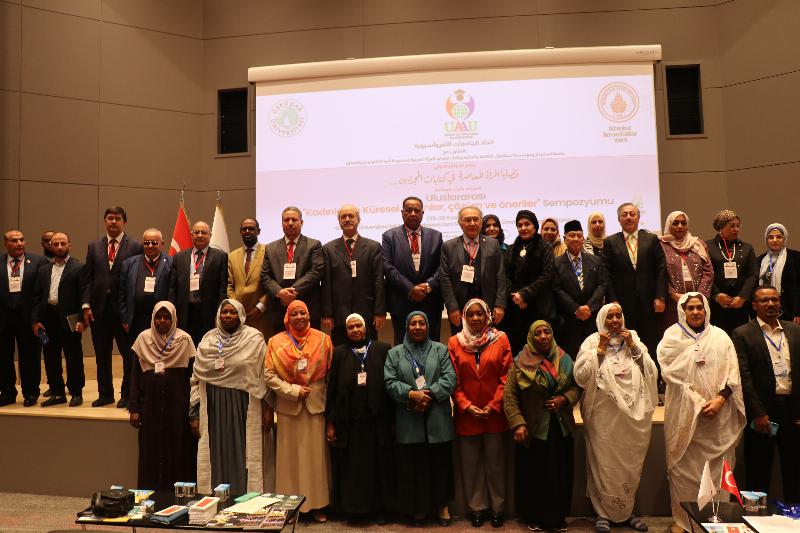
The International Symposium on Women and Global Issues, Solutions and Recommendations, organized by Üsküdar University, the Asia-Africa Universities Alliance, and the Istanbul Science and Culture Foundation, commenced at Üsküdar University NP Health Campus Avicenna Auditorium.
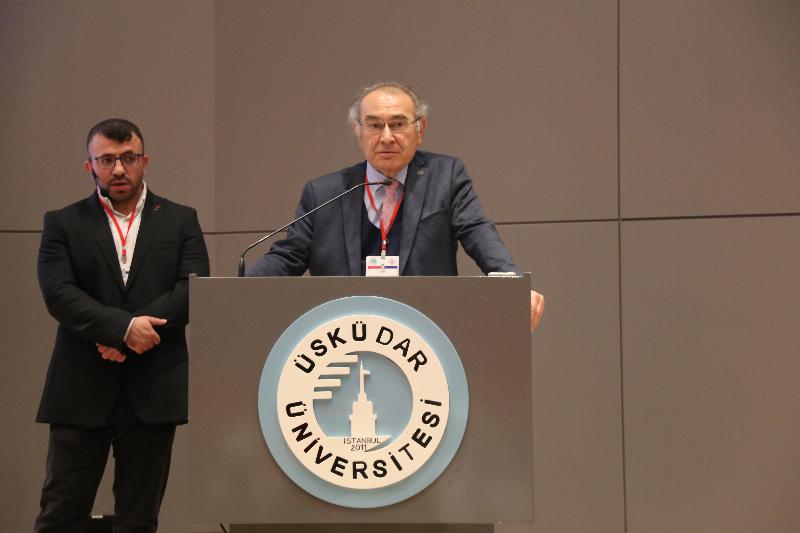
Prof. Dr. Nevzat Tarhan spoke at the opening of the symposium
Üsküdar University Founding Rector and Head of the Board of Trustees, Psychiatrist Prof. Dr. Nevzat Tarhan, in his opening speech, reminded that November 25 was declared by the UN as the International Day for the Elimination of Violence against Women, and touched upon female psychology, the differences in the working models of male and female brains, and the approaches of the West and the Islamic world to male-female relationships.
Prof. Dr. Nevzat Tarhan: “Male and female brains work differently”
Stating that in 2003, a woman served as an imam in a mosque in New York, and he considered this as a project on women in the Islamic world, Prof. Dr. Nevzat Tarhan said, “Following this, I wrote a book titled 'Female Psychology'. It is now in its 100th edition. In this book, I stated that women and men are equal in rights and opportunities, but not biologically and psychologically. The life of Prophet Muhammad (PBUH) was my reference here. Male and female brains work differently. Especially during problem-solving, the male brain retreats to a mental refuge. The female brain, on the other hand, wants to share and relax more under stress. If both are angry, a fight will break out.”
Prof. Dr. Nevzat Tarhan: “In Islamic culture, male-female culture is complementary”
Noting that the Western and Islamic worlds have different perspectives on male-female relationships, Prof. Dr. Nevzat Tarhan said, “The Western world says that male-female relationships are competitive. In our Islamic culture, male-female relationships are considered complementary.”
Prof. Dr. Nevzat Tarhan: “The spirit of this age brings the role of Aisha more to the forefront”
Giving examples from the life of Prophet Muhammad (PBUH) to illustrate this understanding in Islamic culture, Prof. Dr. Nevzat Tarhan said, “I would like to give three examples from the life of the Prophet (PBUH) in the Age of Bliss. The first is the example of Khadijah. The Prophet (PBUH)'s first wife, Khadijah, was 15 years older than him. She supported him. They had a deeply established male-female relationship. The second is the role of Fatimah. The daughter of our Prophet Muhammad (PBUH), married to Ali. She preferred to remain in the shadow of men. The third is Aisha. Aisha played the role of a woman engaged in knowledge, conversation, and giving conferences. All three are correct. However, our Mesopotamian culture, which is male-dominated, has preferred the role of Fatimah more. The spirit of this age brings the role of Aisha more to the forefront. But all three are correct.”
Prof. Dr. Nevzat Tarhan: “We need education that elevates the resolution of male-female relationships through dialogue”
Prof. Dr. Nevzat Tarhan said, “The era of our Prophet (PBUH) in the Age of Bliss is known as the period in history when women were granted the most rights. All rights, such as inheritance law, right to education, and acceptance of women's personality, were given during this period. When the French Revolution took place in France, there were discussions about whether women were human or not. That is, a thousand years later... We should not forget these. Especially the culture of violence, for example, Babylonian tablets mention teachers responsible for beatings. This is an ancient method. We need education that elevates the resolution of male-female relationships through dialogue.” Tarhan noted that the view that Turkish culture is generally male-dominated is widespread, adding, “But this is not the case. In 80% of society, what the woman says happens.”
Prof. Dr. Mehmet Zelka expressed his wish for a productive symposium
Üsküdar University Acting Rector Prof. Dr. Mehmet Zelka stated that the university, named after Üsküdar, one of Istanbul's most historically rooted districts both materially and spiritually, has goals befitting its name. Noting that the university has 24,500 students, of whom 4,500 are international students, Prof. Dr. Mehmet Zelka wished for the symposium to be productive in offering important ideas for solving problems.
The importance of cooperation was emphasized
Speaking at the opening ceremony of the symposium, Said Yüce, Chairman of the Board of Trustees of the Istanbul Science and Culture Foundation, stated that the world is struggling with major problems and that men and women living in accordance with their nature will help overcome these problems. Yüce added that the biggest danger is targeting the family, and precautions should be taken in this regard.
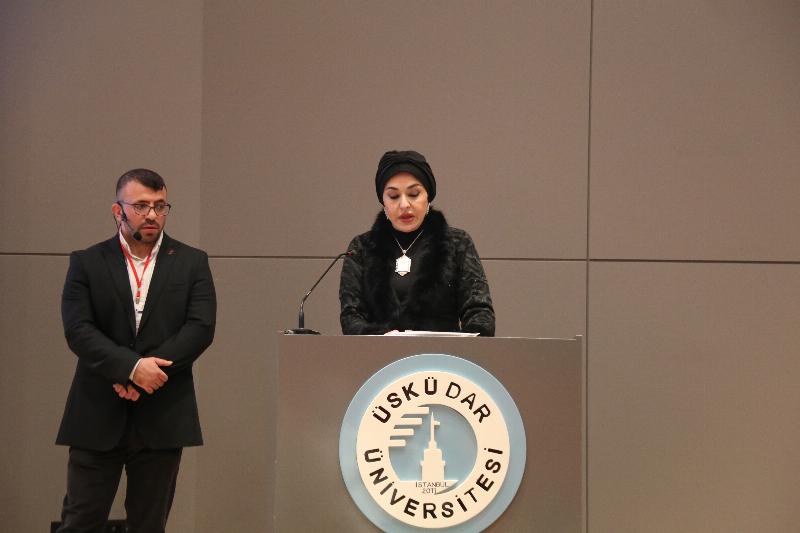
Princess Nawal Sabah of the Kuwaiti Emirate was the guest of honor
Prof. Dr. Emel Fetullah Zerkeşi, Vice President of the Asia-Africa Universities Alliance, stated that as an alliance, universities in Asia and Africa aim to work together to solve existing problems through important scientific collaborations. Princess Nawal Sabah of the Kuwaiti Emirate, who attended the symposium as a guest of honor, also spoke about the rights granted to women in Arab countries in recent years. Dr. Hala Adli Hussein, Secretary General of the Arab Women Leaders Union, Prof. Dr. Sahar Fouad, Symposium Paper Coordinator, Prof. Dr. Ibrahim Ahmed Abdulaziz Gandour, Rector of Razi University of Sudan, and Prof. Dr. Ridwan Haayresi, Deputy Prime Minister of Somalia, also spoke.
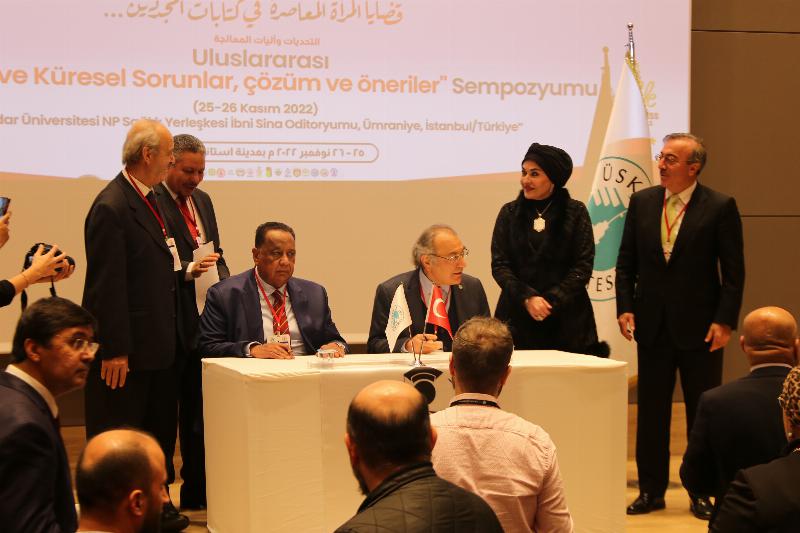
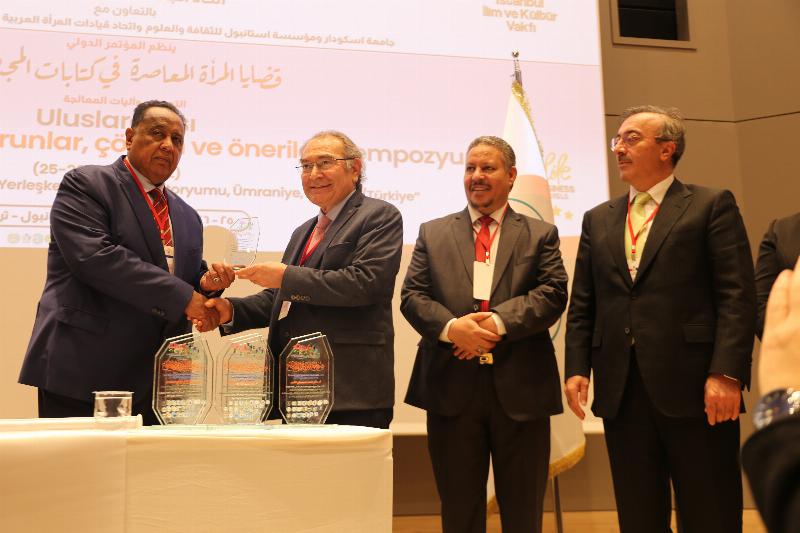
Cooperation protocols were signed
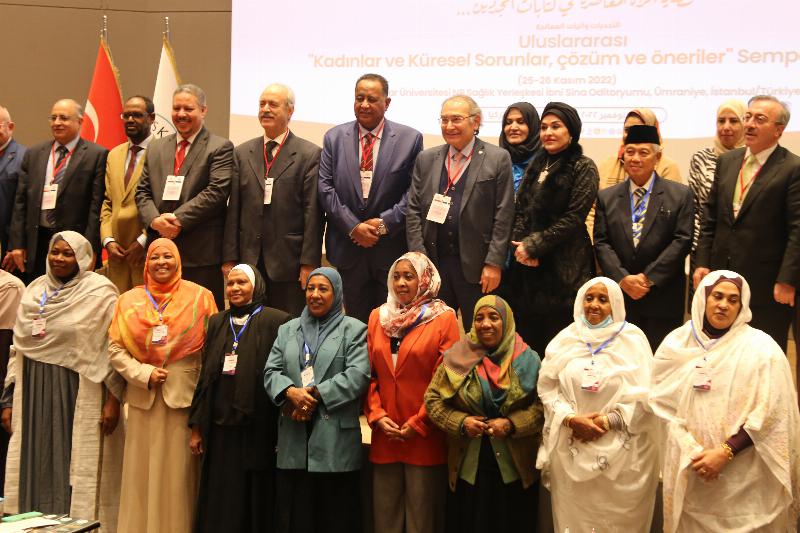
Following the opening speeches, Üsküdar University Founding Rector Prof. Dr. Nevzat Tarhan, together with Prof. Dr. Ibrahim Ahmed Abdulaziz Gandour, Rector of Razi University of Sudan, and Prof. Dr. Ridwan Haayresi, Deputy Prime Minister of Somalia, signed cooperation protocols. Participants of the symposium also took a commemorative photo together.
The program continues with scientific sessions.
Share
Request a Call
Other News
- The book that read today's digital threats in 2014: Being a Conscious Family
- Experts warn: 'Instead of memorizing letters, teach pencil grip, scissor use, and coloring'
- School fear and school love both start in the family!
- Family is not merely transforming, it is being battered under a serious assault
- Artificial intelligence opens the door to early diagnosis in autism!