

The 5th International Positive Psychology Congress, organized this year by Üsküdar Üniversitesi, is being held with the theme “Science of Goodness / What Arises from Goodness? & Post-Earthquake and Post-Traumatic Growth”. At the congress, which features the participation of world-renowned scientists, topics such as ‘Science of Goodness’, ‘What arises from goodness?’, ‘Meaning and Purpose of Life’, ‘Optimism and Hope’, ‘Psychological Needs and Motivation’, ‘Psychological Resilience’, ‘Post-Traumatic Growth’, and ‘Human Relationships and Social Support’ are being discussed. Üsküdar Üniversitesi Founding Rector Prof. Dr. Nevzat Tarhan stated that one of the parameters of post-traumatic growth is the ability to develop the virtue of valuing relationships. Tarhan said, “As people become self-centered, they become lonelier; as they become stronger, they become lonelier and do not value relationships. In events like earthquakes, people begin to see that loneliness is a harmful element for themselves.”
Content
International Positive Psychology Congress Held with the Theme of “Science of Goodness”
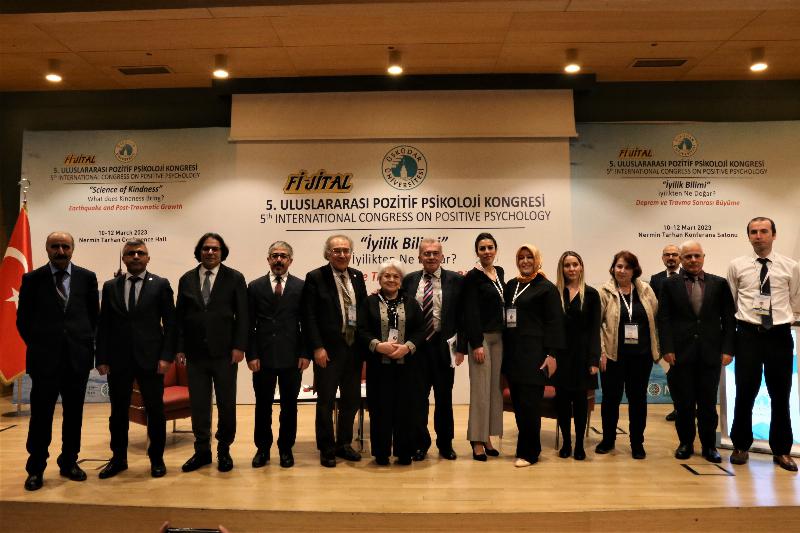
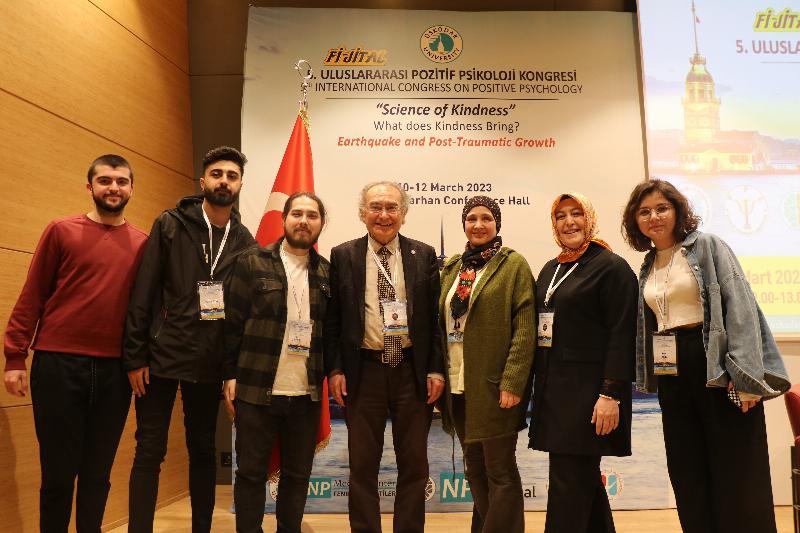
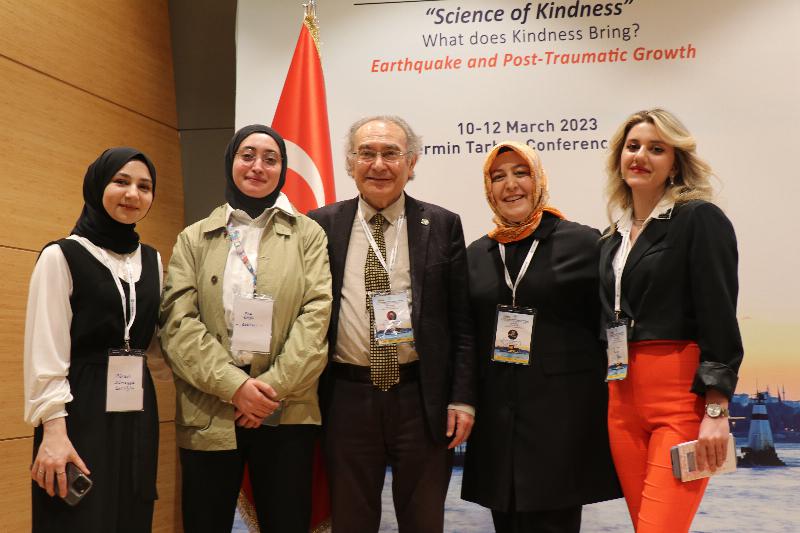
The 5th International Positive Psychology Congress, organized this year by Üsküdar Üniversitesi in partnership with NPİSTANBUL Hastanesi, NP Etiler & Feneryolu Tıp Merkezi, the Turkish Psychological Counseling and Guidance Association, and the Positive Psychology Institute, is hosting experts working in this field. The theme of this year's three-day congress has been determined as “Science of Goodness / What Arises from Goodness? & Post-Earthquake and Post-Traumatic Growth”.
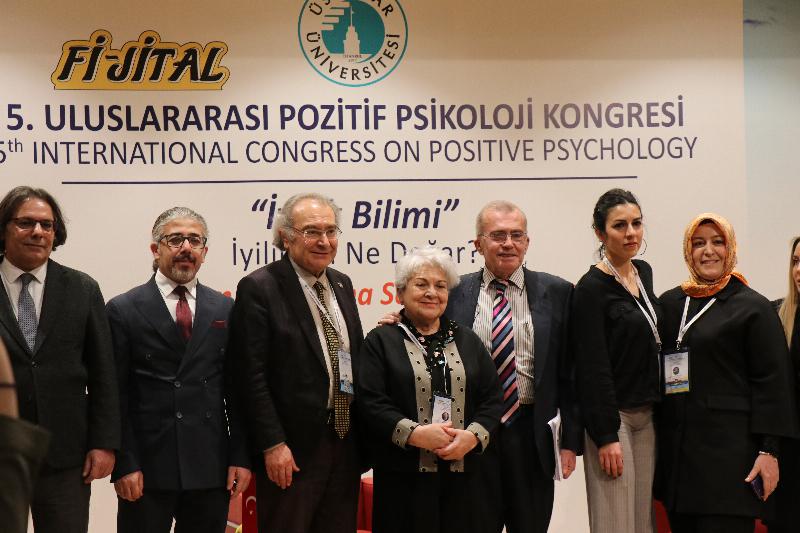
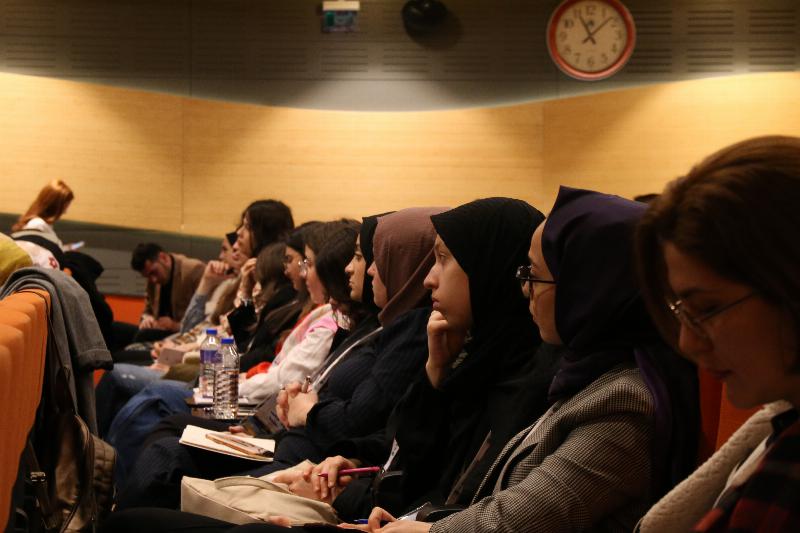
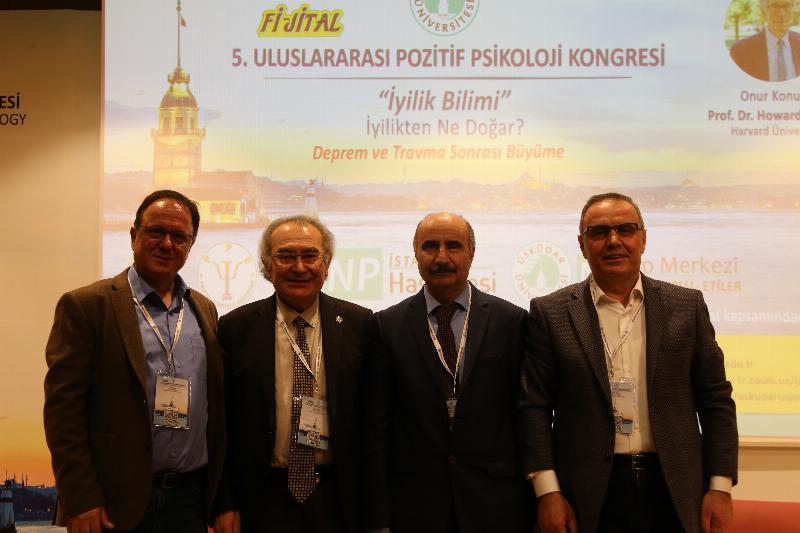
The congress, held in a 'phygital' format at the Nermin Tarhan Conference Hall, Üsküdar Üniversitesi Central Campus, began with opening speeches by Üsküdar Üniversitesi Founding Rector Prof. Dr. Nevzat Tarhan, who is also the Congress President, and Üsküdar Üniversitesi Rector's Advisor, Acting Dean of the Faculty of Humanities and Social Sciences, Prof. Dr. Deniz Ülke Arıboğan.
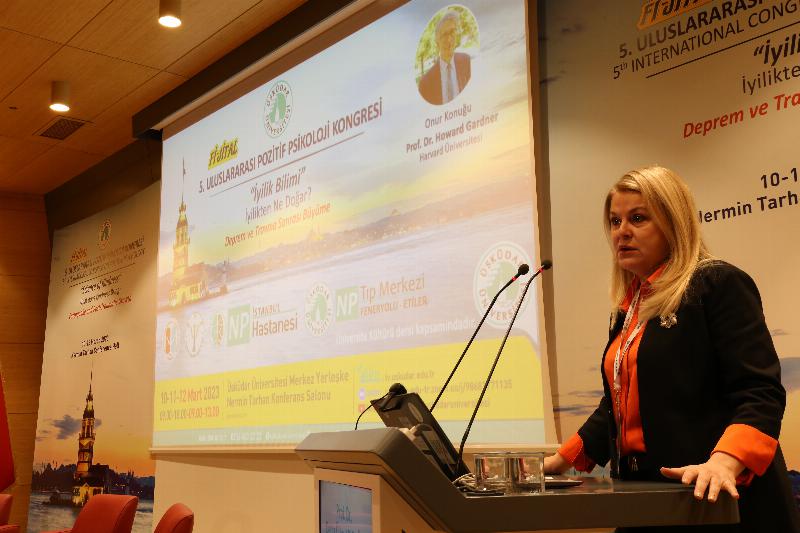
Prof. Dr. Deniz Ülke Arıboğan: “Experts Satisfy Their Egos in Their Statements”
Prof. Dr. Deniz Ülke Arıboğan stated that the Kahramanmaraş-centered earthquake, as scientifically revealed, is a disaster that occurs once every 500 years, activating multiple destructive tremors. She said, “The earthquake we experienced is defined as a disaster event affecting the widest geographical area in human history. There is another trauma experienced by millions of people who were exposed to the traumatic effects of the earthquake or felt as if they were experiencing it by watching the event. Furthermore, there are experts who, by stating that the Istanbul earthquake is imminent within the first 24 hours, traumatize everyone in the country, leaving no room to grieve sufficiently for the disaster in our cities. Earthquakes are a reality of our lives; experts also say this, but how they say it is important. We see experts on television who, by inflating their egos and trying to make themselves seem unique, satisfy their narcissistic personality disorders at the expense of the public. The main issue is not to scare people. Telling people they will die should not be so easy,” she commented.
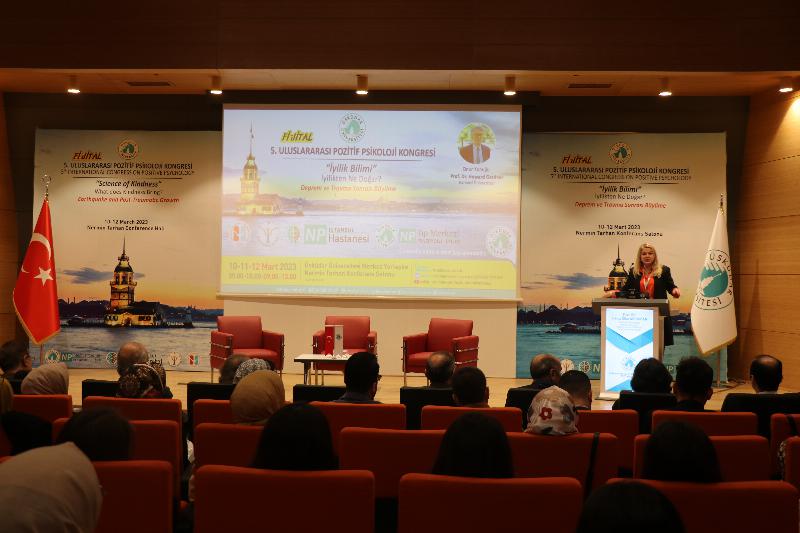
Prof. Dr. Deniz Ülke Arıboğan: “The Fundamental Source of Traumas is Not Earthquakes But Unscientific Approaches”
Prof. Dr. Deniz Ülke Arıboğan noted that humanity's first priority is to ensure its safety. She said, “Dangers occur outside our homes, meaning outside the places we seek refuge. We never think that shelter itself could be a source of danger. The place we should flee to and seek refuge in is now the danger itself. However, we think we can survive by living on the streets. This is actually a trauma of detachment. Very clearly, the way to overcome the effects of major disasters like earthquakes is through science. We need to implement construction structures, urban developments, and a way of thinking that will keep us safe. Because the fundamental source of traumas is not earthquakes but unscientific approaches,” she said.
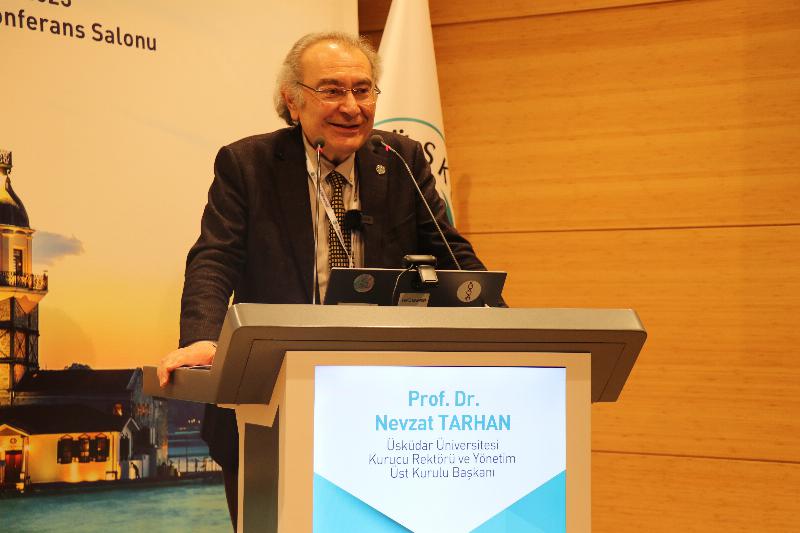
Prof. Dr. Nevzat Tarhan: “They Presented Our Anatolian Wisdom to the World Under the Name of Positive Psychology”
Recalling that the concept of positive psychology first began to be discussed in 2005, Prof. Dr. Nevzat Tarhan said, “The first congress on this topic was held in 2008. A new scientific discipline emerged. While researching its foundations, they actually took our Anatolian wisdom, systematized it, developed its methodology, and presented it as Positive Psychology. We also offered it as a rectorate course to all students in 2013. Subsequently, Harvard added it to its curriculum in 2015, Yale in 2018, and Bristol University in 2019. Bristol University evaluated positive psychology as the science of happiness against the suicide epidemic. Currently in the USA, high school and middle school students are taken for mindfulness training in the middle of their lessons. Because in the West and the USA, suicide attempts and cases of major depression among students have increased significantly, almost peaking since 2008.”
Prof. Dr. Nevzat Tarhan: “Every Trauma Has a Threat and an Opportunity Dimension”
Recalling the earthquake disaster that occurred on February 6, Prof. Dr. Nevzat Tarhan said, “Prof. Dr. Howard Gardner from Harvard University, who is the guest of honor at our congress, asked about the postponement of the congress due to the earthquake. We told him that scientifically, a return to normalcy should occur within 2-4 weeks. We believe that the 5th International Positive Psychology Congress will contribute to normalization. We wanted to continue the congress by adding a subheading called post-traumatic growth. Every trauma has both a threat and an opportunity dimension. Scientists and geoscientists focus heavily on the threat dimension. They may be right from their perspective, but the opportunity dimension should not be neglected,” he stated.
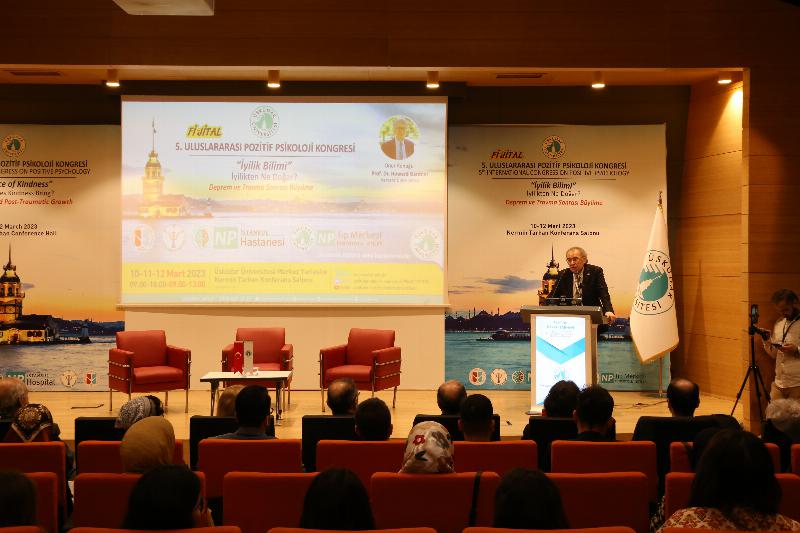
Prof. Dr. Nevzat Tarhan: “We Should Benefit from Positive Psychology for Community Mental Health”
Noting that our lives will change to 'before the earthquake' and 'after the earthquake', Prof. Dr. Nevzat Tarhan said, “In this geography, human comfort has been disrupted. We must question the reliability of our living spaces. On the other hand, our freedom has also been restricted. It was felt that death was closer than anticipated, especially for young people. Despite this, happiness is possible. One can only be happy if they define happiness correctly. Happiness is not a goal or a result, but a process. It is necessary to grasp that process and be on that path. Popular culture especially teaches happiness dependent on internal and external causes. What is truly important is to enable individuals to be happy by improving their internal dynamics. If we want to protect the mental health of society, prevent illness, and do something to reduce violence and crime, we need to benefit from positive psychology, which has very serious scientific references as a preventive health study.”
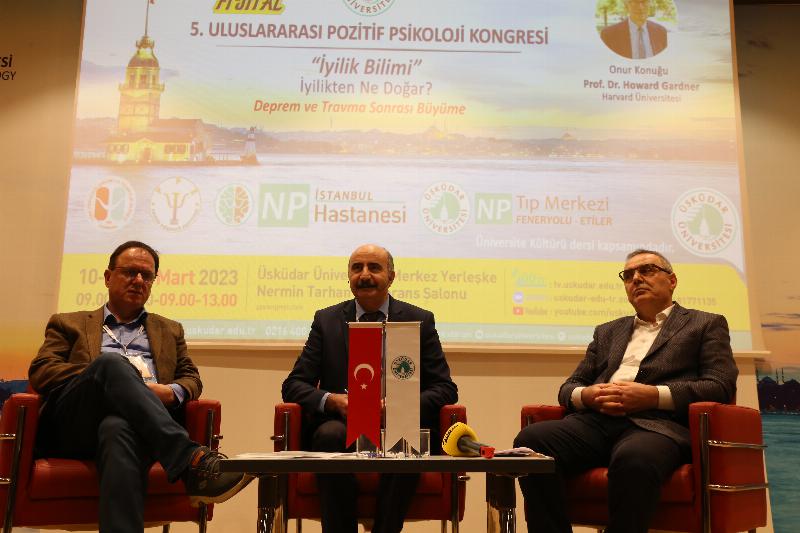
Following the opening speeches of the congress, the congress panels commenced.
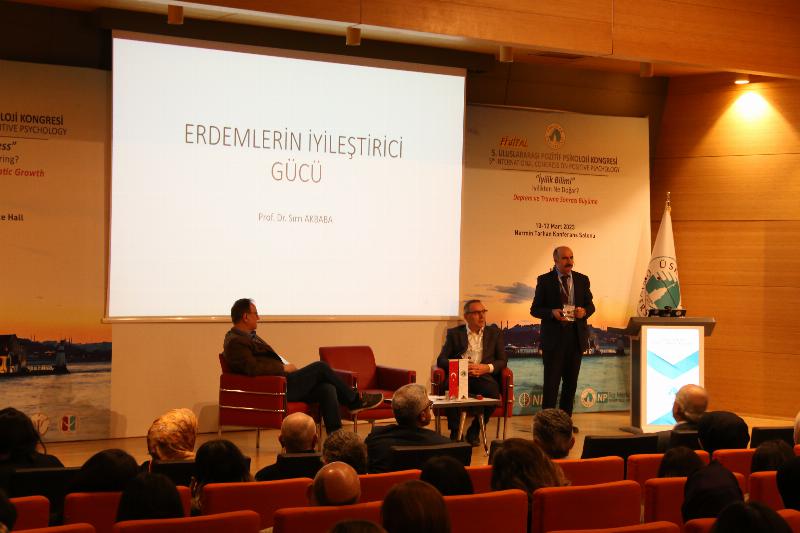
Prof. Dr. Sırrı Akbaba: “Positive Psychology Is an Original Product of Our Culture”
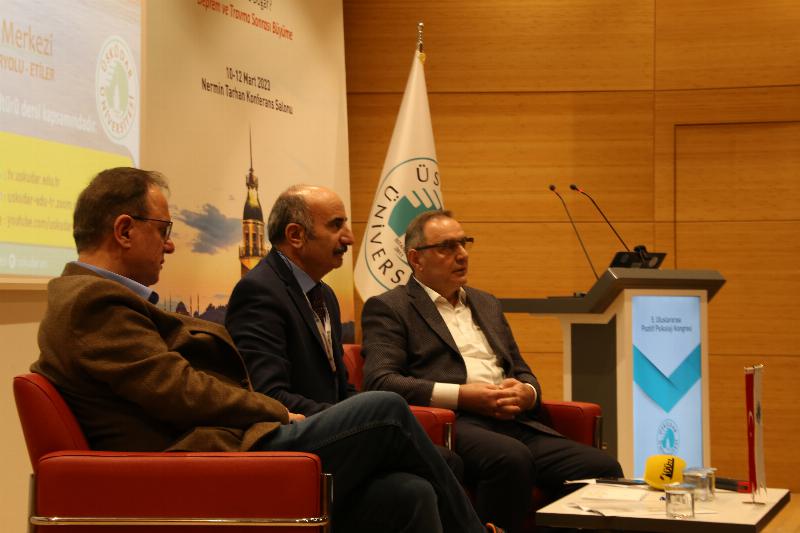
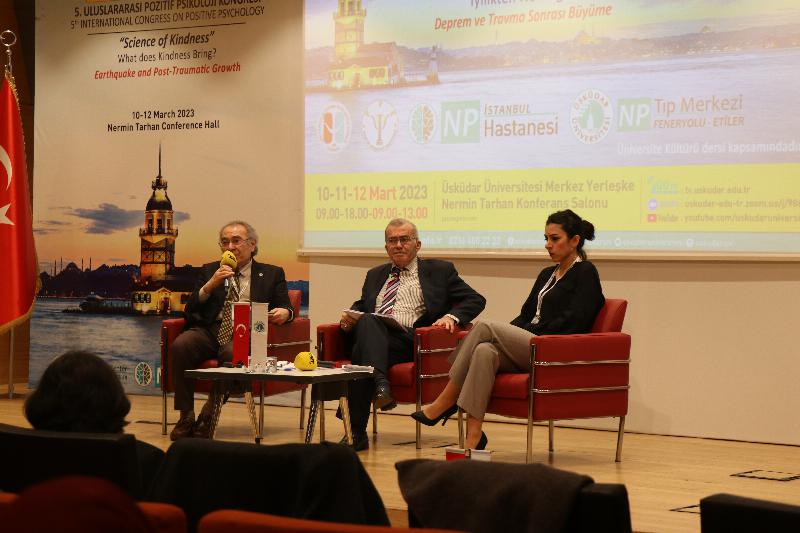
In the opening panel of the congress titled 'Science of Happiness', Prof. Dr. Sırrı Akbaba from Üsküdar Üniversitesi, in his speech titled 'The Healing Power of Being Virtuous', stated that positive psychology is an original product of our culture, adding, “Being a virtuous person forms the focal point of positive psychology.” Prof. Dr. Adnan Ömerustaoğlu from Biruni University gave a speech titled 'Science of Happiness', and Prof. Dr. Halil Ekşi from Marmara University gave a speech titled 'Positive Psychology and Spirituality'.
In the last panel of the congress before noon, titled 'Earthquake and Developing Trauma', the earthquake and its traumatic effects were discussed.
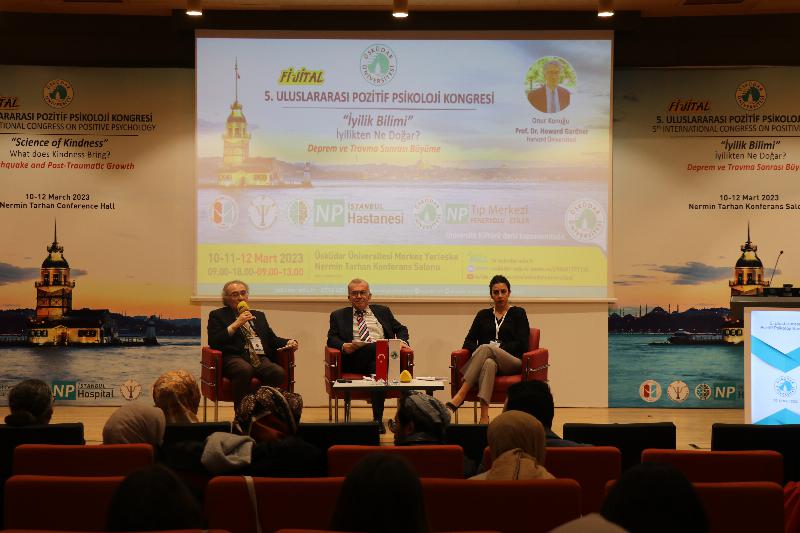
Prof. Dr. Nevzat Tarhan: “The Prioritization of Things People Value Has Changed”
Prof. Dr. Nevzat Tarhan, Founding Rector of Üsküdar Üniversitesi and Chairman of the Board of Trustees, who participated as a panelist in the panel titled 'Earthquake and Developing Trauma', drew attention to the developmental effect of trauma in 'Post-Traumatic Growth'. Starting his speech by mentioning that traumas develop virtues in human life, Prof. Dr. Nevzat Tarhan said, “Firstly, the prioritization of things people value in their lives has changed. The same event can lead to different perspectives in different people. While it brings virtue and meaning to one person, it can impose meaninglessness on another. We can define this as absurdism. Absurdists state, 'Searching for meaning is meaningless; struggling with meaning is the greatest meaning.' On the other hand, people realized they could brave difficulties. Life has hidden psychological laws. Life rewards those who can cope with difficulties. In our culture, this is known as patience. However, patience is not enduring, but adapting to the speed and rhythm of nature. It is about balancing when to speed up and when to slow down. In some matters, we need to slow down and change our priorities,” he said.
Prof. Dr. Nevzat Tarhan: “The Earthquake Taught the Skill of Delayed Gratification”
Noting that people have started to accept events as they are, Prof. Dr. Nevzat Tarhan said, “In mindfulness, it is referred to as acceptance and commitment, but I evaluate it as acceptance and management. One must also consider an individual's free will. Events should be accepted as they are, and only then should management come into play. There are things people can change and things they cannot. To realize this, people must be able to use their reasoning power. They also need to be patient to find the truths. The earthquake teaches this; in fact, it becomes a psychological resilience training for people. The earthquake forces society to experience the resilience training we try to provide in therapies. At the same time, the skill of delayed gratification was acquired. People wanted things to happen immediately, right now. Besides the earthquake, the pandemic also had an effect in teaching delayed gratification. It is also possible to say that interest in spiritual matters has increased,” he added.
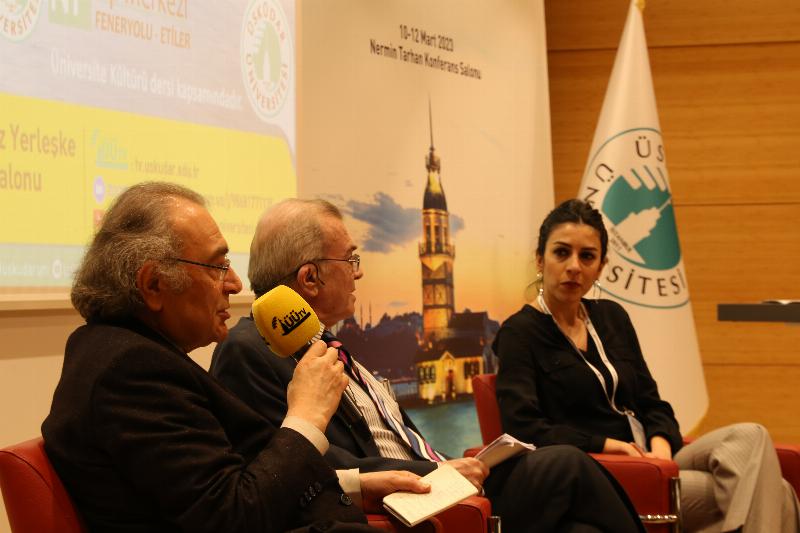
Prof. Dr. Nevzat Tarhan: “People Understood the Value of What They Had”
Noting that more importance has begun to be given to relationships, Prof. Dr. Nevzat Tarhan continued his words as follows: “One of the parameters of post-traumatic growth is the ability to develop the virtue of valuing relationships. As people become self-centered, they become lonelier; as they become stronger, they become lonelier and do not value relationships. In events like earthquakes, people begin to see that loneliness is a harmful element for themselves. Humans are relational beings. Neurobiologically, they can also be happy when relational. Even in mice, there is a balance of sociality and happiness. On the other hand, people also understood the value of what they possessed. Being happy with small things is a skill. The current capitalist system constantly puts 10 people into competition with slogans like 'Earn more, be the best', but only 3 people can be happy. A system that makes 7 people unhappy is not a fair system. Therefore, one should succeed in being happy with small things and set big goals. We teach our students to 'be ambitious in education, and content with the harvest.'”
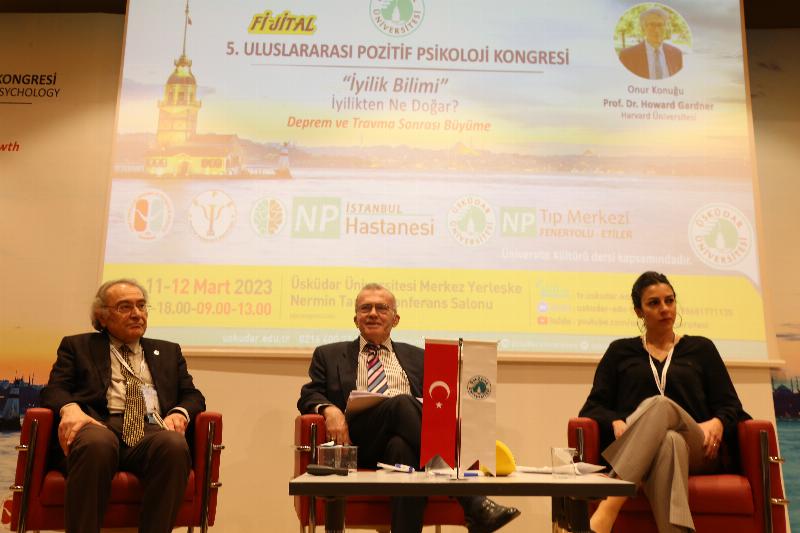
Prof. Dr. Nevzat Tarhan: “The Brain Reacts Faster to Negative Events”
Stating that consciousness studies are among the foremost topics neurobiology is currently focusing on, Prof. Dr. Nevzat Tarhan said, “Above our brain, there is consciousness. The brain reacts to positive events after 300 milliseconds, while it responds to negative events after 50 milliseconds. This shows that the brain spends 6 times more time on positive events. Since the brain works focused on threat and survival, it perceives negativity more quickly. When the brain makes a decision, it takes action. In such a situation, consciousness becomes active. Research is being conducted to determine if there is an executive gene in the brain that performs these actions, but it has not been found so far.”
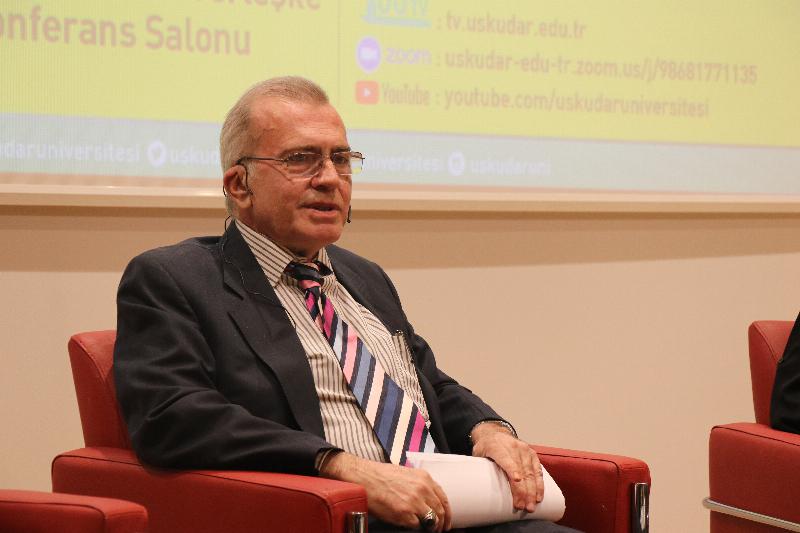
Dr. Mert Akcanbaş Drew Attention to the Concept of Collective Empathy
Dr. Mert Akcanbaş, Faculty Member from Üsküdar Üniversitesi, emphasized the importance of social support and the concept of collective empathy in post-trauma in his speech titled 'The Importance of Trust, Social Support, and Losses in Post-Earthquake Growth'. Drawing attention to suicide cases after major global disasters, Dr. Mert Akcanbaş stated that suicide rates increased for two years after major earthquakes in highly individualized countries such as America and Japan. Akcanbaş noted that in countries with stronger social relationships, there was no change in suicide rates, and the rate of Post-Traumatic Stress Disorder was very low, emphasizing that social support, in particular, prevented suicide cases. Recording that social support and a structure of collective sacrifice strengthen people, Dr. Mert Akcanbaş said, “What I will call a new terminology is collective empathy… After this earthquake, I often hear from my friends: 'When I lie in a warm place, they come to my mind, and I feel ashamed of where I am lying.' We hear of people not wanting to go out to eat. This collective empathy is a situation specific to cultures like ours, which have not lost this kind of collective structure.”
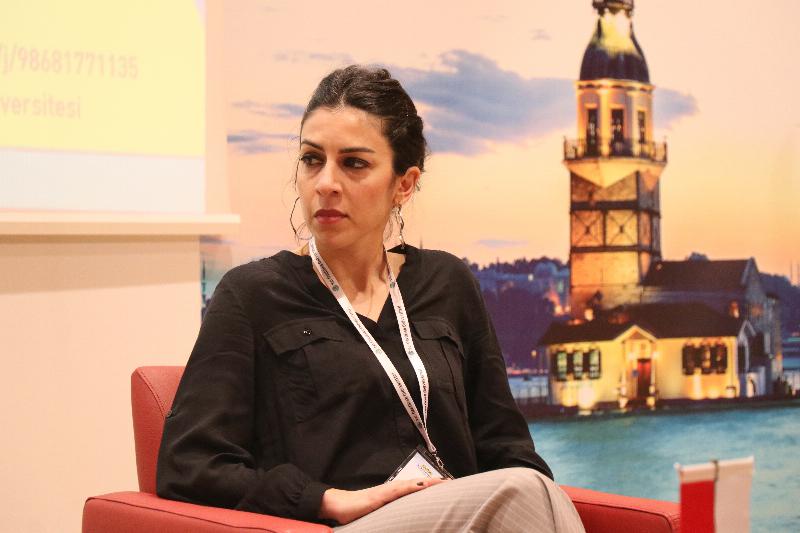
Dr. Hazal Ayas: “Psychological Flexibility Is Very Important”
Dr. Hazal Ayas, Faculty Member from Üsküdar Üniversitesi, in her presentation titled 'Post-Traumatic Growth and Related Factors', touched upon the effects of post-earthquake growth. Noting that some people experience more growth after trauma while others do not, Dr. Hazal Ayas said, “Those with a rigid mindset before trauma do not experience growth. The more rigid this mindset is—e.g., 'Nothing will happen to me' or 'I am a very careful person, I have taken my precautions'—the more intense the shock from the traumatic event, because the schema is rigid. Psychological flexibility is very important here, and the flexibility of schemas is also very important.”
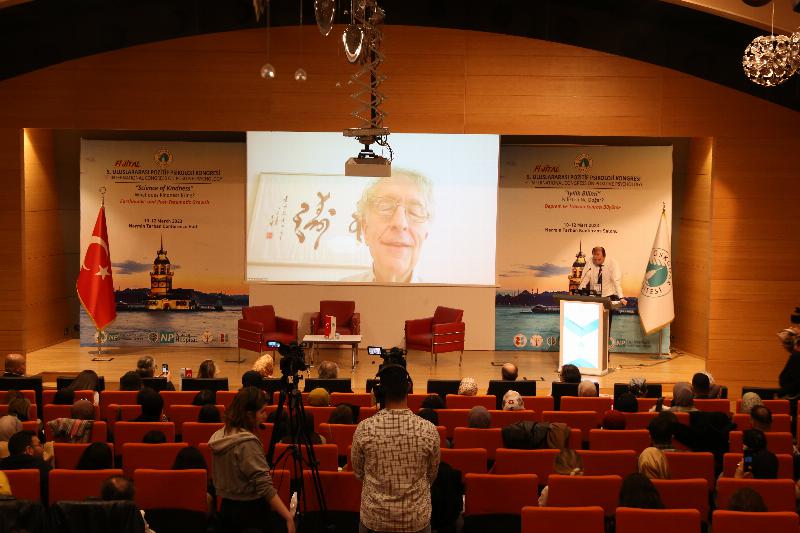
Prof. Dr. Gardner from Harvard University Was the Guest of Honor
The congress continued with a conference titled 'Does Pity Lead to Malady?' by sociologist Prof. Dr. Fatma Beylü Dikeçligil. Prof. Dr. Metin Pişkin from Ankara University gave a conference titled 'Positive Career Counseling in the 21st Century'. On the first day of the congress, Prof. Dr. Howard Gardner from Harvard University, as a guest of honor, delivered a speech titled 'Science of Goodness, Theory of Multiple Intelligences'.
Will Give an Online Conference from Ukraine
Workshops with the participation of NPİSTANBUL Hastanesi experts were also held at the congress. Prominent scientists will also give conferences on the second and third days of the congress. Prof. Dr. Daria Suprun from Ukraine Dragomanov University, who will participate online from Ukraine, will also give a conference titled 'Professional Identity and Social Values: Synergy of Education and Spirituality'.
Prof. Dr. Oğuz Tanrıdağ Will Explain “The Neuroscientific Foundations of Positive Psychology”
Prof. Dr. Oğuz Tanrıdağ, Neurologist at Üsküdar Üniversitesi NPİSTANBUL Hastanesi, will also participate in the congress with a conference titled 'The Neuroscientific Foundations of Positive Psychology'. On the last day of the conference, NPİSTANBUL Hastanesi Expert Clinical Psychologist Özgenur Taşkın will give a conference titled 'The Relationship Between Self-Compassion and Mindful Awareness', and Dr. Fatma Turan, Faculty Member from Üsküdar Üniversitesi, will give a conference titled 'The Voice of Hope: Silent Acts of Goodness'.
Share
Request a Call
Other News
- Social responsibility courses moved to the field
- Erasmus+ Orientation Week completed at Üsküdar
- Prof. Nevzat Tarhan: “Brain secretes ‘dark glue’ in social media lynchers!”
- Prof. Nevzat Tarhan: “Every segment of society should be able to say, ‘This constitution is my constitution!’”
- OHS releases guide for safe operation of industrial robots