

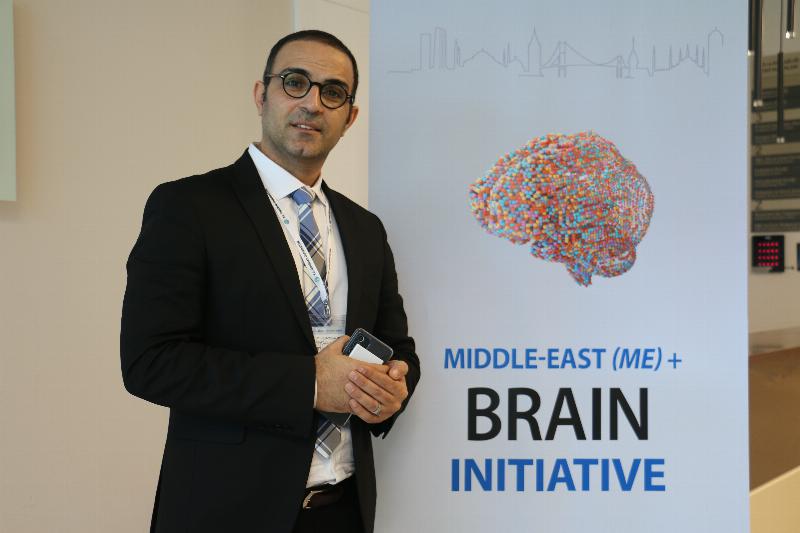
The Balkans and Middle East Brain Initiative Summit, organized by Üsküdar Üniversitesi and the Society for Brain Mapping and Therapeutics (SBMT), brought together experts working in the field of neuroscience. Dr. Mohammad Nami, a Harvard Alumni Mental Health Ambassador who conducts studies in the field of sleep, stated that there has been a 63% increase in screen time. Emphasizing that blue light deceives the brain into thinking it doesn't need sleep, and inefficient sleep weakens the immune system, Dr. Nami said, “I work with patients who have had COVID. We see that one of the long-term consequences of COVID is sleeplessness, in other words, insomnia.”
Content
Insomnia: One of the Long-Term Consequences of COVID
SDG tags related to the news



Excessive Light Deceives the Brain!
Dr. Mohammad Nami, who conducts studies in the field of sleep, spoke about the effects of increased technology use, especially during the pandemic, on sleep.
The Pandemic Changed Our Lives
Dr. Mohammad Nami stated that the pandemic led to significant changes and effects in many areas, from our daily lives to our sleep patterns, saying, “The pandemic process affected everything. Since people could not continue their normal lives and could not go outside, they had to switch to a different lifestyle than normal. This caused them to feel more alone. They were deprived of the opportunity to meet with friends and loved ones. They used to meet with friends, family, acquaintances, and loved ones, but the pandemic changed all of this.”
Screen Time Increased by 63%
Dr. Mohammad Nami noted that people started using social media during this period, stating, “If we look at current studies, we see a 63% increase in screen time for adolescents and young adults. When people have nothing to do in the evenings, they go online and surf. They log into social media platforms and get lost on the internet. They look at incoming messages, posts, and get very caught up in these platforms. For this reason, too much light from the screen reaches their retinas.”
Exposure to Excessive Light Deceives the Brain
Dr. Mohammad Nami noted that there are many neurons and sensors in the retina at the back of the eye, drawing attention to the deceptive effect that exposure to blue light creates in the brain:
“Many of these neurons are responsible for encoding the perception of light and darkness in our brain. When the brain is exposed to this light, it falls into the illusion that it is not yet time to sleep. When this blue light reaches the back of the brain, specifically the pineal gland, the pineal gland stops secreting the hormone melatonin. Melatonin levels drop, and the hypothalamus and melatonin receptors cannot receive sufficient amounts of melatonin. Therefore, the brain cannot send the signal that the body needs sleep. That is why we stay awake throughout the night. The same thing happened during the pandemic. As I mentioned before, the time people spent looking at screens and their time to fall asleep increased by 40% to 60%.”
Poor Quality Sleep Negatively Affected the Immune System
Dr. Mohammad Nami stated that this situation also caused people to be deprived of efficient and quality sleep, saying, “This situation negatively affected our health, our hearts, our lungs, our nervous system, and our circulatory system. Even our immune system was quite negatively affected. We saw that people who did not get enough sleep were more vulnerable to the virus. For this reason, people could get COVID despite being vaccinated. These data are also supported by current research. Neuroscience has a lot to do to determine the long-term consequences of COVID.”
Insomnia is One of the Long-Term Consequences of COVID
Dr. Mohammad Nami noted that as a physician studying sleep disorders, he works with patients who have had COVID, stating, “We see that one of the long-term consequences of COVID is sleeplessness, in other words, insomnia.”
There Are 14 Types of Insomnia
Dr. Mohammad Nami stated that there are 14 different types of sleeplessness, or insomnia, and noted that 4-5 of them are directly linked to COVID. Dr. Mohammad Nami continued: “There are 80 different types of sleep disorders. Insomnia, which falls under sleep disorders, has 14 different types. Some people have difficulty falling asleep, while others struggle with maintaining uninterrupted sleep. Some suffer from waking up early in the mornings. We see that some individuals develop breathing problems during sleep, while some experience restless legs during sleep. Some may have teeth grinding problems. Irregularities in heart rhythms may be observed in some. Some may also have a condition called secondary insomnia.”
Sleep Medications Should Not Be Used Unconsciously
Dr. Mohammad Nami noted that the risk of substance abuse also peaked during the COVID period, stating, “Insomnia developed in some people due to substance use. One of the treatment methods for insomnia is pharmacological treatment. Pharmacological treatment should definitely not be perceived as wrong. Insomnia treatment should certainly not be equated with the prescription of sleep aids. Unfortunately, some people take sleeping pills without consulting their doctors, but many of these drugs are harmful. Because many of these drugs increase addiction and tolerance. Unfortunately, these people can become addicted to these drugs. After a while, they may struggle not only with falling asleep but also with their daily activities. They become dependent on these drugs to perform their daily tasks. That’s why I say that insomnia treatment should not be seen solely as medication therapy.”
Dr. Nami also touched upon methods that support treatment besides medication for insomnia, saying, “We can list meditation, yoga, mindfulness, and cognitive activities. Some sound and music-based therapies and relaxation techniques can also be counted. These are among the methods that can be used to alleviate sleep disorders. Drinking herbal teas and taking a shower, and adhering to sleep hygiene rules help us maintain our calmness and achieve a deep sleep.”
The Root Problem in Sleep Issues Must Be Solved
Dr. Mohammad Nami noted that if a person has a condition such as anxiety, depression, or pain requiring medical treatment, they may suffer from insomnia, stating, “Some people take sleeping pills when they have a headache or toothache and can't sleep. But this will not work. Therefore, in the treatment of sleep problems, we must first focus on the root of the problem, its main cause, and the appropriate treatment method for it. The treatment method also varies from person to person and from case to case.”
Sleep Hygiene Must Be Followed for Healthy Sleep
Dr. Mohammad Nami emphasized that people do not give importance to sleep hygiene for healthy sleep and do not follow sleep hygiene rules, warning, “Sleep hygiene includes a list of what to do and not to do before bed. If you smoke, consume alcohol, or eat at 11 PM, or look at your phone, tablet, and computers, it means you are not following healthy sleep routine rules. These behaviors are contrary to sleep hygiene rules. If we turn on all the lights in the room, our brain falls into the illusion that we don't need sleep. If our room is not cool and dark enough, or if the surroundings are messy, if there is a television in our room, if I am eating in my bed late at night, if I am reading a book for a long time in bed, or if I open my work computer in bed and try to get things done, it means I cannot maintain sleep hygiene.”
These Recommendations Should Be Heeded!
Dr. Mohammad Nami offered recommendations regarding sleep hygiene:
“We should eat healthy, and we should not exercise after 8:00 PM because exercising after 8:00 PM will raise our body temperature and hinder sleep. For good sleep quality, we must adhere to sleep hygiene rules. To get the sweet sleep we deserve and experience the benefits of quality sleep, we must pay attention to sleep hygiene. Sleep is not just about the brain. It is a need met by the body for the body, with the body. It establishes a connection between the brain and the body. In this regard, we absolutely cannot ignore our sleep needs.”
On the second day of the event, which continued for three days at Üsküdar Üniversitesi NP Dental and Health Campus, sessions were held under the headings of neurotechnology, neuropsychiatry, neurooncology, epilepsy and connectomics, neurotrauma (Brain and Spinal Cord Injuries), and movement disorders.
Share
Update Date: March 01, 2026
Creation Date: July 04, 2022
Request a Call
Other News
- Experts warn: 'Instead of memorizing letters, teach pencil grip, scissor use, and coloring'
- School fear and school love both start in the family!
- Family is not merely transforming, it is being battered under a serious assault
- Artificial intelligence opens the door to early diagnosis in autism!
- Artificial intelligence doesn't end engineering, it transforms it!