

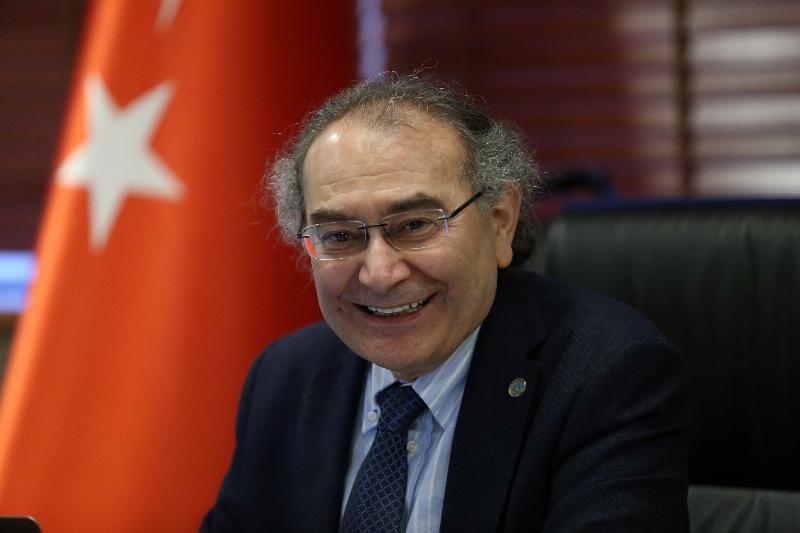
Psychiatrist Prof. Dr. Nevzat Tarhan, stating that a special approach should be developed for children with Attention Deficit Hyperactivity Disorder (ADHD), pointed out that incorrect approaches reinforce negative behaviors in children. Prof. Dr. Nevzat Tarhan, highlighting the disadvantages of relationships built on problems, said that special strategies should be developed for these children both at home and at school. Tarhan, recommending the application of a symbolic behavior model, also emphasized that children's positive behaviors should be reinforced with words of approval.
Content
Incorrect Approach in Attention Deficit Reinforces Negative Behaviors!
October is observed annually as Attention Deficit Hyperactivity Disorder (ADHD) awareness month. The aim is to draw attention to ADHD.
Üsküdar University Founding Rector Psychiatrist Prof. Dr. Nevzat Tarhan made important evaluations regarding the effects of Attention Deficit and Hyperactivity Disorder on children and the approach to children with ADHD.
Highly accurate diagnoses can be made
Prof. Dr. Nevzat Tarhan noted that a series of tests are administered to diagnose ADHD, and said that it is easier to diagnose children who get bored in class at school. Prof. Dr. Nevzat Tarhan said, “We have tests that we use to diagnose ADHD in children. Half-day tests are applied. ADHD in children can be determined with brain scans. For attention deficit and hyperactivity disorder, we can now make highly accurate diagnoses, not just presumptive ones.”
Teachers' approach to the child is important
Prof. Dr. Nevzat Tarhan noted that special training is also provided to teachers today regarding the correct approach to children with ADHD, and said, “Teachers may also face difficulties in their approach to these children. For example, let's say a child in class has hyperactivity. The child is restless. In such situations, the teacher thinks, ‘This child's interest in my lesson is weak. They are not interested in my lesson, or my lesson seems unimportant to them.’ The teacher may become offended, thinking the child does not value their lesson. Or they start to think that the child is acting this way intentionally. In such a case, their thoughts about the child can turn into emotions. They get angry at the child or act harshly towards them. They observe the child, find their mistakes, and scold them. They silence the child.”
The child's negative behaviors are reinforced
Prof. Dr. Nevzat Tarhan, drawing attention to the effects of such approaches by teachers on children, said, “What happens to the child in such situations? Because the problem is not recognized, the teacher reacts. Parents do this too. Parents or teachers unknowingly reinforce negative behavior. In children with such behavioral disorders, those with hyperactivity who do not follow rules or obey, when we build a relationship based on the problem, we reinforce this problem. This child sees it as a method of attracting attention or communication. However, teachers and parents need to develop special strategies for these children.”
Parents should know how to manage the child
Prof. Dr. Nevzat Tarhan noted that the tension between parents and a child with ADHD can eventually turn into an ego battle, and said, “In this tension, the adults always lose. In such situations, the psychological superiority at home lies with the father and mother. They are the leaders. So what will they do? They will manage the child. The child will not direct them. So what will they do? They will sit down and develop a strategy for the child. They will emphasize the child when they do something good, not when they do something wrong.”
Positive actions should be reinforced
Prof. Dr. Nevzat Tarhan noted that the child's positive behaviors must be reinforced, and said, “Parents will reinforce the child's positive actions. Such as, ‘Look how well you did that, look how nicely you tidied your room. Look how nicely you put your shoes away. You studied your lesson.’ When positive behaviors are reinforced, the child thinks ‘My mom and dad love me’ and does not reinforce negative behaviors. This is called psychoeducation. We teach these as psychoeducation to parents.”
Two-thirds of the treatment is through education
Prof. Dr. Nevzat Tarhan stated that ADHD treatment is carried out not only with medication but also with psychoeducation, and said, “Treatments are not only with medication. Medication is one-third of the treatment. Two-thirds is education. In some cases, there are skills to remain calm under stress. We work on that. There are training modules on the computer. For example, there's a new Vienna Test System. We apply it. Rehabilitation and attention training are done on the computer. This method serves as exercise for the frontal lobe of the brain. Just as exercises are performed and developed for weak muscles in physical therapy, there are programs that develop the frontal lobe in the brain using mental exercises with a computer. These are the conveniences brought by artificial intelligence. We use them.”
We recommend symbolic behavior training
Tarhan stated that parents are also taught a symbolic reward system in their approach to children with ADHD, and said, “Instead of constantly building relationships with these children through behavior, we also recommend using a symbolic reward system. For example, the child is encouraged to keep a daily log at home. A chart can be prepared and hung in their room. ‘Did you brush your teeth?’ If they did, a plus is placed; if not, a minus. If they tidied their room, a plus; if not, a minus. At the end of the week, the symbols are collected. When a certain score is exceeded, they are rewarded, and this reward is something they desire. If they didn't collect enough points, they don't get that week's reward. We call this symbolic behavior training and a symbolic reward system. If this is applied, the child learns both impulse control and patience. This is resilience training.”
Share
Update Date: March 01, 2026
Creation Date: October 05, 2022
Request a Call
Other News
- Üsküdar University became a member of the International Association of Universities (IAU)!
- Prof. Nevzat Tarhan: “Protecting a child is not just about putting an obstacle in front of them on the screen!”
- Prof. Deniz Ülke Kaynak: “We are still in the conflict management phase!”
- Residual current device saved a life!
- Can violence be prevented in schools?