

“Sources of Pharmaceutical Active Ingredients and Their Effects on Environmental Pollution” was discussed at the seminar organized by the Pharmacy Services Program of Üsküdar Üniversitesi. Lecturer İnci Karakaş, Head of the Environmental Health Program, participated as a speaker in the seminar moderated by Dr. Lecturer Sultan Mehtap Büyüker, Head of the Vocational School of Health Services Pharmacy Services Program. Karakaş pointed out that pharmaceutical active ingredients can mix with sewage water and pose a serious threat to the ecosystem.
Content
The Impact of Pharmaceutical Active Ingredients on the Environment and Humans Discussed
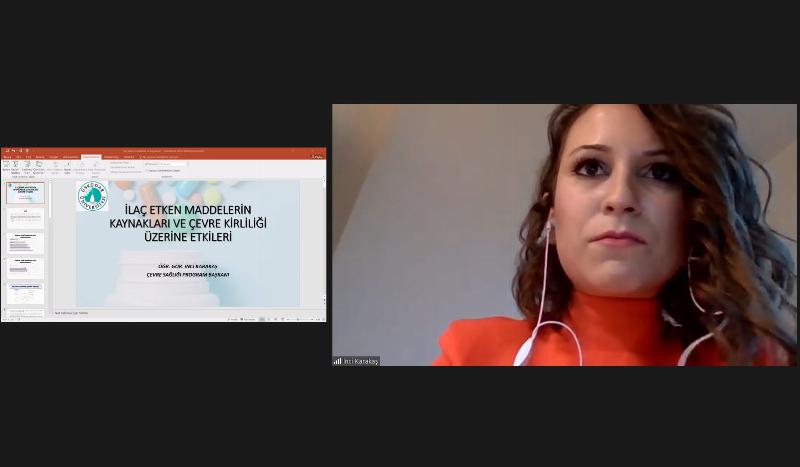
“Antibiotics are drugs that kill bacteria and provide protection, and we know they absolutely do not affect viruses”
Lecturer İnci Karakaş, who started her speech by defining what a drug is, used the following statements; “It is the entirety of chemical preparations aiming for the diagnosis, treatment, or prevention of a disease. We use these drugs in medicine; they are mixtures that contain a high amount of biological agents and active substances, can contain pure chemical substances, are of plant or animal origin, and contain a certain standard amount of active ingredients. If we look at antibiotics, they are drugs that biologically target, kill bacteria, and provide protection, and we certainly know that they do not affect viruses.” she said.
“Wastewater treatment plants are not very effective on pharmaceutical active ingredients”
Karakaş, drawing attention to the presence of pharmaceutical active ingredients in the environment, said, “Hospital services, medical and surgical units, laboratories use many drugs and chemicals in different units, and these medical units, surgical units, and laboratories generate hospital effluents. Within these hospital effluents, we can observe microbial pollutants, clinical discharges, blood and biological samples, heavy metals, and domestic wastewater. When we look at hospital effluents, we can say that they show similarities with domestic wastewater up to a certain substance. Because hospitals also have both canteens and laundries. Therefore, they contain macro components such as carbon, nitrogen, and phosphorus. However, hospital wastewater differs slightly from domestic wastewater due to the presence of metals, radioactive components, blood, or biological samples. Unfortunately, these directly go to wastewater treatment plants, and in wastewater treatment plants, biofuels can reach surface waters or groundwater. Unfortunately, since the conventional wastewater treatment plants we use are designed to remove macro pollutants, we can say that they are not very effective on pharmaceutical active ingredients. Therefore, after the effluent is treated in wastewater treatment plants, pharmaceutical active ingredients can still be found in the discharge waters. Due to their entry into receiving environments such as seas and lakes (surface aquatic environments), they can be found in water and soil, indirectly in drinking water, agricultural lands, and in the bodies of other living organisms through the food chain.” she stated.

“Pharmaceutical active ingredients can mix with sewage water and pose a serious threat to the ecosystem”
Karakaş, mentioning that antibiotics enter wastewater treatment plants due to their presence in very high amounts in the environment and sewage systems, said; “Pharmaceutical active ingredients can pass, for example, to fish, and from fish to us. From the perspective of homes, we directly throw unused or expired drugs into the trash or flush them down toilets. Thus, we enable them to reach the sewage system. Pharmaceutical active ingredients can mix with sewage water and pose a serious threat to the ecosystem. It is estimated that between 100,000 and 200,000 tons of antibiotics are consumed worldwide, which is a terrifying figure. Due to such frequent use, we can say that the concentration in the environment is continuously increasing, and antibiotics, due to their presence in very high amounts in the environment and sewage systems, enter wastewater treatment plants.” she stated.
“Preventing the pollution of surface and groundwater with pharmaceuticals should be our primary goal”
Concluding her speech, Karakaş stated; “According to a study conducted in the United States, 113.5 million kilograms of pharmaceutical active ingredients were found annually from 5,700 hospitals and 45,000 nursing homes. It is determined that these substances are discarded along with their packaging materials, and as a result, the water sources of 45 million people are negatively affected. Preventing the pollution of surface and groundwater with pharmaceuticals, with chemicals entering drug compositions, and preventing these pollutions should be our primary goal. Therefore, the issue of waste and residual pharmaceuticals needs to be addressed seriously. They show significant accumulation in groundwater, surface water, and soil. Therefore, when we look at humans, various studies have shown that they lead to allergic reactions or impairment of the resistance mechanism, gender changes, cancer, and psychological disorders. Speaking about hospital wastewater, it needs to be urgently treated and then transferred to wastewater treatment plants. There should be standards in the regulation regarding pharmaceutical active ingredients. Unnecessary drug stockpiles should be prevented by prescribing small amounts of medication.” she concluded.
Share
Update Date: February 28, 2026
Creation Date: January 12, 2022
Request a Call
Other News
- Ümraniye Family Academy project qualified for support
- Üsküdar University students examined production and distillation processes on-site
- The importance of student clubs in university life highlighted in Üsküdar
- Prof. Süleymanlı introduced the Turkish Barometer 2026 research in Astana
- Melih Talha Bektaş introduced his artificial intelligence research at an international conference