

‘Humanity’s Language and Communication Journey’ was discussed in a program organized by Üsküdar Üniversitesi. The online program was attended by Assoc. Prof. Dr. Feride Zeynep Güder, Head of the New Media and Communication Department, and Dr. Lecturer Hümeyra Genç from the English Translation and Interpreting Department. Güder pointed out that the digital world has affected everyone like a tsunami, while Genç emphasized the importance of the relationship between language and culture.
Content
Humanity's Language and Communication Journey Discussed
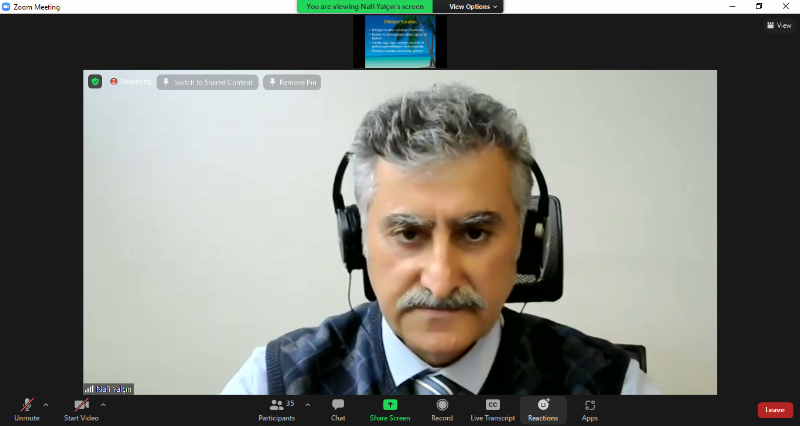
Nafi Yalçın: “All of humanity's thoughts, actions, and activities are made possible by language”
Dr. Lecturer Nafi Yalçın, Head of the English Translation and Interpreting Department at Üsküdar Üniversitesi, made evaluations on the topic of ‘The Structure and Functions of Language as a Communication Tool’ during the program. Yalçın stated: “In cases where there is no communication or it is incompatible, conflicts, arguments, and wars arise, and people's many efforts and work go to waste. Language is truly a wonderful chain of events and a miracle. Through language, bridges are built between the physical and metaphysical realms. The question of how language emerged was widely debated until the beginning of the 20th century, and various views were put forward. However, since these views were not based on any evidence, language-related documents, or remnants from humanity's early periods, they could not go beyond interpretations and conjectures. For this reason, today's linguists have preferred to stop pondering the origin of language and instead focus on studying language itself and trying to understand how language acquisition and learning occur.” he said.
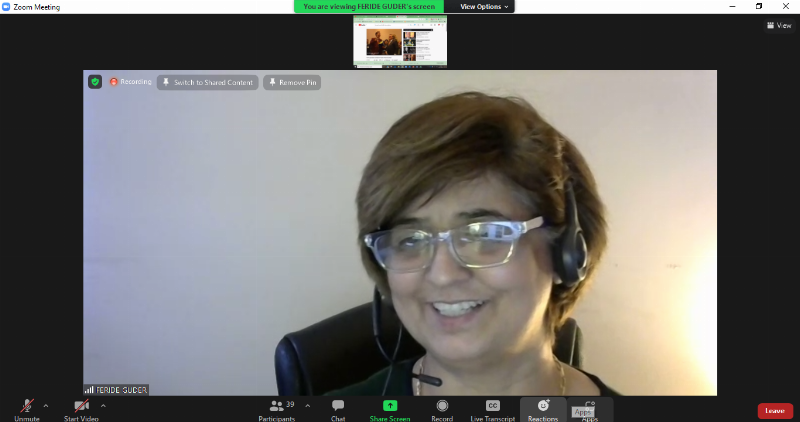
Feride Zeynep Güder: “There is too much polarization in society”
Assoc. Prof. Dr. Feride Zeynep Güder, Head of the New Media and Communication Department at Üsküdar Üniversitesi, made statements in the context of ‘Effective Communication Between Individuals and Groups’. Güder said: “In intercultural communication, culture greatly affects a person’s communication style and structure. In intercultural communication, for example, we have a very hybrid culture. We need to strive to convey this into a peaceful discourse, considering everyone's background and upbringing. Speaking in the context of political communication at the national and macro level, there is too much polarization in society. No one has patience for anyone else; no one listens to anyone fully. They listen based on ideology. The communication established by the subject at the point where they define themselves is also very different. Time, and the perception of time, are very important. In the Postmodern world, we all need to communicate very quickly, and unfortunately, with such speed, we don’t have time for human relationships. We don't have time for natural communication, chatting with the elderly, or perhaps understanding the world of our elders. The most important thing affecting successful and unsuccessful communication is language. Language, the encoding of language, is a system that serves as an indicator in our perception of the world and the encoding of objects. We must not overlook proper encoding or the limits of language itself.” she said.
Feride Zeynep Güder: “Empathy is the most important emotional skill today”
Assoc. Prof. Dr. Feride Zeynep Güder, addressing the importance of the power and impact of communication in influencing masses, said: “We need to ask the question, why are some more successful? Some are very successful in communication. Some are very unsuccessful. Whether this is related to education is somewhat debated. Philosophers in scholastic thought try to teach this. How is a person influenced? How is one persuaded? How do we move a person from one idea to another? They ponder this and create their segment. The art of influencing people, perhaps we can establish it, first and foremost, as the feeling of empathy. Empathy is currently the most important emotional skill today. If I lose my ability to understand what the other person thinks or feels, then we are talking about the humanization of artificial intelligence. Or the robotization of humans due to artificial intelligence. The most feared thing is the communication established by robots that cannot take initiative. In a situation where all of this is present, the feeling of empathy truly places us in a position where we can communicate with all subjects, and establish inter-subjective communication.” she said.
Feride Zeynep Güder “Digital has swept away communication”
Assoc. Prof. Dr. Feride Zeynep Güder, likening the digital world to a tsunami and talking about the resulting sweep creating a zero point, said: “If we cannot empathize with the state of the person opposite us, as there is an expression in Turkish, ‘Hemhal’ (being in the same state), then they will only serve us visually. Under normal circumstances, if we cannot take others into consideration, we cannot be successful in any form of communication. This is true for verbal communication, digital communication, and mass communication. With so many visuals, there is so much evidence in the city that it desensitizes all of us. The digital world has affected everyone like a tsunami. The digital revolution; our communications in the postmodern era are now very, very different from normal communication. Digital has swept away communication. In fact, even interpersonal relationships sometimes proceed through digital relationships. One gets to know someone, first looks at their social identity, their social traces, digital footprints, and then something forms in their mind about them, and so on. In a sense, this tsunami-like change and transformation sweeps everything away in human relationships. It sweeps away the past and memories, creating a brand new zero point.” she said.
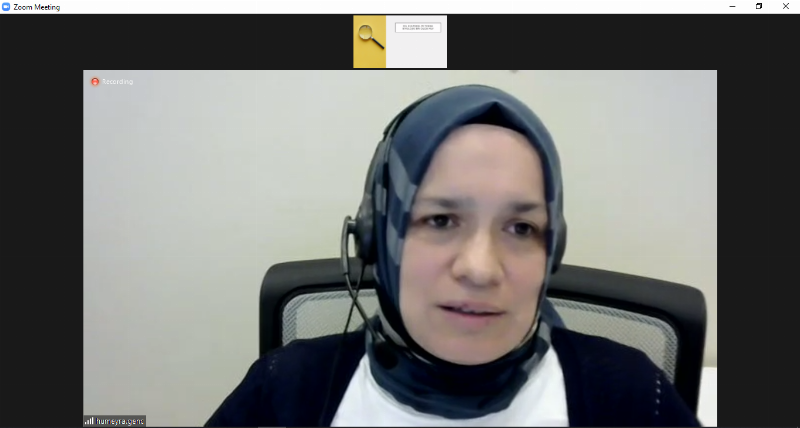
Hümeyra Genç: “If there were no language, there would be no civilizations”
Dr. Lecturer Hümeyra Genç from the English Translation and Interpreting Department at Üsküdar Üniversitesi shared insights on ‘The Role of Translation in Inter-Societal and Intercultural Communication’. Genç said: “If language is the tip of the iceberg, culture is the bottom part of the iceberg. Translation has gained importance today. In the past, people usually came together from different cultures for war or trade, and their translation needs arose from these reasons. However, today, accurate translation is crucial in many areas to prevent misrepresentation of cultures. Translation is often seen as a simple transfer from one language to another, but it is actually a transfer of culture. You need to know for what purpose, with what ideology, and within which culture someone else wrote the text you are translating, so that you can achieve the same purpose in your target translation. Furthermore, if you translate correctly and preserve the language, you can better convey the cultures and lives of societies. The more bi-cultural translators we train as a country, the better we will be known by other countries, and the better we can get to know other countries. This way, our communication will also be more positive.” she said.
Share
Update Date: February 28, 2026
Creation Date: November 22, 2021
Request a Call
Other News
- Be careful about the thought, “It’s just once, nothing will happen”!
- Üsküdar University became a member of the International Association of Universities (IAU)!
- Prof. Nevzat Tarhan: “Protecting a child is not just about putting an obstacle in front of them on the screen!”
- Prof. Deniz Ülke Kaynak: “We are still in the conflict management phase!”
- Residual current device saved a life!