

Under the leadership of the Head of Üsküdar University Sociology Department Prof. Dr. Ebulfez Süleymanlı, a study titled “Family and Marriage Through the Eyes of University Youth in the Turkic World” was conducted, offering the opportunity to analyze the perspectives on the institution of marriage and family of 7,066 young people living in 6 countries across different geographies of the Turkic World.
Content
How do the youth of the Turkic World view marriage?
To the question of what marriage means to young people, more than half of the participants across all participating countries, 58.6%, responded “A happy union”. In Turkey, 51.9% of young people stated that marriage is “A happy union”. 67.1% of participants said they desired a love marriage, while 20.5% desired a practical marriage. The rate of those who stated they never wanted to marry was 0.4%.
Üsküdar University Founding Rector, Psychiatrist Prof. Dr. Nevzat Tarhan, referring to the Kyrgyz proverb mentioned by Prof. Dr. Darhan Kıdırali, President of the International Turkic Academy, in his speech, said, “The homeland begins in the family. The miniature version of the homeland is the family.” Tarhan, drawing attention to the fact that the nightmare of the modern world is the epidemic of divorce and infidelity, emphasized that we must uphold the values that make us who we are and form our identity.
Under the leadership of Prof. Dr. Ebulfez Süleymanlı, Head of Üsküdar University's Department of Sociology, the results of the study titled “Family and Marriage Through the Eyes of University Youth in the Turkic World,” which revealed the perspectives of university youth on the institution of marriage and family in different geographies of the Turkic World, were shared. The research, conducted with a large academic staff from 6 countries, included the participation of 7,066 young people living in Turkey, Azerbaijan, Kazakhstan, Uzbekistan, Kyrgyzstan, and the Republic of Bashkortostan of the Russian Federation.
Protocol signing ceremony held
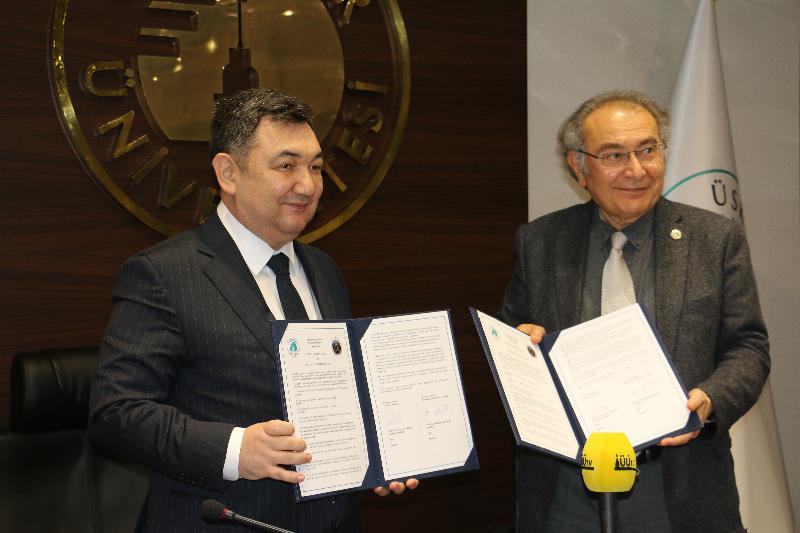
In the phygital program held under pandemic measures, some participants took part online. Prof. Dr. Ebulfez Süleymanlı, who also led the research, undertook the moderation of the program held in the Senate Room of Üsküdar University Central Campus. Prior to the program, a ‘Goodwill Protocol’ signing ceremony was held between Prof. Dr. Nevzat Tarhan, Üsküdar University Founding Rector and Head of the Board of Trustees, and Prof. Dr. Darhan Kıdırali, President of the International Turkic Academy.
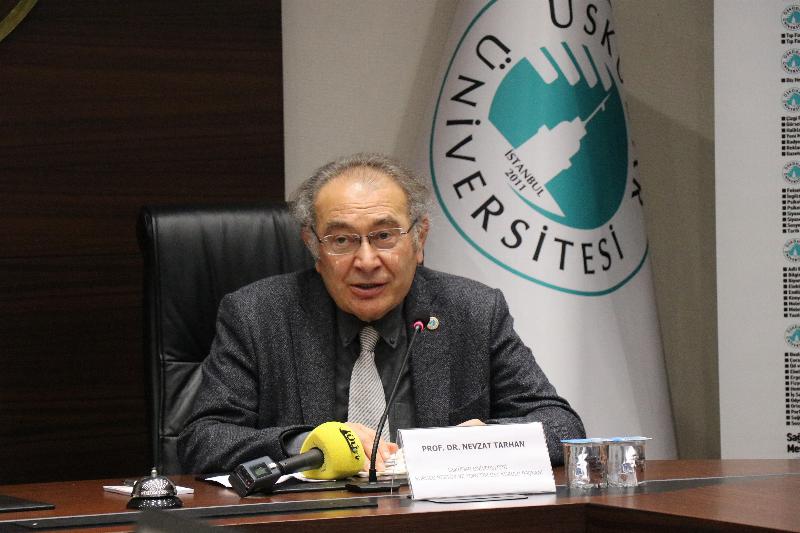
Prof. Dr. Nevzat Tarhan: “We must uphold the values that make us who we are”
Üsküdar University Founding Rector, Psychiatrist Prof. Dr. Nevzat Tarhan, highlighting the importance of this international study, said, “With this study, we analyzed young people's attitudes and views on marriage for the first time. Üsküdar University has long-standing, fruitful, concrete, and scientific relations with the Turkic world. Developing these relations is important for us.”
Prof. Dr. Nevzat Tarhan stated that many cultures in the world might disappear in the coming years, perhaps 40-50 years from now. “The course of the world indicates this. We must uphold the values that make us who we are and form our identity. It is very important for the Turkic academy to reach a consensus on this issue and to make it a priority. In this way, it will be easier to overcome challenges. We will also balance the negative impact of cultural propaganda and Hollywood culture, which affect these new generations, in many places. We, as the Turkic world, will not 'buy into' the identity crisis experienced in the Western world. This is very important from this perspective,” he said.
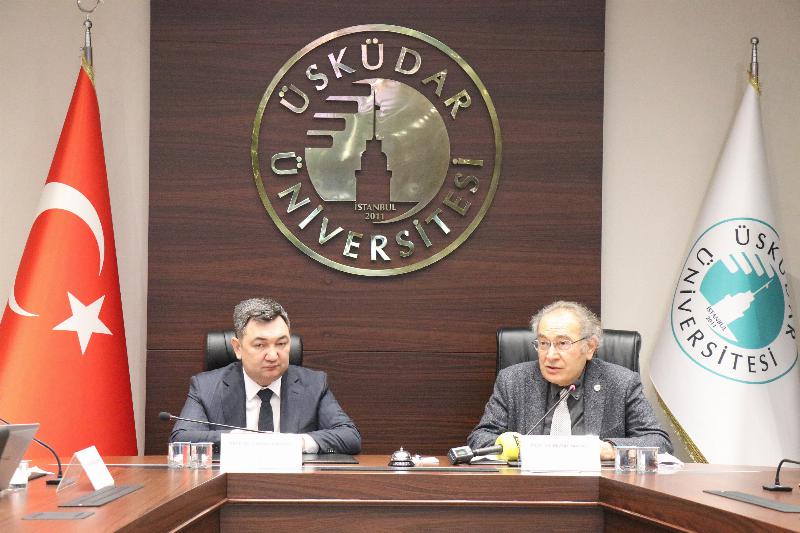
Prof. Dr. Nevzat Tarhan: “A generation experiencing emotional neglect is coming”
Prof. Dr. Nevzat Tarhan stated that a generation experiencing emotional neglect is emerging, saying: “Currently, in countries like France, Sweden, Norway, England, and Iceland, a significant cultural change is occurring, with the notion that 'there is no need for family.' It appears to be 'what's the point of family?' The family is seen as a hindrance. Since divorces have risen to 60%, there's a perception and approach that 'you don't invest in an institution that fails more than 50%. Why should I invest in a short-term affair?' In Sweden and Norway, out-of-wedlock birth rates are around 56%; in Iceland, around 69%; and in France, around 59%. They live together without marrying. On children's identity cards, 'mother-father' is not written. 'Parent 1, Parent 2' is written. Children in care homes are currently searching for the feeling of a mother, the concept of a mother. There is no one who replaces the mother in care homes. They provide very good physical care, feeding them and giving them drinks. However, they do not meet the child's emotional needs. A generation experiencing emotional neglect is coming.”
Prof. Dr. Nevzat Tarhan: “Neglecting the family is dangerous for the future of humanity”
However, Prof. Dr. Nevzat Tarhan noted that studies conducted on children aged 0-3 reveal the importance of the mother in a child's life. “According to neurology-based studies, more than 50% of the human brain is formed between the ages of 0-3. Here, the mother plays the primary role, the main director, and then the father comes. Neglecting such a crucial value as keeping the family together is dangerous for the future of humanity. This means that future generations will grow up on the streets. There is a possibility that such a generation will emerge, focused solely on self-interest, consumerism, and with a weaker sense of responsibility,” he warned.
Prof. Dr. Nevzat Tarhan: “The nightmare of the modern world is the epidemic of divorce and infidelity”
Prof. Dr. Nevzat Tarhan, noting that family values are better preserved when looking at studies on the attitudes of university youth in the Turkic world, said, “Those between 22-26 years of age have marriage goals. This desire among young people is around 60-70%. But I don't know if this sensitivity will emerge after 10 years. Another thing that drew my attention here is that, regarding marriage, 70% prefer love marriage, not practical marriage. In fact, it's necessary to understand what they mean by love. Love is not the cause in marriage; it is the result. They fall in love and marry. After 6 months to 1 year, they divorce. There is currently a divorce epidemic. This epidemic, the nightmare of the modern world, is infidelity. There are many relationships within marriage. Open marriages are particularly encouraged in the US. Both parties are married, but both also have lovers. Mainly because children do not grow up healthily. This was examined in the 70s regarding open marriages. It was seen that they did not work out,” he said.
Prof. Dr. Nevzat Tarhan: “The enlarged version of the family is the homeland”
Tarhan, referring to the Kyrgyz proverb mentioned by our International Turkic Academy President Darhan Kıdırali in his speech, said, “I really like this proverb: 'The homeland begins with the family.' The miniature version of the homeland is the family. The enlarged version of the family is the homeland. As a result of the widespread adoption of family values within the family, that place becomes a homeland. Someone who does not carry the feeling of patriotism does not want to make sacrifices for their homeland. This situation is similar for family ties as well.”

Prof. Dr. Deniz Ülke Arıboğan: “Youth see marriage as nothing more than Instagram visuals”
Prof. Dr. Deniz Ülke Arıboğan, Dean of the Faculty of Humanities and Social Sciences, stated that the institution of family, an important part of a world and environment undergoing tremendous transformation and change, was analyzed with this research. Arıboğan noted that understanding young people, who will actually shape the future, is very valuable for comprehending the common cultural norms of the Turkic world and defining our common roots more easily. Arıboğan emphasized that marriage today is not perceived as establishing a home, starting a lifelong relationship, or having children. “It exists in the minds of young people only as a set of wedding photos to be shared on Instagram. When marriage is mentioned, many young girls and boys see it this way. However, marriage is a very long-term, valuable institution that shapes human life. We can say that this research, which will allow many concepts to be re-discussed and better understood, is very important,” she said.
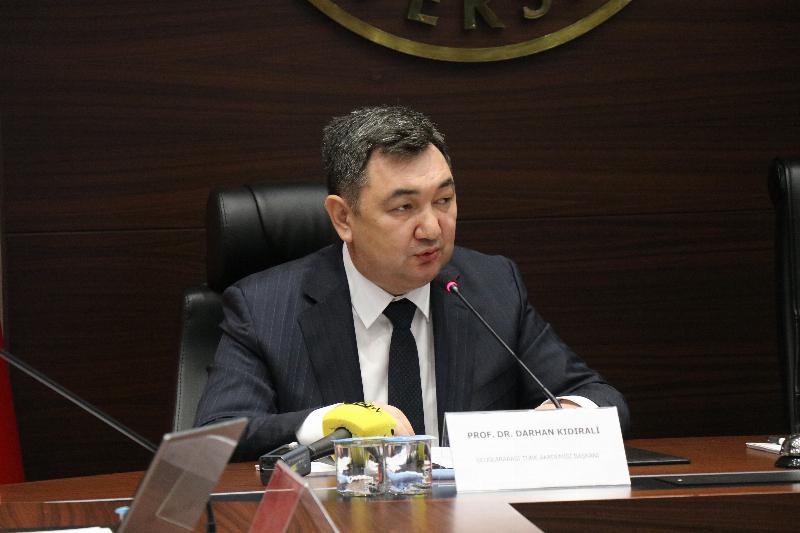
Prof. Dr. Darhan Kıdırali: “It is gratifying that young people consider marriage important”
Prof. Dr. Darhan Kıdırali, President of the International Turkic Academy, also said, “It is extremely important to conduct sociological research that takes the pulse of society and examine young people's thoughts on family and marriage while building a common future on a common past.” Prof. Dr. Kıdırali added, “In a time when family values are rapidly deteriorating, it was gratifying that 82% of young people in the Turkic world responded with 'Yes, marriage is important.' Our youth prioritizing spiritual values over material values and not deeming it appropriate to live together before marriage is promising for our future. The Turkic family is a structure that stands strong with powerful kinship ties. When we examine kinship terms alone, we encounter dozens of words not found in other cultures. The fact that 64.7% of young people do not want to live with their spouse's family after marriage indicates that kinship ties are weakening. The increase in the number of homeless, orphans, and nursing homes in our societies also, in fact, disturbs our peace,” he said.
Prof. Dr. Ebulfez Süleymanlı, Head of Üsküdar University's Department of Sociology, and Feyza Keskin from the Department of Sociology, provided information regarding the study's results for Turkey.
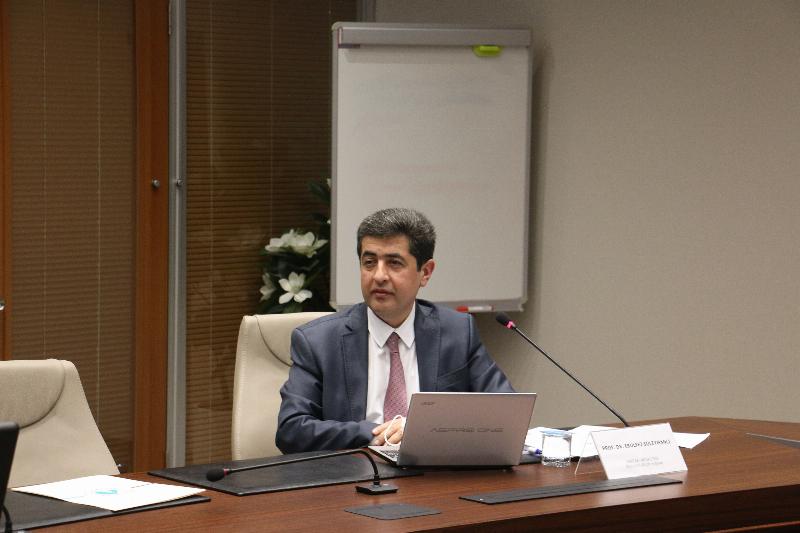
Prof. Dr. Ebulfez Süleymanlı: “The position of the family is rapidly changing”
Emphasizing that the position of the family is rapidly changing in today's world, Prof. Dr. Ebulfez Süleymanlı said, “Roles and structural factors are also being reconstructed. In this process of change, the institution of family, experiencing serious problems regarding balance and stability, results in divorces in many societies, or there is a change in perceptions related to the family in society. Therefore, it is extremely important for universities, non-governmental organizations, and state institutions to develop supportive and protective policies for the family in cooperation, for the future of humanity. In this context, we place great importance on this research. The data set obtained in the context of each country contains important materials to be presented to both the state and the public.”
Marriage is mostly seen as a happy union
The study, which investigated many parameters, shed light on young people's perspectives on marriage with important questions such as 'Do you prefer a love marriage or a practical marriage?', 'Does marriage scare you?', 'What is the ideal age for marriage?', 'How does marriage affect love?', 'Do you approve of arranged marriages?', 'Do you think violence can be a reason for divorce?'. To the question of what marriage means to young people, more than half of the participants across all participating countries, 58.6%, responded “A Happy Union”. In Turkey, 51.9% of young people also stated that marriage is “A happy union”.
The rate of those desiring love marriages in Turkey was 69.6%
To the question 'Do you prefer a love marriage or a practical marriage?', 67.1% of young people responded with love marriage, while the rate of those who stated they wanted a practical marriage was 20.5%. The rate of those who stated they never wanted to marry was determined as 0.4%. The predominant rates for love marriage were Turkey 69.6%, Kyrgyzstan 86.8%, Bashkortostan 83.7%, Kazakhstan 83.5%, Uzbekistan 82.8%, and Azerbaijan 54.1%, respectively, giving the same answer. The responses of young people favoring practical marriage were reflected in the research data with rates of Turkey 0.9%, Azerbaijan 26.4%, Uzbekistan 9.1%, Kyrgyzstan 5.8%, Kazakhstan 3.1%, and Bashkortostan 2.9%.
They evaluated the results in their countries
Prof. Dr. Serik Seydumanov, Director of the Institute of Philosophy at the National Academy of Sciences of Kazakhstan, and Prof. Dr. Mukhtar Tolegen, Rector of Amenjelov East Kazakhstan University, who participated online in the meeting, also gave short greeting speeches. At the meeting, Prof. Dr. Gali Galiyev, President of the Eurasian Sociologists Union, Prof. Dr. Kuat Rakhimberdin from Amenjelov East Kazakhstan University, Prof. Dr. Jıldız Urmanbetova from Kyrgyzstan-Turkey Manas University, and Assoc. Dr. Kemale Kahramanova from Azerbaijan Baku State University, participated online and gave presentations on the research results in their respective countries. Participants expressed their satisfaction in contributing to this scientific study which reveals the views of future generations on marriage and family.
The program was broadcast live on ÜÜ TV and Üsküdar University's YouTube channel.
Share
Update Date: February 28, 2026
Creation Date: November 03, 2021
Request a Call
Other News
- Prof. Nevzat Tarhan: “Every segment of society should be able to say, ‘This constitution is my constitution!’”
- OHS Releases Guide for Safe Operation of Industrial Robots
- Prof. Nevzat Tarhan: “Social media is digital fast food”
- 2026-2027 Academic Year orientations completed
- Asst. Prof. İdil Arasan Doğan explained the importance of early intervention in living with dementia