

Stating that the sense of self is the inner core of a human being, and it is called the reference center, Psychiatrist Prof. Dr. Nevzat Tarhan, said: “We are born with a reference center, as 'me' and 'others'. Then it gradually takes shape within the family. If a person is shaped correctly, a healthy identity and personality emerge over the years. If shaped incorrectly, a wrong identity and personality emerge. Therefore, the investment made in our self is the greatest investment a person can make in themselves in life.” Noting that teaching self-perception to a child is the duty of parents, Prof. Dr. Nevzat Tarhan said, “Teaching a child healthy self-perception is one of the most important duties of a parent. It is important to convey the message, 'You are a separate person, a separate individual.'”
Content
How to Teach Healthy Self-Perception?
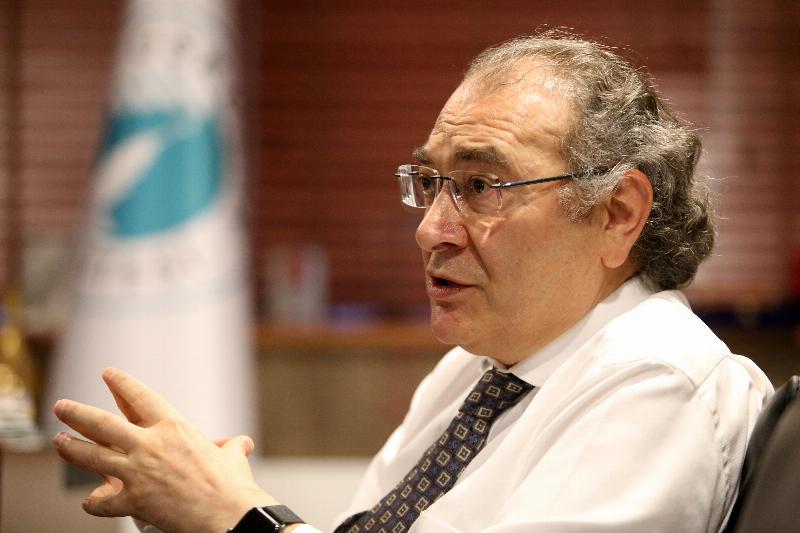
Üsküdar Üniversitesi Founding Rector, Psychiatrist Prof. Dr. Nevzat Tarhan, made evaluations on the self and self-perception, which is one of the important fields of study in psychology.
Prof. Dr. Nevzat Tarhan stated that the foundation of self-perception is laid in childhood years and said: “The self is one of the most important areas of study in psychology. It is referred to as self-perception, self-concept. In these studies, to understand the psychological reality of a human, the concept of 'I' needs to be put in place. The studies that give us the most insight here are child studies, studies related to observing children. A child does not have a sense of 'I'. There is 'Mom and I'. A child can go into a tremendous crisis when their mother is not present. There is maternal deprivation syndrome. It is usually seen around 1 year of age, sometimes at 2 years. If the mother is away from the child for a long time, the child may develop maternal deprivation syndrome. This is infant depression. In such a situation, the child cries continuously. When someone approaches or there is movement, they stop. They look, it's not their mother, and they start crying again. In fact, some older people know this; they give the child who is crying in the absence of their mother, the mother's clothes, etc., so the child can smell the mother and stop crying. The child sees their mother and themselves as inseparable. This is the state of self-perception at the child level. We all go through this period.”
A quality and secure relationship with the mother is important…
Noting that the mother means everything during infancy and childhood, Prof. Dr. Nevzat Tarhan said, “In the first 3 years, nothing can replace the mother. It's the mother or someone who takes the mother's place. What's important is having a quality, secure, consistent, and continuous relationship with someone. This situation does not exist in other living beings. For example, a duck. As soon as it's born, it starts walking, immediately enters the water. There are even eels that live in the Gulf of Mexico. They go to Continental Europe, are born there, live there, and then return to the Gulf of Mexico to die. Mother and child never see each other. They do not have a mother-child relationship,” he said.
A person with healthy self-perception can self-criticize
Stating that humans are born psychologically premature and develop over time, Prof. Dr. Nevzat Tarhan said that a person with healthy self-perception can criticize themselves: “Humans are born early. Animals mature in the womb and are thrown into life as soon as they are born. But humans are born needing someone else's help for 10-15 years. This is what makes humans a social self. Self-perception is the ability of a person to ask, 'Who am I?' In scientific terminology, it is referred to as self-concept. There is the ideal self, and there is the real self. And there is the self that a person envisions, perceives. How a person perceives their self determines whether their self-perception or self-concept can be called healthy or unhealthy. If they perceive their self as it is, if they can confront their mistakes with their own realities, with their strengths and weaknesses, if they can critique a criticism instead of immediately opposing it, if they can analyze it, if they question it and then make a decision, we can say that their self-perception and self-esteem are healthy. In other words, we can say that their self-perception is consistent with their real self.”
Knowing where you are for your goal is important
Tarhan stated that there was a concept called 'vakkaf' in the Ottoman Empire. “It means stopping and accepting a truth again. In fact, it is one of the attributes of Hz. Omar. He had made a decision, was going to punish someone, and then news arrived that it was not so, but rather different. He could immediately change his mind. He didn't say, 'I've decided once.' To ensure justice. This is the biggest reason why Hz. Omar was a leader in justice. The urge to seek truth and to be independent and impartial towards oneself. Being independent of one's own impulses, desires, and wishes indicates a high self-perception. Just as one can confront realities, one can also confront oneself. This is like this; imagine a map, you have a destination on the map, you are going somewhere. But if you don't know where you are, you cannot go there,” he said.
Knowing strengths and weaknesses builds self-esteem
Prof. Dr. Nevzat Tarhan stated that a person can chart their psychological goals if they know themselves, adding: “To draw a roadmap, one needs to know where they are. Self-perception is also important on the path of life. There is a saying in Anatolia: 'He who has not eaten another's punch thinks his own punch is a ton.' This is one of the sayings in our culture that beautifully explains self-perception. Knowing one's strengths and weaknesses builds self-esteem,” he said.
Prof. Dr. Nevzat Tarhan noted that just like genes, personality also has some foundations and cannot be changed, stating: “Humans are free, but we are as free as our genes limit us. For example, we cannot make our brown eyes blue. Personality is the same. Our core personality is 30-40%. 60-70% is acquired later. There are 12 personality types. Some are introverted, some are extroverted, some are meticulous, some are very social. These are also defined as intrapersonal intelligence and social intelligence. It is somewhat related to our genetic heritage. A person showing themselves stronger than they are is one of the most important signs of not knowing themselves. A person who knows themselves sees their true self when they look in the mirror,” he said.
Prof. Dr. Nevzat Tarhan noted that some people are afraid of mirrors, or rather, psychologically, they are afraid to confront themselves. “Such people do not know the difference between their ideal selves and their real selves. They have an ideal self. In their minds, they think, 'I should be like this, I should behave like that,' and they mistake that for reality,” he said.
A person close to their ideal self is also at peace with themselves…
However, Prof. Dr. Nevzat Tarhan stated that the closer a person's ideal self is to them, the more at peace they are with themselves. “Such people do not stay in their comfort zone in life. They are open to the general, they are not afraid of initiative. They are individuals who experience a great deal of curiosity and wonder. For a person to be open to new experiences, they need to break out of their shell,” he said.
Prof. Dr. Nevzat Tarhan noted that teaching self-perception to a child is the duty of parents. “If a child does not leave their mother's side, and the mother does not give them much opportunity for this, this child becomes a dependent child, addicted to their mother, and that child experiences anger and love towards the mother simultaneously during adolescence. Teaching a child healthy self-perception is one of the most important duties of a parent. It is important to convey the message, 'You are a separate person, a separate individual,'” he said.
Children should be raised to adapt to life
However, Prof. Dr. Nevzat Tarhan pointed out that the message to be given here must be balanced. “There is 'me' and there is 'the other', but in children raised with the feeling or knowledge of 'I am superior to them' or 'You are superior to everyone,' the gap between the ideal self and the real self widens. When it widens, the child becomes uncomfortable when someone criticizes them when they face the realities of life. If parents raise a child like a hothouse flower, they will easily collapse when a storm comes. Therefore, it is necessary to raise them to be suitable for life. Motherhood and fatherhood are not about protecting our child, but about preparing them for life,” he said.
Investment in the self is the greatest investment
Prof. Dr. Nevzat Tarhan noted that being able to clearly distinguish between self-perception and ideal self means being at peace with oneself. “At the same time, such a person becomes capable of developing themselves in life. The sense of self is being researched in other living beings. There is no such thing as 'self' in other living beings. When you meet their basic needs, nothing happens. But humans always have a self-concept. That's why the self is the inner core of a human, and it's called the reference center. We are born with a reference center within us from birth, as 'me' and 'others'. Then it gradually takes shape within the family. If a person is shaped correctly, a healthy identity and personality emerge over the years. If shaped incorrectly, a wrong identity and personality emerge. Therefore, the investment made in our self is the greatest investment a person can make in themselves in life,” he said.
Individualization is different from selfishness
Prof. Dr. Nevzat Tarhan stated that when a person encounters another, they are greeted by their outer appearance but sent off by their inner appearance, noting an important difference between individualization and selfishness: “That's why it is not physical appearance that makes a human being. It is their disposition, character, humanity. That is, their inner 'siret'. 'Suret' is physical appearance, 'siret' is inner appearance. We have neglected our inner appearance. This is one of the greatest harms modernism has done to us. It presented us with an approach that secular understanding makes everything worldly. We even see this from psychologist friends trained in the West for couple's therapy. They say, 'You are important, family is not important; the individual is sacred, not the family.' They say, 'If I am sacred, if I am the most important, why should I endure my spouse's or child's troubles? I came to this world once.' Individualization is different from selfishness. Being an individual is a good thing, but being individualistic is not. When you are individualistic, you see the world revolving around yourself. This is the lowest step of self-development. Freud made a very good observation here. He says the child is a primary narcissist. The schizophrenic is a secondary narcissist. In primary narcissism, the child only loves themselves, thinking the world revolves around them. If you ask who the most selfish being is, they say a child. Because they recognize nothing else. They invest love first in themselves, then in their mother, and as they grow, in people, nature, the universe, the creator. The more accurate and fair the love investment they make, that is what they will have in their bag at the end of life. But in a schizophrenic person, secondary narcissism occurs, meaning they redirect their love investment back to themselves. They prioritize themselves but fail to cope with life's difficulties and withdraw. They create an area in their mind where they wage wars and make it rain in their own world. For example, they say, 'It's raining because I'm sad,' or 'The sun is out because I'm cheerful.'”
Three realities do not mix in self-perception
Prof. Dr. Nevzat Tarhan noted that there are three types of self-perception. “This is also important in psychological health. The first self is a person's physical reality. Like, it's soft, warm, or cold. The second is imaginary reality. The world of imagination is like clouds; the world of the mind is like muddy water. If we clean our world of imagination, the water in our mind will clear. That's why we need to make our world of imagination beautiful. If our world of imagination is dirty, we cannot remove the dirty water from our minds. The other reality is dream reality. The biggest characteristic of schizophrenics is that they cannot distinguish the boundaries of these three realities. They fantasize, mistake the fantasy for reality, believe it, and live accordingly. Or they dream and believe it as soon as they wake up. A person with self-perception does not mix these three realities. That's why our self-perception is the most important lantern in a person's hand; it illuminates. It illuminates oneself, illuminates one's surroundings. And developing our self-perception is what makes us human. Other living beings do not have this feature. Eating, drinking, and reproducing are enough. Humans have a gene for discovery, for being open to new experiences. Humans perceive time. No living being other than humans has a perception of time and space. These are the genes that enable us to produce abstract concepts that distinguish humans from other living beings,” he said.
Share
Request a Call
Other News
- Prof. Nevzat Tarhan: “Those with a mental filter are not afraid of the digital”
- Artificial intelligence doesn't eliminate the translator, it transforms their expertise!
- Social responsibility courses moved to the field
- Erasmus+ Orientation Week completed at Üsküdar
- Prof. Nevzat Tarhan: “Brain secretes ‘dark glue’ in social media lynchers!”