

Experts, highlighting social harmony as crucial in preventing hostility towards migrants worldwide, draw attention to the importance of formulating policies in this regard. Political scientist Prof. Dr. Havva Kök Arslan, emphasizing that the issue should extend beyond the integration of migrants into society to involve migrants and the local population adapting to each other, stated, “Operating the process unilaterally can, on the one hand, strengthen anti-migrant movements in society and promote the idea of assimilating migrants, while on the other hand, it can lead to the organization and radicalization of migrants. Policies based on mutual integration should be created to prevent migrants from being labeled as individuals who consume existing limited resources in cities.”
Content
How to Prevent Xenophobia?
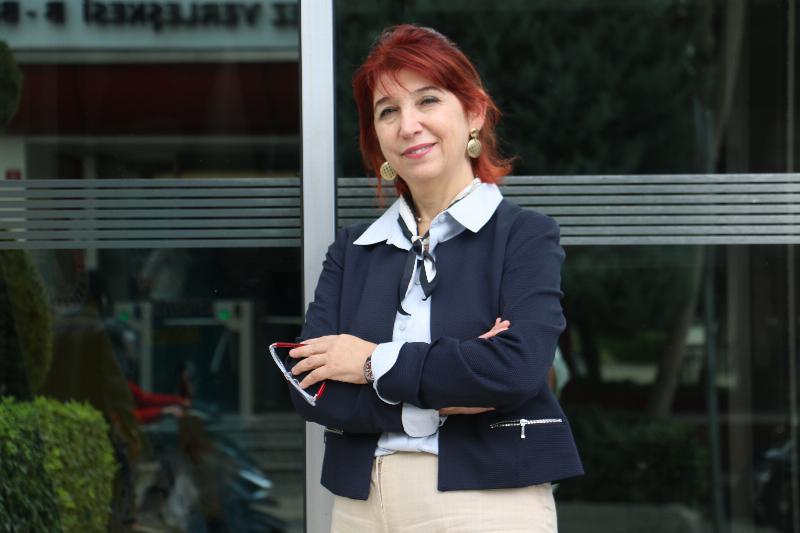

Migrants Should Not Be Labeled as Resource Consumers!
Head of the Department of Political Science and International Relations (English) at Üsküdar Üniversitesi Faculty of Humanities and Social Sciences (İTBF), Prof. Dr. Havva Kök Arslan, and Research Assistant Doğan Demirkıran, made evaluations regarding increasing xenophobia and international migrant policies worldwide.
Migrants Constitute 11 Percent of France's Population
France hosts people from Africa due to its historical political and economic relations, and also those who migrate to continue their lives under better and more developed conditions. According to OECD data, 11.6 percent of France's population consists of people born in another country, in other words, migrants.” she said.
Prof. Dr. Havva Kök Arslan stated that while the birthplaces of the football players making up the French national team in the 2022 World Cup held in Qatar were being debated, the armed attack targeting migrants in Paris on December 24 caused anti-migrant movements to return to the world agenda, especially in France and Europe. Prof. Dr. Havva Kök Arslan said, “A Frenchman organizing an armed attack in front of the Ahmet Kaya Cultural Center, founded by Kurdish migrants in the country, and killing 3 people, once again revealed the necessity of rethinking migration, migrants, and anti-migrant movements, and formulating policies.”
“Migration Journeys Are Undertaken for Different Purposes”
Prof. Dr. Havva Kök Arslan noted that people embark on migration journeys voluntarily or by necessity, not wishing to remain in their own countries and aiming to build a new life elsewhere. She said, “The destination of this journey is often politically, economically, and culturally developed cities. Indeed, migrations to these countries and cities from different countries lead to the transformation of the city and country into areas where people from different cultures and the local population live together.”
Xenophobia Emerges from Time to Time
Prof. Dr. Havva Kök Arslan noted that xenophobia emerges from time to time in countries experiencing intense migration. She said, “The unwillingness to share limited resources in countries with migrants; the constant highlighting of differences in religion, language, race, and culture; and populist politicians bringing the issue to the forefront for their own interests, trigger xenophobia in society.”
“Administrations Need to Formulate Policies”
Referring to the work that needs to be done to prevent xenophobia, Prof. Dr. Havva Kök Arslan said, “Administrations need to formulate policies so that encounters between local people and migrants in cities do not increase xenophobia, do not turn into attacks like in Paris, and allow different groups to live together. Looking at co-existence theories in migration literature, integration stands out because it aims to increase communication and interaction between groups and thereby prevent radicalization by forming common values.”
Migrants Should Not Be Labeled as Resource Consumers
Prof. Dr. Havva Kök Arslan, pointing to the importance of social harmony in preventing hostility towards migrants, said, “The issue goes beyond the integration of migrants into society; it is about migrants and the local population adapting to each other. Indeed, operating the process unilaterally can, on the one hand, strengthen anti-migrant movements in society and promote the idea of assimilating migrants, while on the other hand, it can lead to the organization and radicalization of migrants. Policies based on mutual integration should be formed to prevent migrants from being labeled as individuals who consume existing limited resources in cities.”
“The Main Goal of Policies Should Be to Shift Perceptions and Attitudes Towards a Positive Direction”
Üsküdar Üniversitesi Political Science and International Relations Department Research Assistant Doğan Demirkıran stated that the main goal of policies should be to ensure that the perceptions and attitudes of local people and migrants towards each other evolve in a positive direction, and that their needs are met, allowing them to live together peacefully. Demirkıran said, “The success of policies depends on the diversity of actors to be included in the policy-making and implementation process. It is evident that migrant policies produced and implemented solely by the state do not address local needs and their objectives remain vague.”
“Local Actors Should Take Part in Policy Implementation”
Demirkıran noted that for this reason, all segments, including civil society organizations, in addition to the state, should participate in the policy-making process, and concluded his words as follows: “Therefore, the involvement of various ministries and institutions of the state, universities, private companies, civil society organizations, local governments, and migrant associations in the policy-making process will contribute to the production of holistic and responsive policies for the benefit of both the local population and migrants. Especially, the active involvement of local actors in the implementation of policies will increase their widespread impact. In today's world, where communication and transportation technologies have developed tremendously, migration is seen as a human right. In this regard, it is the duty of all institutions and people, especially states, to determine and implement humanitarian and ethical approaches to prevent the formation of anger and hatred between communities.”
Share
Request a Call
Other News
- Prof. Nevzat Tarhan: “Those with a mental filter are not afraid of the digital”
- Artificial intelligence doesn't eliminate the translator, it transforms their expertise!
- Social responsibility courses moved to the field
- Erasmus+ Orientation Week completed at Üsküdar
- Prof. Nevzat Tarhan: “Brain secretes ‘dark glue’ in social media lynchers!”