

Public health expert Prof. Dr. Haydar Sur, highlighting the importance of proper communication with victims in disasters such as earthquakes, noted that officials often reach out to disaster victims and survivors by phone to communicate with them, emphasizing the need for careful conduct, building trust, and providing timely and accurate information during communication.
Content
How to communicate with disaster victims?
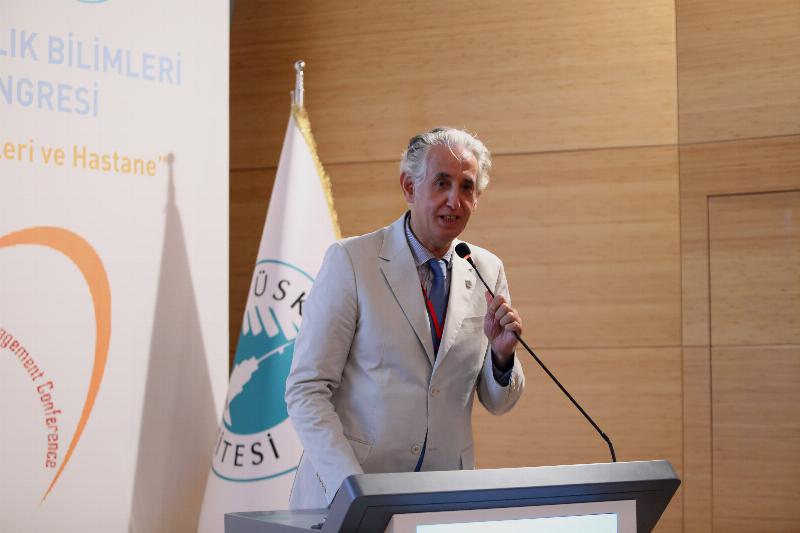
Üsküdar Üniversitesi Faculty of Medicine Dean Prof. Dr. Haydar Sur offered important advice on communication with disaster victims.
Careful conduct should be observed
Prof. Dr. Haydar Sur stated that reaching out to disaster victims and survivors by phone and communicating with them is often among the actions of officials, adding, “It is a big mistake to act carelessly in this type of communication, thinking ‘They don't see me anyway.’ A person's body posture and emotional state are reflected in their voice, even on the phone, and the person on the line understands our attitude from these reflections. For our help to be effective, it is of great importance that these individuals' trust in us is never broken. In phone communication, besides the words we choose, elements such as our tone of voice, the intensity of our voice, whether we give the other person a chance to speak, and our speaking speed must be friendly and goal-oriented.”
Awareness of potential communication barriers should be developed
Sur, also referring to communication barriers that may arise in disaster situations like earthquakes, said, “Those who serve disaster victims and survivors must do everything in their power to recognize potential communication barriers and overcome them.”
Various factors can hinder communication
Public health expert Prof. Dr. Haydar Sur stated that there can also be some obstacles to communication in disaster situations. Prof. Dr. Haydar Sur noted that these obstacles can be cultural differences between professionals and service users, barriers such as lack of education, and sometimes physical barriers like geographical distances when people need to travel to access services. Other barriers he listed include language barriers, barriers created by the inability of disaster victims and survivors to focus after severe physical or emotional trauma, and barriers caused by injuries.
Service providers have obligations
Prof. Dr. Haydar Sur stated that those who provide services to disaster victims and survivors have certain obligations for the most accurate conduct of communication, adding, “Those who provide services to disaster victims and survivors are obligated to build relationships based on trust, understand and overcome communication barriers, and achieve an effective assessment by observing and asking questions.”
Trust-based communication should be established
Prof. Dr. Haydar Sur stated that the experience of emerging from disasters with great losses or being a victim of crime can leave effects that will turn every aspect of the rest of life into chaos and disorder, adding, “A common feeling reported by victims after a crime is loss of control. Since victims have no control over their victimization, this feeling of helplessness can persist in other areas of their lives and create suspicion and distrust towards other people and the criminal or child justice system in general. It is important for victims to begin regaining control of their lives and develop trust-based relationships with people who can help them cope with the problems they face.”
Follow-up is essential
Public health expert Prof. Dr. Haydar Sur emphasized that having good information and being able to provide useful, relevant resources to victims is of great importance in building trust, stating, “If we can provide timely and accurate information, we must do so. If such information cannot be provided at the moment of communication, we should inform the person that we will try to obtain it within a certain timeframe and get back to them, and we must absolutely do this.”
Share
Update Date: March 01, 2026
Creation Date: February 24, 2023
Request a Call
Other News
- Prof. Nevzat Tarhan: “Every segment of society should be able to say, ‘This constitution is my constitution!’”
- OHS Releases Guide for Safe Operation of Industrial Robots
- Prof. Nevzat Tarhan: “Social media is digital fast food”
- 2026-2027 Academic Year orientations completed
- Asst. Prof. İdil Arasan Doğan explained the importance of early intervention in living with dementia