

Immediately after the Kahramanmaraş earthquakes, rescue teams from many countries arrived in the earthquake zone and played an important role in rescuing many people by participating in search and rescue efforts. Political scientist Prof. Dr. Havva Kök Arslan, evaluating the impact of natural disasters such as earthquakes on international relations, states that such situations, rather than permanently changing political tendencies between countries, may lead to a temporary pause in conflicts. Arslan points out that such situations can also benefit potential cooperation and an international peace environment that the atmosphere of mutual aid and solidarity can provide.
Content
How does disaster affect international relations?
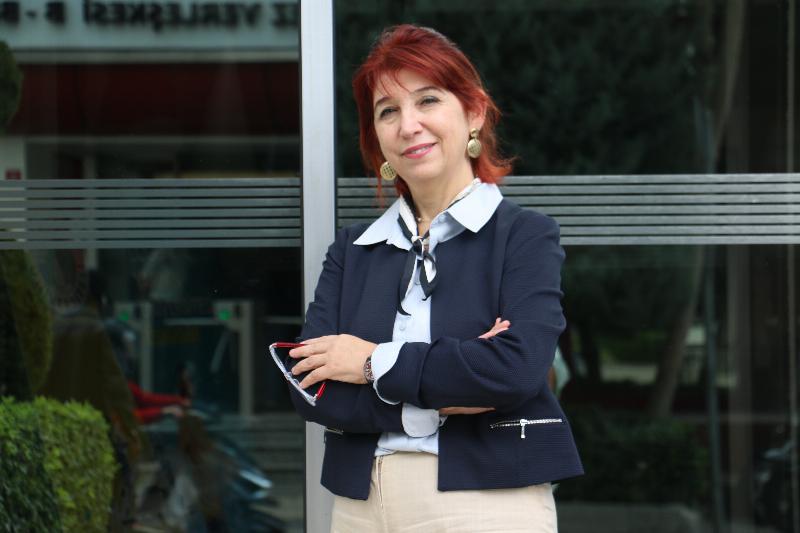
Prof. Dr. Havva Kök Arslan, Head of the Department of Political Science and International Relations (English) at Üsküdar University Faculty of Humanities and Social Sciences (İTBF), evaluated the impact of natural disasters such as earthquakes on international relations.
Prof. Dr. Havva Kök Arslan reminded that on February 6, 2023, at 04:17 AM, two earthquakes occurred: one with a magnitude of 7.7, centered in Pazarcık, Kahramanmaraş, and another with a magnitude of 7.6, centered in Elbistan, Kahramanmaraş, at 13:24 on the same day. She said, “Several severe aftershocks followed this in various parts of the region. In the disaster, where many of our people lost their lives and were injured, many also became homeless and experienced psychological trauma.”
Search and rescue teams came from many countries
Prof. Dr. Havva Kök Arslan noted that the Kahramanmaraş earthquakes were a natural disaster of a magnitude not seen in our country for many years. She said, “Due to the earthquakes, which destroyed thousands of buildings, a Level 4 alarm was declared, and rescue teams from many countries were dispatched to the region.”
Prof. Dr. Havva Kök Arslan stated that Adıyaman, Hatay, Kahramanmaraş, Gaziantep, Malatya, Adana, Diyarbakır, Şanlıurfa, Kilis, and Osmaniye were the provinces most affected by the earthquake, and added that after this great disaster, in which civil initiatives like Ahbap and İHH played important roles in aid efforts, a 90-day state of emergency (OHAL) was declared starting from February 8, 2023.
Humanitarian dimension stands out in natural disasters
Prof. Dr. Havva Kök Arslan noted that natural disasters are situations where countries suffer great humanitarian and material damage. She said, “In normal circumstances, states benefit each other through conflicts and collaborations, and sometimes harm each other's interests. However, natural disasters reveal a dimension beyond merely being a situation that can be evaluated in terms of inter-state interests; this is the humanitarian dimension of the issue.”
In times of disaster, the pain of the disaster is shared
Prof. Dr. Havva Kök Arslan noted that the first reaction of ordinary, mentally healthy people living anywhere in the world when a disaster strikes a country is sadness. She said, “Because, no matter which country, a healthy person cannot wish for something extraordinarily bad to happen to another person without any reason. This perspective, of course, influences the decisions made by states and international organizations, at least partially and for a short period. Therefore, when a disaster strikes a country, almost every country tends to share the pain of the disaster to a greater or lesser extent, at least until the initial shock wears off.”
Political tendencies between countries cannot change permanently
Prof. Dr. Havva Kök Arslan also stated that this situation naturally yields a positive outcome in terms of reminding positive human emotions among societies. She continued, “Indeed, we can observe that in countries like Greece, with whom we sometimes experience friction, and particularly within their societies, the prevailing feelings are directed towards sharing our pain. However, one should not expect these to permanently change political tendencies between countries. Rather, this situation results in a temporary pause in conflicts.”
Should be seen as a positive opportunity
Political scientist Prof. Dr. Havva Kök Arslan stated that if pre-disaster crises are not due to structural reasons, the positive atmosphere reflected in relations during such crises should be seen as an opportunity to change the relationship between countries positively, both at the state level and at the civil society level.
Atmosphere of mutual aid and solidarity should contribute to peace
Prof. Dr. Havva Kök Arslan, Head of the Department of Political Science and International Relations (English) at Üsküdar University Faculty of Humanities and Social Sciences (İTBF), concluded her words as follows:
“Although we are affected by the negative aspects of the disaster in the current climate of conflict in the world and our region, it would be beneficial for us to leverage the atmosphere of mutual aid and solidarity into potential cooperation that can contribute to an international peace environment.”
Share
Update Date: March 01, 2026
Creation Date: February 22, 2023
Request a Call
Other News
- The book that read today's digital threats in 2014: Being a Conscious Family
- Experts warn: 'Instead of memorizing letters, teach pencil grip, scissor use, and coloring'
- School fear and school love both start in the family!
- Family is not merely transforming, it is being battered under a serious assault
- Artificial intelligence opens the door to early diagnosis in autism!