

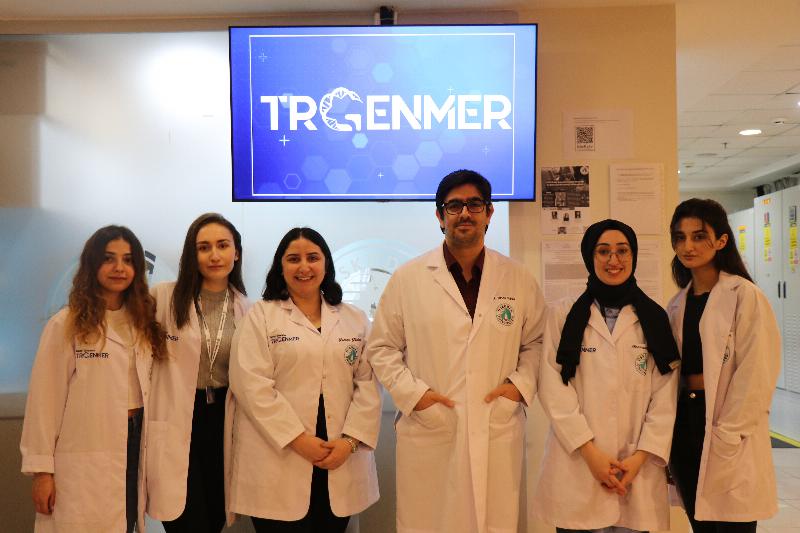
Üsküdar Üniversitesi Transgenic Cell Technologies and Epigenetics Application and Research Center (TRGENMER) tested CRISPR Prime Editing gene-editing technology in SMA disease for the first time in the world. Dr. Cihan Taştan, Faculty Member and Director of TRGENMER, stated that with this study, they increased the low SMN protein production in SMA Type 1 patients and noted that they aim for a clinical phase trial by the end of 2023. TRGENMER, which conducts studies to produce similar and inexpensive drugs in a national drug concept for use in the treatment of rare diseases, especially SMA, announced that SMA gene therapy studies are progressing positively.
Content
Hope Trial in SMA! Applied for the First Time in the World
‘SYMPTOMS MAY DECREASE’
Dr. Cihan Taştan, Faculty Member and Director of TRGENMER, stated that CRISPR Prime Editing technology was tested for the first time in the world for SMA disease, saying, “We proved that we reversed the low SMN protein production, which causes SMA disease, through genetic engineering in the SMN2 gene and increased SMN protein production. In recent weeks, we also published our preliminary reports showing the positive progress of our SMA gene therapy studies based on CRISPR Gene Editing Technology, for which the 2020 Nobel Prize was awarded,” he said. Taştan continued his words as follows: “While SMN protein production in SMA type 1 patients is approximately 10 percent, we increased this rate to 30 percent with CRISPR and up to 75 percent with AAV gene therapy in controlled experiments established in the laboratory, which are very good rates for reducing the symptoms of SMA disease.”
‘WE AIM FOR THE END OF 2023’
Cihan Taştan said that they aim to start testing their SMA gene therapy approaches, which are structurally similar to two different genetic treatment drugs, Zolgensma and Spinraza, currently FDA-approved and on the market, and even provide more permanent and long-term treatment opportunities, in SMA animal models by the end of 2022. Taştan stated that they aim to move to clinical phase trials in children with SMA by the end of 2023 and, for this reason, noted that they submitted a project application to the Turkish Health Institutes Presidency (TÜSEB).
Share
Update Date: February 28, 2026
Creation Date: May 18, 2022
Request a Call
Other News
- Social responsibility courses moved to the field
- Erasmus+ Orientation Week completed at Üsküdar
- Prof. Nevzat Tarhan: “Brain secretes ‘dark glue’ in social media lynchers!”
- Prof. Nevzat Tarhan: “Every segment of society should be able to say, ‘This constitution is my constitution!’”
- OHS releases guide for safe operation of industrial robots