Social media addiction increases as loneliness increases
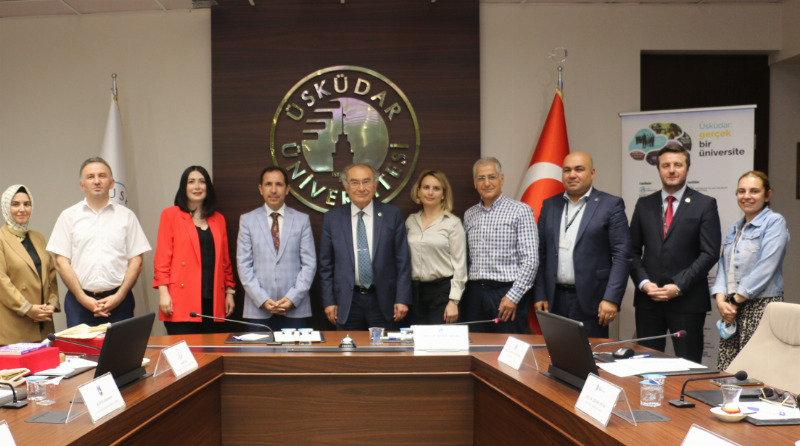
The team for the 'Change Starts With Me Social Media Awareness' Project, led by Üsküdar Üniversitesi Founding Rector and Chairman of the Board of Trustees Prof. Dr. Nevzat Tarhan, and coordinated by Assoc. Prof. Dr. Aylin Tutgun Ünal, included Child and Adolescent Psychiatry Specialist Assoc. Prof. Dr. Çiğdem Yektaş from Üsküdar Üniversitesi, Ophthalmology Specialist Lecturer Dr. İbrahim Şahbaz, Üsküdar District National Education Branch Manager Fehmi Gür, Betül Belkıs Okutan from the Üsküdar District National Education Directorate, and Üsküdar District Governorship Project Specialist Hüseyin Karaman.
In the research, 1453 students from 8 pilot schools selected from various types of high schools in Üsküdar were given social media literacy training for 6 months between December 22, 2021, and June 15, 2022. At the closing ceremony of the project held in the Üsküdar Üniversitesi Senate Hall, the project's outputs were discussed with its stakeholders.

Aydın: “A project true to its name”
Üsküdar District National Education Director Sinan Aydın emphasized that this study carried out with Üsküdar Üniversitesi was very fruitful and yielded important results, stating, “Ibn Rushd says, 'If an egg is broken by an outside force, life ends; if broken by an inside force, life begins.' The name of the 'Change Starts With Me' project reminds me of this saying. Indeed, there is a great need for this. The project also proved to be true to its name, a substantial project. It was an enjoyable and valuable work. Its results are very precious to us. Hopefully, we will brainstorm what we can do with its results. I thank everyone who contributed.”
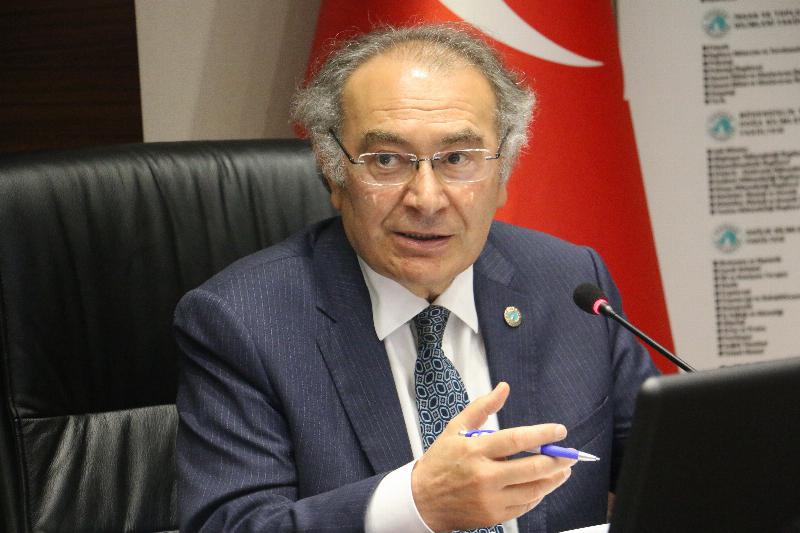
Prof. Dr. Nevzat Tarhan: “Research reflects the perspective of Turkish youth”
Prof. Dr. Nevzat Tarhan stated that 1453 students were reached in Üsküdar within the scope of the 'Change Starts With Me' Project, and said, “Actually, based on this research, we can derive a perspective for all of Turkey. There was a study by the University of Manchester on loneliness. In that study, the rate of young people aged 16-24 who said 'I feel very lonely' was 40 percent. It was a study involving approximately 50,000 young people worldwide. We can say that Turkey has caught up with the global figures. The rate of young people saying 'I sometimes feel very lonely' was determined as 42 percent, and the rate of those saying 'I feel lonely every day' was 15 percent. The total of those who said often, never, every day, and sometimes reaches 80 percent.”
Prof. Dr. Nevzat Tarhan: “Despite our culture, young people feel lonely”
Prof. Dr. Nevzat Tarhan, emphasizing that our culture does not encourage loneliness, said, “Despite this, the fact that young people feel lonely shows that they are more affected by global factors compared to young people in the UK. When we talk about identity, there is cultural identity, environmental identity acquired from the family, and sexual identity. Social media has taken the place of the family in identity formation. Research results also show that the rate of young people who spend more than 7 hours on social media, are considered addicted, and feel lonely is quite high. So much so that as loneliness increases, addiction also increases.”
Prof. Dr. Nevzat Tarhan: “Social media and the internet are the open doors of our homes”
Prof. Dr. Nevzat Tarhan, underlining that young people see social media as a means of socialization, said, “Actually, social media should be called virtual media. It is referred to as social media, but those who spend time on it are not social at all. We are deceiving ourselves under the name of social media. People invite the most untrustworthy individuals into the safe environment of their home. For this reason, we define social media and the internet as the open door of our home. We think the house is safe, but there is an open door to the house, and through that door, without us realizing it, a lot of information enters our child's room. This also needs to be known.”
Prof. Dr. Nevzat Tarhan: “In the future, Hollywood-identified youth will govern Turkey”
Prof. Dr. Nevzat Tarhan stated that there is a cultural connection to the addiction seen in female students based on the research results, saying, “The reason girls prefer social media is that it seems attractive to them. This is because girls are overly restricted in society. They, in a sense, create a bypass through social media. Boys can spend time more freely outside. There are global projects like TikTok. For example, in South Korea, girls are among the biggest victims of these projects. They try to appreciate the role models on that platform by falling in love with them. In terms of identity development, if we continue like this, in 30 years we will have children with global identities. In other words, our own national identity will have changed. In 20-30 years, young people with Hollywood identities will govern Turkey. Parents need to know this.”
Prof. Dr. Nevzat Tarhan: “Home environment and family relations are important criteria in addiction”
Prof. Dr. Nevzat Tarhan stated that as a professional, they consider it appropriate for children to learn digital literacy between the ages of 0-6 and continued his words as follows:
“As a principle, it is recommended not to give tablets or smartphones to children aged 0-3 when they are alone. Children need to be digitally literate under parental supervision, but giving them a tablet or smartphone alone until early adolescence is no different from leaving them alone on the street. If parents can talk to their children and spend a lot of time together, the risk for the child decreases. Children who spend a lot of time with their parents and have a warm home environment show a low rate of social media addiction. If a child loves their home, they engage with social media and the internet for a bit, then put it aside and continue with their daily life. If they don't, they use it as a stress reduction technique, leading to a false sense of relief, and they get carried away. If the home environment is good, the child does not become a prisoner of social media. Parents need to focus on how to make their home a warm and attractive environment. We recommend walking alongside adolescents rather than trying to correct them by confronting them. Families can be companions to their children.”
Prof. Dr. Nevzat Tarhan: “It is necessary to be a role model for the child and not to be authoritarian”
Prof. Dr. Nevzat Tarhan noted that this age group rejects authoritarian parenting styles, stating, “Children of parents with an authoritarian style tend to turn to social media more, where they feel safe. Until early adolescence, children are more receptive to listening because they are dependent on their parents. However, with adolescence, friends become more important than parents, and they become more open to influence and reaction. Detachment from the family is part of a child's biological nature. They need to individuate. If the home environment is pleasant and they enjoy coming home, they avoid breaking family rules. When raising a child, a family environment with dreams and rules should be established. If this can be done, the child adheres to the rules at home. If parents open their computers immediately upon arriving home and spend time that way, the advice they give to their child loses all meaning. Being a role model and not being authoritarian is very important.”
Prof. Dr. Nevzat Tarhan: “Parents should pay more attention to their children”
Prof. Dr. Nevzat Tarhan concluded by stating that addicted children generally express that they cannot talk to their parents: “As a result, these young people try to resolve their stress on social media. Research results show that 51 percent of them develop sleep disorders. This is a very serious rate. This situation reminds me of Google's slogan, 'Our biggest competitor is sleep.' Looking at the rates, we can actually say that they have succeeded, meaning they have disrupted the sleep of young people. The rate of dry eyes was also determined to be 42 percent. This data also indicates high exposure and suggests that an increase in eye diseases in this age group would not be surprising. Research results revealed that young people look to social media, not to their parents. Therefore, parents need to pay more attention to their children. If parents spent half an hour with their children 50 years ago, even if they spend 1 hour now, it will be of higher quality. If time cannot be allocated, children should not be brought into the world. If we don't have our children, they become children of popular culture.”
Social media addiction of 1453 high school students in Üsküdar investigated
The research, which involved high school students within the scope of the project, drew attention with its striking results. The 1453 high school students participating in the study were asked about their screen usage, social media usage preferences, and the frequency of encountering symptoms such as headaches and sleep disorders, along with a social media addiction scale. While the average age of participants, ranging from 14 to 18, was 15.5; 55.7% were female (809 people), and 44.3% were male (644 people). It was stated that 7% of the participants were in the preparatory class; 28.8% in the 1st grade, 30.1% in the 2nd grade, 26.2% in the 3rd grade, and 7.9% in the 4th grade.
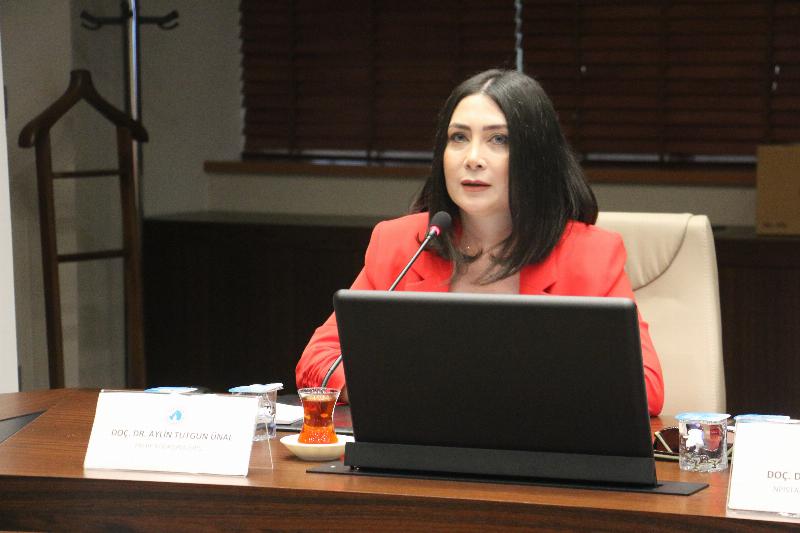
Assoc. Prof. Dr. Aylin Tutgun Ünal: “Addiction scores are high in schools with a majority of girls”
Üsküdar Üniversitesi Faculty of Communication Lecturer and Social Media Expert Assoc. Prof. Dr. Aylin Tutgun Ünal provided information regarding the striking results of the research.
Ünal noted that the study revealed social media addiction varies even from neighborhood to neighborhood, stating, “The research showed the presence of social media addiction that varies from school to school in Üsküdar, Istanbul. Girls' higher use of social media emerged along with use for emotional support, and social media addiction scores were found to be high in our high schools with a majority of girls. This indicates that interventions can primarily be carried out in high schools with a majority of girls.”
Assoc. Prof. Dr. Aylin Tutgun Ünal: “High school students have a social media addiction that creates mental preoccupation”
According to information provided by Assoc. Prof. Dr. Aylin Tutgun Ünal, female students' addiction scores were higher. Assoc. Prof. Dr. Ünal said, “High school students have a social media addiction that creates mental preoccupation. Recurrent thoughts about what is happening on social media lead to increased usage. As seen in the research, motivations for social media use are seeking emotional support and the need for socialization. They prefer social media platforms where they can express themselves more comfortably for the purpose of socializing.”
Addiction is higher among students newly starting high school
Ünal noted that social media addiction differs for students in the 1st grade of high school compared to those in the 3rd grade, stating, “Accordingly; along with general social media addiction, high school 1st-grade students were found to have high social media addiction in terms of preoccupation and emotion regulation dimensions. Social media creates mental preoccupation, and the seeking of emotional support is at a high level.”
High school students mostly use Instagram
According to the research, high school students use Instagram the most, at a rate of 58.8%. This is followed by YouTube at 25.9%. The TikTok app ranks third with 7.6%. The Twitter app ranked fourth with a rate of 3%. High school students stated that they enjoy following video and music content, taking single and multiple photos, and sports news. Young people also stated that they dislike snarky remarks, politics, and advertisements on social media.
Addiction increases as social media usage time increases
The research also revealed the daily social media usage hours of high school students. Assoc. Prof. Dr. Aylin Tutgun Ünal stated that those who use it for 1-3 hours a day ranked first with 50.7%. While the rate of those who spend 4-6 hours a day ranked second with 33%; the rate of those who spend more than 7 hours on social media was 7.6%. Assoc. Prof. Dr. Ünal said, “The addiction of the group using social media for more than 7 hours was found to be higher than those who used it for less time. Similarly, high school students using social media for 4-6 hours were found to have higher social media addiction than those using it for fewer hours. Thus, social media addiction increased as social media usage time increased. The social media addiction score of 110 high school students who used social media for more than 7 hours a day was found to be the highest (120 points), revealing that they are moderately addicted.”
“Liking those who like you” increases social media addiction
The research questioned the attitude towards social media likes. Assoc. Prof. Dr. Aylin Tutgun Ünal said, “Social media addiction was found to be higher among high school students who adopted the attitude of liking based on the person, saying 'I like those who like me,' compared to those who viewed, read, and liked content based on the content itself. Mental preoccupation and emotional addiction also increased with the 'liking those who like you' attitude. Those who said 'I just browse, I don't like' had the lowest social media addiction. Thus, engaging in liking and 'liking those who like you' (Like’a Like / Beğen’e Beğen) behavior increases social media addiction.”
Addiction was highest among those who checked 30-40 times within 1 hour
According to the research results, high school students who checked their phone, mobile devices, or computer screen 30-40 times within 1 hour had the highest social media addiction. Assoc. Prof. Dr. Aylin Tutgun Ünal said, “High school students who checked digital screens 20-30 times within 1 hour also had high social media addiction. Accordingly, it was observed that social media addiction increased as the frequency of checking phone, mobile devices, or computer screens within 1 hour increased. The lowest score was obtained by those who checked 5-10 times.”
Social media addiction increases as the frequency of sleep disorders increases
According to research results showing that social media addiction scores increase as the frequency of sleep disorders increases, the social media addiction scores of high school students who stated that they frequently, very frequently, and every day have sleep disorders significantly differed, and their addiction increased. Assoc. Prof. Dr. Ünal said, “The addiction score was highest for those who had sleep disorders every day (113.6 points), and lowest for those who said 'Never' (76.4 points). In addition; the score for those who said 'very frequently' was 107, for 'frequently' was 99, and for 'sometimes' was 87.9. Those with frequent sleep disorders showed high social media preoccupation and high addiction to emotion regulation. It was also revealed that conflict behaviors were high with increasing doses of social media use.”
Headaches also increase as addiction increases
Assoc. Prof. Dr. Aylin Tutgun Ünal said, “In the research conducted with 1453 high school students aged 14-18, headaches also increase as social media addiction increases. Accordingly; the social media addiction scores of those who had headaches every day (111 points), very frequently (103 points), and frequently (101 points) were found to be significantly high. The social media addiction score of the group without headaches was found to be the lowest (77.7 points). The research concluded that as the frequency of headaches increased among high school students in Üsküdar, social media addiction also increased. It was concluded that the increase in social media usage increases headaches. The desire to constantly be on social media, thinking about what is happening there when not present, seeking emotional support from social media, and postponing tasks along with increasing doses of repetitive usage habits also bring about headaches.”
Social media addiction increases as loneliness increases
In the research, 1453 high school students were also asked how often they felt lonely. Those who constantly felt lonely (112 points), very frequently felt lonely (100 points), and frequently felt lonely (95.8 points) were found to have high social media addiction. Assoc. Prof. Dr. Ünal said, “Social media addiction increased as the frequency of feeling lonely increased. Those who sometimes felt lonely (89.4 points) were again found to be more addicted than those who said 'Never' (76.2 points). Social media preoccupation increased as loneliness increased. Spending time frequently on social media and social media creating mental preoccupation, meaning frequent recurring thoughts about what is happening there even when not in use, increased. Seeking emotional support from social media increased with the frequency of loneliness. As loneliness increases, behaviors such as escaping real-life problems, feeling better on social media, and using social media in increasing doses for this purpose also increased. Along with increased frequency of feeling lonely; negative consequences such as using social media for socialization, preferring online friendships instead of face-to-face ones, postponing tasks, and experiencing conflicts with real-life people and tasks also increased.”
Social media addiction is high among those whose eye prescription increases
The research also examined the link between social media addiction and eye disorders. Social media addiction was found to be highest among those with eye disorders whose glasses prescription increased in their last examination. Social media addiction was found to be significantly higher for those whose prescription increased compared to those who said “decreased in the last examination, did not change” or “I don't wear glasses.” Preoccupation addiction was also found to be high in those whose prescription increased. It was revealed that those whose prescription increased in the last examination thought about social media more and had higher mental preoccupation with social media.
Dry eyes also increase as addiction increases
According to research results showing that social media addiction scores also increase as the frequency of dry eye complaints increases, it was found that the frequency of dry eye complaints increased as social media preoccupation increased. Similarly, those who were emotionally addicted to social media had increased dry eye complaints. The frequency of dry eye complaints increased with rising social media addiction scores in other dimensions of repetition and conflict. Assoc. Prof. Dr. Aylin Tutgun Ünal said, “Thus, it is observed that increasing doses of social media use continue along with the frequency of dry eyes. This showed that the desire to use social media did not decrease despite dry eyes.”
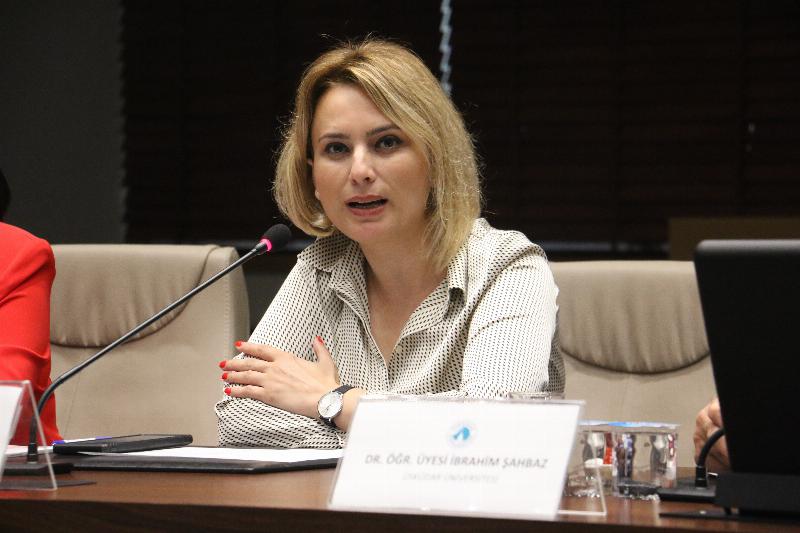
Assoc. Prof. Dr. Çiğdem Yektaş: “Young people are now borrowing a significant part of their identity from social media”
Assoc. Prof. Dr. Çiğdem Yektaş, a project coordinator and Psychiatry Specialist from Üsküdar Üniversitesi Faculty of Medicine, Department of Child and Adolescent Mental Health and Diseases, emphasized that adolescence is a critical stage of identity development that will determine our roles and values in adult life, stating, “During this period, whatever we connect with, model ourselves after, and engage with, we evolve into that. Healthy and value-appropriate identification models are essential for a healthy sense of identity to develop. Developing a healthy identity also brings emotional and behavioral autonomy, meaning full control over one's behavior and emotions, which in turn means the ability to cope with stress in adult life, satisfaction in home, work, and interpersonal relationships, and a reduced incidence of psychiatric illnesses. In the results of our research, we see that young people are now borrowing a significant part of their identity from social media.”
Assoc. Prof. Dr. Çiğdem Yektaş said, “For this reason, we must be aware of young people's social media activities not only in terms of time but also content, listen to their curiosities and questions when necessary, and set healthy boundaries from childhood. It should not be forgotten that while healthy social media use can be a tool for identity experimentation for adolescents, inappropriate and intense use may indicate a 'identity crisis.'” Yektaş also emphasized the importance of creating healthy social spaces for children.
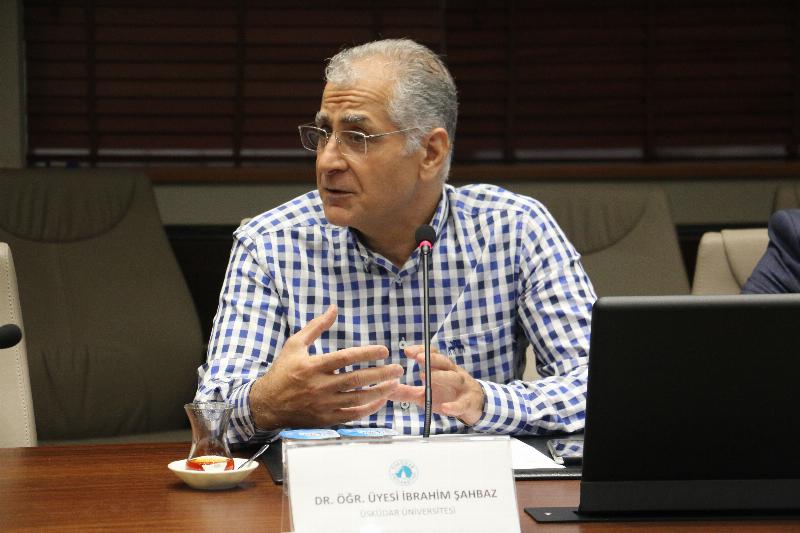
Dr. İbrahim Şahbaz: “An increase in myopia as a refractive error is observed.”
Dr. İbrahim Şahbaz, another project coordinator and Lecturer in Ophthalmology at Üsküdar Üniversitesi Faculty of Medicine, also presented research results demonstrating the relationship between social media addiction and eye disorders. Emphasizing that children are given smart devices like tablets and phones almost from birth, Şahbaz noted that eye development begins at birth and continues until approximately age 12. Şahbaz warned, “During this period, external factors, primarily genetic factors, affect eye health and vision development. Myopia, a refractive error, is the most common disorder in society. In the progression of myopia, this increase also plays an important role, particularly due to the continuation of the eye's accommodation, called excessive accommodation, caused by very close work. The results of our study clearly demonstrate this situation. Additionally, in children, excessive attention and focus significantly reduce the number of blinks. This number, normally an average of 20 times per minute, decreases drastically, leading to severe dry eyes. Along with dryness, blinking and tics, allergic problems, redness, and blurred vision are also observed.”
Lecturer Dr. İbrahim Şahbaz said, “In our study, social media addiction was found to be highest among those with eye disorders whose glasses prescription increased in their last examination. Continuous use of electronic devices has a direct impact on education, learning, and competency skills. The duration of time spent with screened devices, their content, nighttime use, and the number of digital devices are reasons for eye health problems, orthopedic problems, a higher risk of obesity, nutritional problems, symptoms of depression, and a lower quality of life among children and adolescents. Gaze position, sitting angles, proper placement of devices, and ambient lighting are important parameters in screen use. For screen use duration and distances, we recommend the 20/20/20 rule: every 20 minutes, look 20 feet (6 meters) or beyond for 20 seconds.”
Dr. Şahbaz: “Addiction starts in the cradle…”
Emphasizing that they have started seeing children in strollers with cell phones or tablets in their hands in the clinic, Şahbaz noted that addiction now begins in the cradle.
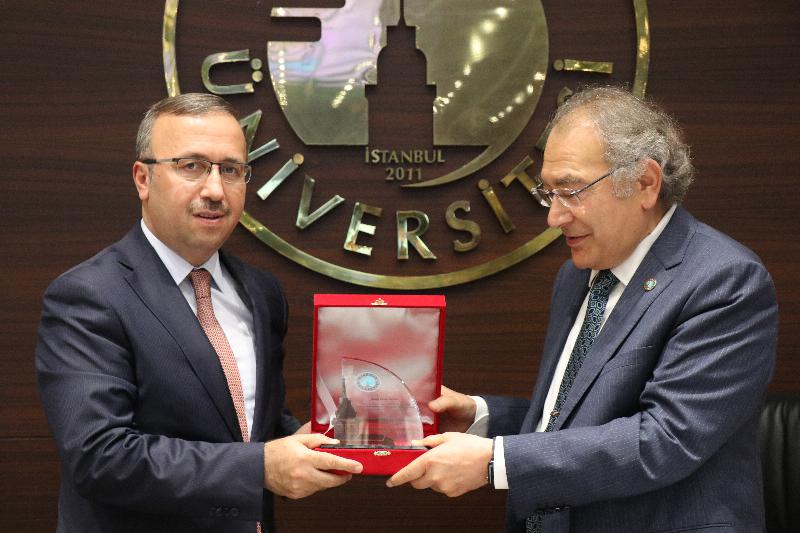
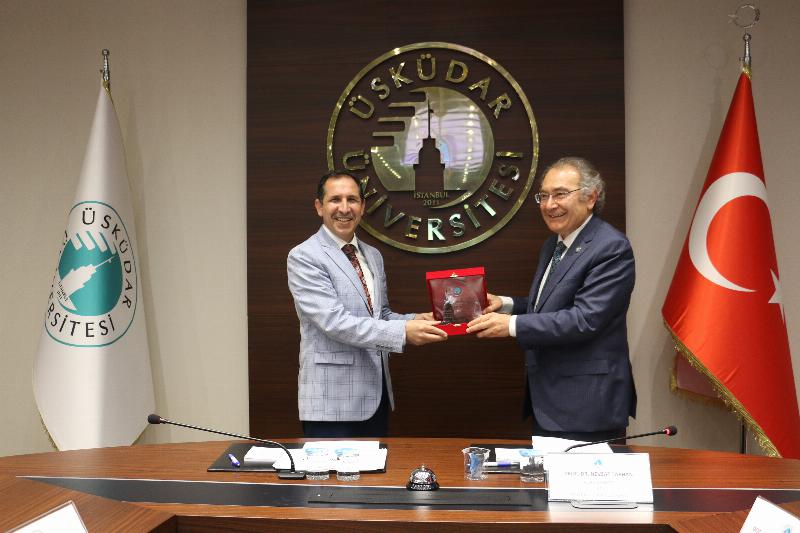
The program concluded with the presentation of plaques to project coordinators and certificates of appreciation to supporters, followed by a photo session.

