

ÜÜTV had an important guest from the earthquake zone this week. Ali Uğur, the founding chief of the Hatay Academy Orchestra, was a live broadcast guest on the ‘Beyond the Lines’ program. Describing Antakya as a barefoot, homeless child, Uğur stated that people found themselves in another land before their tears even touched the ground. Ali Uğur noted that the greatest pain was this: having to leave without being able to mourn, while the cries of their loved ones continued.
Content
Hatay Academy Orchestra Chief: “Antakya is like a barefoot, homeless child”
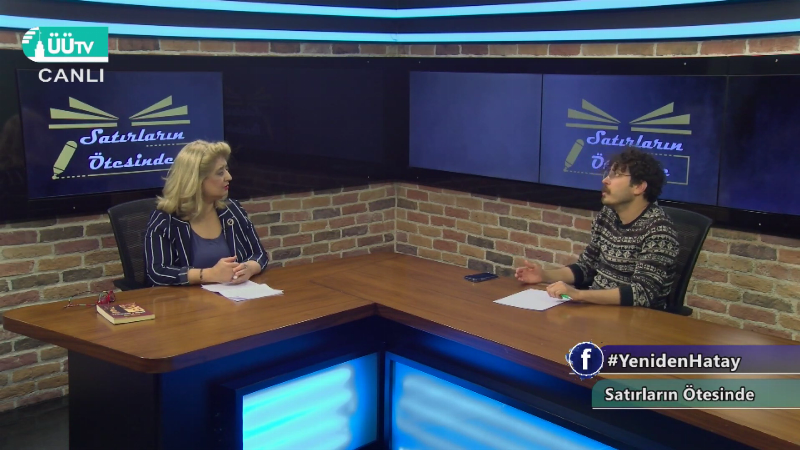
Ali Uğur, the founding chief of the Hatay Academy Orchestra, was a guest on Üsküdar University Television’s (ÜÜTV) live broadcast program ‘Beyond the Lines’, joining from the earthquake zone. In the program presented by Üsküdar Üniversitesi faculty member Assoc. Prof. Dr. Feride Zeynep Güder, Ali Uğur discussed the effects of the Kahramanmaraş-centered earthquake on Antakya and the art performed in the region.
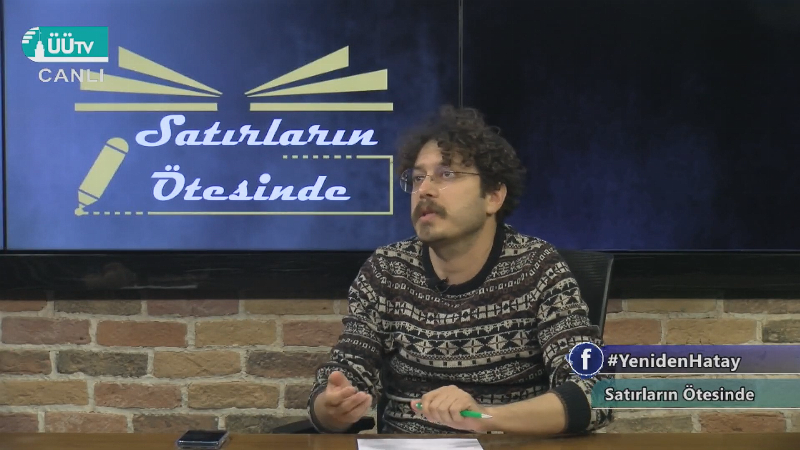
Antakya is like a barefoot child…
Ali Uğur, who witnessed the rebuilding of life in Antakya and lost 4 friends from his orchestra in the earthquake, shared his feelings and thoughts live. Uğur: “Currently, Antakya is like a barefoot, homeless child. We are trying to be shoes for it. Its house was destroyed, we are trying to be its home. We are grieving very intensely; our last 3 rehearsals were very difficult for us, emotionally. We made music without our friends for the first time; we raised our voices for the first time. This time, we played the pieces we used to play with them without them, or we played pieces in their memory. For example, everything is very emotional for us, but we never gave up. There was destruction, yes. How can we weave new life from this destruction? We are talking about a city that is physically gone, but its spirit is still alive. That's why our hope is still fresh; in fact, we became more hopeful, we grew more, and we met many wonderful people during this process. Perhaps these happened as a result of pain, but beautiful things can also emerge from pain.” he said.
It is an injustice to reduce Hatay, which bears the traces of two civilizations, to künefe and gastronomy…
Artist Ali Uğur stated that Antakya, besides its food culture, also possesses strong historical and spiritual cultures, and described Antakya as an ancient land. Uğur said; “The topic of künefe and gastronomy was an issue that bothered me even before the earthquake. It wasn't just me, but all Antakyan intellectuals were bothered by it. I'm not judging outsiders because that’s how it's presented to them; Hatay’s administrators also present it that way to the outside world, and that’s the main problem. All Antakyan intellectuals are distressed and saddened by this because we are talking about an ancient land. One of the few ancient cities in the world. We are talking about two civilizations, the Hittites and the Romans, with such immense cultural layers, which influenced the entire world with their cultures. It is a city that was the center of both. With so many ethnicities living together, we reduce all this culture to künefe and gastronomy. Food and künefe do not create culture. Cultures create food. Hatay needs a vision to understand this. Yes, our food is delicious, our künefe is wonderful, but it is the multi-layered culture that created it. We need to address the true ancient culture, history, and philosophy. For instance, an example I always give, and I will insist on giving it, is Libanios, a philosopher who lived in Antakya in the 4th century. He founded the Antakya Academy in the 4th century in Antakya, which then became the educational center of the East, and intellectuals from many parts of the world came to receive education there. At that point, culturally and artistically, Antakya was at a lower level than it was before the earthquake. Antakya is not a gastronomy city. Gastronomy is just one of its aspects, but we are talking about a massive ancient land. Of religions, languages, art, philosophy, culture, architecture. It was the second-largest city of Rome during that period. So, to extract only gastronomy from such a city would be an injustice to it. If we only interpret grief as despair, we cannot create a new city and culture; then we truly perish.” he commented.
People found themselves elsewhere before their tears touched the ground…
Referring to the exodus of qualified people from Antakya, Uğur said; “Antakya was a harbor, a home for us. A ship in a storm, in the ocean, battles all storms, but there is a lighthouse and a harbor to take refuge in. Antakya was like that for us. It was destroyed, that’s the real problem; the place we called home, the place we called a harbor, was destroyed. A disaster happens, your house is destroyed, or, for example, a loved one dies, you still experience your grief in your own city, you go and take refuge with a friend. You take refuge with your parents, you go to a place you always frequented and cry. You experience your grief in your own city. We couldn't do that; our city was destroyed, our loved ones, relatives, friends, memories, all were destroyed, and we couldn't experience our grief there; everyone had to leave. Before their tears touched the ground, people found themselves in another land, or while the cries of their loved ones continued, they had to leave, couldn't help, and left with their eyes looking back; that was the real pain. I didn’t have a friend to go and share my pain with. After this earthquake, Antakya experienced a significant exodus of qualified people; teachers, artists, scientists, academics, doctors, all left, and there is a possibility they will settle in the places they went to. If these people settle where they went, they won't be able to return to Antakya. Let's say we build many beautiful architectural cities. But aren't the cultural actors the ones who will give meaning to these aesthetically beautiful buildings? A building does not create culture. For example, in this earthquake, none of us grieved because our shopping mall was destroyed. Apartments were destroyed, but we grieved for our friends who died inside, not for the apartments. As we physically rebuild the city, how will we bring back these local cultural actors in Hatay? A reason is needed there, a motivation is needed. It is the local people who will sustain Antakya. Life goes on. Our city was destroyed, but there are living people, there are children, newborns, those born during this trauma.” he stated.
Hatay Stands Again Platform
Uğur spoke about the platform of which he is one of the founding members; “Hatay Yeniden Ayakta Platformu (HAYAP - Hatay Stands Again Platform). It includes archaeologists, historians, researchers, scientists. We have archaeologist friends there. Their areas of work are Antakya, Roman Antakya, History of Antakya. Actually, it is the 35th destruction it has experienced since Roman times. History has shown us this; it happened to us. It seems like something that recurs, but there needs to be a breaking point here. Of course, there are other platforms I am involved in, like Hatay Ortak Meselemiz (Hatay, Our Common Cause). I am a founding member of HAYAP; we established it together with academics, artists, archaeologists, university representatives, scientists, and associations. You can follow us on our website hayap.org or on Instagram; we have also published our declaration.” he concluded.
Reporter Tarkan Küçükgüzel
Share
Update Date: March 01, 2026
Creation Date: March 31, 2023