

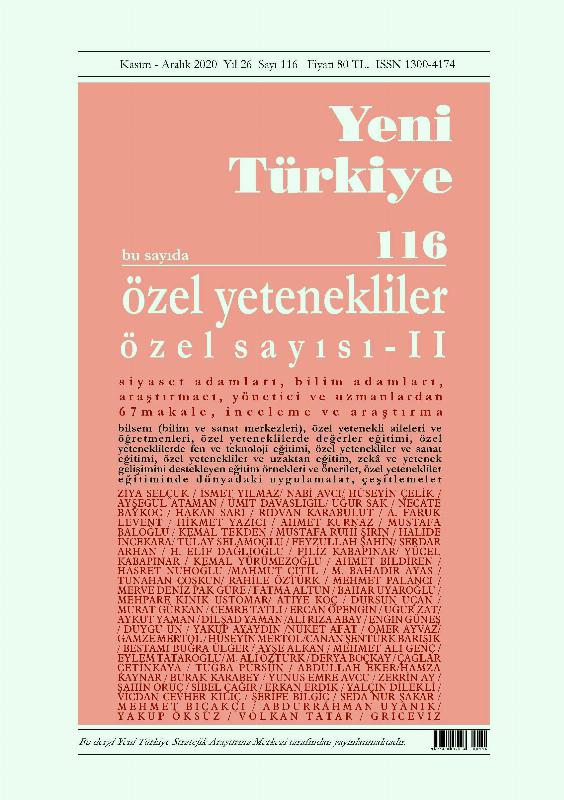
Üsküdar Üniversitesi Rector's Advisor, Director of the Application and Research Center for Gifted Children (ÖYEMER) Halide İncekara evaluated gifted children in the latest issue of Yeni Türkiye Magazine. Full text of İncekara's published article:
Content
Halide İncekara Wrote About Gifted Children
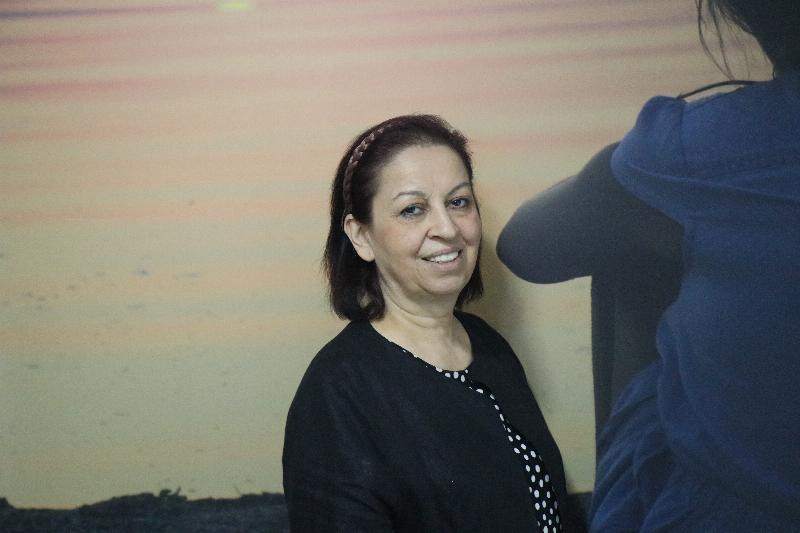
REFLECTIONS FROM THE PARLIAMENTARY RESEARCH COMMISSION REPORT ESTABLISHED FOR THE PURPOSE OF DISCOVERING GIFTED CHILDREN, IDENTIFYING PROBLEMS RELATED TO THEIR EDUCATION, AND ENSURING THEIR EFFECTIVE EMPLOYMENT TO CONTRIBUTE TO OUR COUNTRY'S DEVELOPMENT
I consider Yeni Türkiye dedicating an issue to gifted children very valuable, both for the present and future of our children and for our country's human capital. In this work, I will endeavor to contribute by sharing my observations and findings, given my roles between 2007 and 2015 as Founding Member of the Grand National Assembly of Turkey (GNAT) Children's Rights Monitoring Committee, Chairperson of the Parliamentary Research Commission established to investigate problems affecting children, particularly missing children, and determine necessary measures, and Chairperson of the Parliamentary Research Commission established for the purpose of discovering gifted children, identifying problems related to their education, and ensuring their effective employment to contribute to our country's development.
I strive to work not only on issues related to our gifted children but also on obstacles facing all our children for a good generation. Therefore, we first carried out the work of the Parliamentary Research Commission established on 28.05.2007, which submitted its report for 'Investigating the Increasing Tendency of Violence in Children and Youth and Incidents Occurring in Schools, and Determining the Measures to be Taken.' In 2008, we established the Children's Rights Monitoring Committee in the GNAT. In 2010, we conducted the work of the commission established for 'Investigating Problems Affecting Children, Particularly Missing Children, and Determining the Measures to be Taken.' During these efforts, seeing the struggles of our children with different talents, we formed a commission for 'Discovering Gifted Children, Identifying Problems Related to Their Education, and Ensuring Their Effective Employment to Contribute to Our Country's Development.' These commissions allowed us to understand the problems our children face from the moment they are in the womb more closely. We began working with state institutions, universities, and civil society to find solutions to our findings. Therefore, in my article, as the chairperson of the research commission, I will share my experiences regarding the reasons for establishing the commission, its development processes, and its results. The efforts since 2008, which have increased the speed, content, and prevalence of previous work, are gratifying, but we must also acknowledge that they are not sufficient. The Research Commission Report (November, 2012) was approved by parliament and also facilitated the preparation of the Science and Technology Higher Council's strategy working document in 2013. The Ministry of National Education and the Ministry of Family and Social Policies were assigned roles within the strategy. While these two ministries were designated as responsible organizations, the Ministry of Science, Industry and Technology, the Ministry of Development, TÜBİTAK, YÖK (Council of Higher Education), and Universities were also included among the relevant organizations. Alongside the Ministry of National Education, the Ministry of Family also showed sensitivity on this issue and published a book addressing families on the subject, just like the MEB (Ministry of National Education).
We all know that good intentions are fundamental to effective and successful work, but they are not sufficient. For a work to succeed, it should be sustainable, increase its impact and prevalence over time, and renew itself according to new needs. Therefore, the issue of education for gifted children should be institutionalized as a state policy and followed up, without being affected by interruptions in political processes and changes in management.
In our commission work, it was foreseen to establish a high council on giftedness and assign tasks to relevant ministries from there. Considering that the child is not only a matter for the Ministry of National Education but also a common subject for the Ministry of Family and Social Policies, the Ministry of Youth, and even all policies, the existence of such a high council and the adoption of child-centered decisions are very important. However, currently, education and the education of gifted children fall solely within the control, work, and program framework of the Ministry of National Education. For example, considering that televisions and social media are very effective educational tools, it is not possible to consider a child's education independently of these areas. The more success stories are told on screens and in broadcasts, the more stories are changed in series, and the more moral and just people are shown winning, the more positively it will contribute to our children's development. They will say that we do not make our broadcasts, films, and series according to our children's needs; we tell the realities of life and get ratings. Well, they will also say that they are as close as a remote control to the TV, so they should turn it off, take their children away from the screen. These are big mistakes; these thoughts are too simple. Thinking that every family's approach to their child, their protection of their child, and their interest in their child are different, and that many innocent, talented, growing children can be within advantaged/disadvantaged families, is not only the responsibility of families but also, of course, of broadcasters and regulators (like RTÜK).
Education/Upbringing of Special/Gifted Children
The concept of 'nurturing' gifted children is closer to me than the concept of 'educating' gifted children. While education describes an active and passive relationship, nurturing is about contributing to a child's development in line with their own abilities.
In education, there are the educated and the educator. If we are talking about gifted children, the educators must be as talented as these children, or at least aware of their talents, and also possess developed skills in understanding the distinct emotional worlds of these children. The education/upbringing of gifted children is a different/special matter; our recommendation is that our children receive education in the same institutions and environment without being separated from their peers. There are also those who advocate for children with different talents to be educated together with children similar to themselves under a separate roof. If our desire is for the child to learn, being under the same roof with those similar to them increases learning speed, but it can neglect personality development, problem-solving abilities, and the recognition of different characters. In this approach, children might think the world is only full of people like themselves. In such a case, when children enter life and encounter different characters and problems, their ability to develop solutions will be limited. Therefore, special programs should be created among their normal peers, in the same environments, differentiated, enriched, with grade skipping if necessary, and sprinkled into weekends and holiday periods; these programs should develop their talents and problem-solving abilities. While the Ministry of National Education addresses children's learning needs (including mentor meetings), along with family and kinship relations, and camps organized by the Ministry of Youth during summer periods (the Ministry of Youth organizes these camps occasionally, and some private institutions do it for a fee), children will have the opportunity to engage with life, observe, and develop their skills. The education of talented children cannot take place in desks, in front of blackboards, and under the school roof, because these cannot meet the needs of a special child; in fact, you would be imprisoning the child's mind and intelligence in this way. A gifted child needs to be intertwined with nature, other living beings, and human relationships where they can observe different problems. We know that most inventions are imitations of nature. How and from where will the intelligence of a child who does not watch/observe nature be stimulated! The intelligence of a child who does not encounter problems cannot focus on problem-solving. I believe that having children from different disadvantaged groups (considering that gifted children also need special education) educated under the same roof within the Ministry of National Education, taking into account the empathy, compassion, and problem-solving abilities of gifted children, will accelerate solution-oriented steps for many disability groups. Recently, we witnessed good examples of this at the Ataşehir Istanbul Fuat Sezgin BİLSEM. During a period when students from different disability groups and BİLSEM students were educated together due to construction at BİLSEM, our gifted students created products to meet the needs of their friends in the other group. A beautiful example; one of our gifted students, Özgür Karagül, stated that a completely different door opened in his mind when he saw students who couldn't control their saliva, and with the support of the Turkcell Zekâ Gücü project, he designed a special bib[1] to facilitate their social lives. With this bib he designed, he made the lives of our mentally disabled students easier. In other words, intelligence and talent shifted to production aimed at finding solutions upon seeing a problem. When he found sufficient guidance and support, he was able to turn what he could do into a concrete product.
The Education of a Gifted Child is Not Independent of Overall Education Quality
When comparing our country with developed countries in terms of education, we must examine not only the education of gifted children but the entire education system. From the duration of compulsory education to career choice, vocational training in secondary education, university entrance exam systems, KPSS (Public Personnel Selection Examination), etc., the reflection of all these on a child's life differs in each country. In our studies in different countries, we observed that curricula are determined according to needs and expectations. In our country, our expectations from a child/student in our westernmost city are the same as our expectations from a child in the easternmost, northernmost, and southernmost regions, which is not acceptable even in normal education. Regional differences should be taken into account after common achievements are identified. Ultimately, considering the support of families, educational investments, and urban culture for students in single-child families in big cities, we may encounter neglected, overlooked children from multi-child families who have not even developed language use by school age. Therefore, teachers sent to regions and schools should undergo special training, and teacher appointments should be made based on need. In developed countries, we observed a higher number of contract teachers. Success, parental and student dissatisfaction/satisfaction influence the renewal of contracts. This increases teacher motivation and success and raises the standard of education quality. In our country's educator appointment system, apart from private schools, our students and parents do not have the chance to choose successful teachers. If in-service training yielded positive results, and if the success of educators, the main element of education, could be increased, most of the problems we complain about today would disappear. Union and civil servant guarantees favor the weaker educator between successful and unsuccessful teachers. Additional elimination exams, such as character analysis and teaching ability tests, should be added to educator selection and appointment exams.
Öur children, whom we call gifted/highly intelligent children, with different learning models and ages, have different needs in terms of upbringing. These children, also called 'gifted children' in foreign languages, have long been, and still are, referred to with a superiority adjective. Our children, who hold an important place in our human communities that we call social capital and human capital, are valuable not because they are more intelligent, but simply because they are children. Giving these children a label of superiority by separating them from other children is primarily a great burden for the children thus defined. In society and among families, having children's intelligence levels measured by taking tests has become popular. So, if our children's intelligence levels turn out to be at an undesirable level, will we give up on our children?
Country Visits (Germany, Korea, New Zealand)
During the commission's work, while conducting studies in Türkiye, to include a few countries in our comparisons, in 2012, we made visits with our MPs and expert team to different regions of the world: Germany, Korea, and New Zealand, known as the only country with a 'Ministry of Intelligence' in the world. We visited high schools and primary schools, as well as universities, to get information from officials. Our first surprise was that the research findings attributing Korea's entire development to gifted children were not entirely true. The voluntary work of academics in Korean universities played an important role in the education system. In Korea, there were education programs for gifted children that had transformed into weekend courses. Families spent a large part of their budgets on their children's university education and weekend courses. The most striking aspect of our research was the high schools equivalent to our science high schools. The difference between these high schools and ours was that the appointees were masters from civilian life, meaning there were successful artists and engineers in their fields; they were assigned as educators in high schools based on need through contracts. The emotional and character development of children was closely monitored by psychologists and pedagogues. Another point that caught our attention was that Education Faculties in Korea admitted students with the highest scores; the teaching profession was very important. While basic decisions related to education in Türkiye are made within a centralized system, in Korea, administrators equivalent to provincial national education directors were elected. The elected person responsible for national education in the region was more careful in fulfilling their promises to their constituents. We particularly observed the practices during these visits, believing that drawing on experiences gained worldwide would increase our speed. During these trips, our conviction that we could do much better if we wanted to was reinforced.
During the GNAT research commission's work, our report shared in detail the educational policies of the Seljuk, Ottoman, and Republic periods, detailed legislation on the subject, private and public institutions providing services, other institutions with which horizontal and vertical relations could be established, and examples of legal regulations and educational practices from other countries.
Institutional Structures Related to Special/Gifted Children in Our Country
In Türkiye, very well-intentioned decisions are made, and instructions are given, but unfortunately, the frequently changing political authority, bureaucrats, and senior executives cannot ensure sustainability in success.
We can group institutions and organizations related to giftedness under the following headings:
RAM (Guidance and Research Centers)
BİLSEM (Science and Art Centers)
Science High Schools
Social Sciences High Schools
Fine Arts and Sports High Schools
Private High Schools opened for Gifted Children
Children's Universities
Gifted Research Centers, etc.
One of the most prominent educational practices was the science high schools, which were widespread in Anatolia. Science high schools admitted special children through special exams, but the increase in the number of science high schools due to political concerns affected both scores and the inability to show sensitivity in appointing special teachers who could cater to the special children in these high schools. The lack of mentor and guidance support for graduating children has prevented measurability regarding educational outcomes.
The following handicaps we encountered during our visit to the Sincan Ankara Children and Youth Closed Penal Institution and Ankara Science High School in 2007 are noteworthy: While in the Sincan Ankara Children and Youth Closed Penal Institution, there was one and a half staff per child, we observed that Ankara Science High School had an acting principal and lacked many subject teachers. We learned that even sports education in the Sincan Ankara Children and Youth Closed Penal Institution was provided by teachers from the Sports Academy as part of social responsibility. When we arrived at the Science High School, we saw that the ceilings of the music room had collapsed, and students even complained about buying their own chalk. In the Science High School laboratory, we saw expired materials. We did not find any differentiation in educational standards; in fact, we thought it was as if they had gathered the country's gifted children and wanted to light a match under them (my emotional state). We saw how talented and intelligent the children who ended up in prison due to various social problems actually were, and that they could become beneficial members of society if given sufficient opportunities in time. We noted that if we could provide the opportunities offered in these places, which we now call educational homes, in our schools and normal life, the vast majority of these children would not be here.
Today, the Ministry of National Education can reach gifted children through BİLSEMs (Science and Art Centers) affiliated with the General Directorate of Special Education and Guidance Services. Science and Art Centers select students through a centralized exam system. These children are sometimes guided to the exams by their teachers and families. It is also regrettable that many of our children miss the exams or do not have this chance, and that the number of BİLSEMs is insufficient even in a large city like Istanbul.
Children who spend their entire day at school are directed to knowledge-focused exams without special talent and personality screenings, burdened by exam responsibilities – such as midterm exams and university entrance exams – and are deprived of measuring their talent areas where they can express themselves and environments where they can showcase them. Science and Art Centers cannot go beyond being educational institutions squeezed into an after-school time slot. Even the term 'educational institution' is incorrect. Gifted children need cooperation and guidance in their fields, in addition to education.
What should be considered for Science and Art Centers to be effective and efficient:
- Science and Art Centers accepting students for a limited period and re-testing and re-admitting students every few years will both increase student motivation/enthusiasm and prevent dropouts from BİLSEM.
- Everywhere in the world, there is a limited period for the education of gifted children. Afterwards, a different and new education is started according to the child's performance. With us, students stay in BİLSEM for years...
- Science and Art Centers should move beyond being just weekend courses and become centers where children's talents are re-measured from time to time, and they must work in cooperation with one or more universities (according to the children's areas of interest).
- Gifted children should be given the opportunity to work with veterinarians, farmers, biologists, zoologists, writers, painters, musicians, etc., and these children should be kept away from exam stress. Furthermore, attention should be paid to students' demands such as 'our educators are not enough for us,' and 'we don't want the same teacher for years.'
The education of gifted children cannot be conducted solely through BİLSEM. Our schools should contribute to the process with support education rooms, differentiated and enriched programs. Guidance and Research Centers should support families and children. When the family or school cannot suffice for the child, they should direct the child to universities and mentors. Confining education to the classroom and blackboard is wrong. Ultimately, in the development of talent, not only the school and family but also the institutions described and classified in the 2013-2017 Strategy and Implementation Plan for Gifted Individuals have, and should have, responsibility.
Personality and Needs of Gifted Children
Gifted/highly intelligent children, in environments where their differences are not accepted, can isolate themselves from the group, engage in attention-seeking/acceptance-seeking behaviors, or hide their talents by trying to appear like everyone else. Instead of teachers and families who say, 'This child is naughty,' 'This child is quiet,' or 'That's probably their temperament,' we need teachers and families who notice the difference.
As families, we should have questions about what we ourselves will do for our children, rather than what others will do. Frankly, I am one of those who do not believe that good child education/upbringing can occur in comfortable spaces, far from nature. A child who does not see a flower growing, etc., within four walls, remains incomplete. An intelligence that does not encounter difficulties or problems, that cannot observe nature, cannot develop. The development of intelligence cannot be limited to classrooms, desks, and smart boards. It would be unfair to expect a child who has never seen the sea to swim, or a child who has never seen a tree to develop climbing skills.
Our advice to families concerned about the upbringing of their talented children is, instead of panicking, to expand the child's environment by being aware of what the family can do, to connect the child with nature, and to answer their child's questions, or connect them with people who can answer them. For a child curious about how a book is printed, instead of saying, 'Where will I find a printing press for you?', it is guidance to show them videos on the internet if possible, or to knock on the door of a printing press and visit it. This does not necessarily require a teacher and an institution.
One should answer the child's questions without saying 'be quiet,' the direction of their questions should be followed, and their wishes should be respected. Not every parent may be able to answer their child's questions. Within their means, they should connect their children with individuals or institutions that can answer their questions. In our time, it is even possible to reach people who can answer these questions through social media in our environment.
In this context, I know that some universities follow gifted children from secondary education onwards and channel them to continue their education in their own institutions, and I find this positive. It is of great value for the education of gifted children to start at an early age and for these young people to be provided with individual and institutional guidance. I believe that a criterion for working with a gifted child should be added to the criteria for becoming an academician.
Since 2015, following my parliamentary duties, I have been continuing my work at Üsküdar Üniversitesi, Application and Research Center for Gifted Children (ÖYEMER), to implement my ideas and make my work sustainable. I believe that universities, with their public-facing and community-facing aspects, will contribute greatly to the process.
The objectives of the center are as follows:
a) To contribute to the evaluation of gifted children in our country and to their upbringing as beneficial members of society.
b) To provide an environment for interdisciplinary research and activities on gifted children, thereby enriching the research and studies conducted, and ensuring that the outputs are rendered useful to our society.
c) To create opportunities for gifted students to conduct scientific studies in line with their talents, and to prepare and present opportunities for them to carry out various projects aimed at solving problems or meeting needs with the gains from interdisciplinary studies in particular.
d) To prepare and present environments that address the social and emotional development of gifted students in a holistic manner, in addition to developing their talent areas.
With the National Talent and Mentor Network Project, Üsküdar Üniversitesi, as ÖYEMER, worked for the critical period of 12-17 years of age. These are the ages when children define their own paths and can enter the struggle to become individuals during adolescence. We find it important for a child to encounter/meet a role model at these ages.
The project was planned to be completed within one year. The first 6 months involved completing the necessary training and software infrastructure, while the second 6 months involved bringing together mentor academicians selected from three universities as a prototype, and developing cooperation with gifted youth.
The project, with Üsküdar Üniversitesi as the main executor, was carried out in partnership with Istanbul Şehir Üniversitesi, Istanbul Development Agency, Istanbul Üniversitesi, the Ministry of Development of the Republic of Türkiye, and the Provincial Directorate of National Education. In the project we conducted, we took into account the objectives of the Science and Technology Higher Council's 2017 Türkiye Gifted Individuals Strategy Document. The National Talent and Mentor Network Project, implemented within the scope of the 2016 Children and Youth Financial Support Program with the support of the Istanbul Development Agency,
aimed for young people to come together with mentor academicians and carry out joint work. In the project, selected students and academicians were given training to enable them to become effective mentors, after which mentees and mentors were matched considering their compatibility. Following this selection, it was aimed for mentees and mentors to communicate through the programmed website, to implement new projects in line with the mentee's interests and talents, and to ensure that gifted children utilize their capacities to the fullest. Of course, these efforts are carried out in cooperation with the Ministry of National Education, Provincial Special Administrations, other universities, and civil society. The project has been successfully completed and transferred to the Ministry of National Education.
When the topic is children, education, and special talent, pages are insufficient for what we want to write. Ultimately, since the article needs to be concluded, I would like to complete the subject with the research commission's conclusions and recommendations:
Giving importance to gifted education and supporting talent in society will contribute to social development and national progress, while increasing individual happiness by allowing individuals to use their potential to the fullest.
Children who differ from their peers in developmental characteristics, to the extent they are supported in their self-actualization process, will also influence other individuals in society with strong motivation and moral values, thus forming a driving force for societal development and welfare.
The Parliamentary Research Commission prepared its report as a result of on-site inspections and country visits, listening to and obtaining opinions from field experts, and examining academic research in the literature. It compiled its findings and recommendations regarding the duties and responsibilities of relevant institutions under the headings of policies, diagnosis, educational practices, human resources, family and society, and employment.
Halide İNCEKARA
Source: Yeni Türkiye Magazine
Share
Update Date: February 27, 2026
Creation Date: December 10, 2020
Request a Call
Other News
- The book that read today's digital threats in 2014: Being a Conscious Family
- Experts warn: 'Instead of memorizing letters, teach pencil grip, scissor use, and coloring'
- School fear and school love both start in the family!
- Family is not merely transforming, it is being battered under a serious assault
- Artificial intelligence opens the door to early diagnosis in autism!