

Üsküdar Üniversitesi's Faculty of Health Sciences, Department of Physiotherapy and Rehabilitation's Prof. Dr. Mehmet Baltalı's article on the 'Fourth Dose Vaccine' topic was published on bianet.org.
Content
The Fourth Dose Vaccine Conundrum
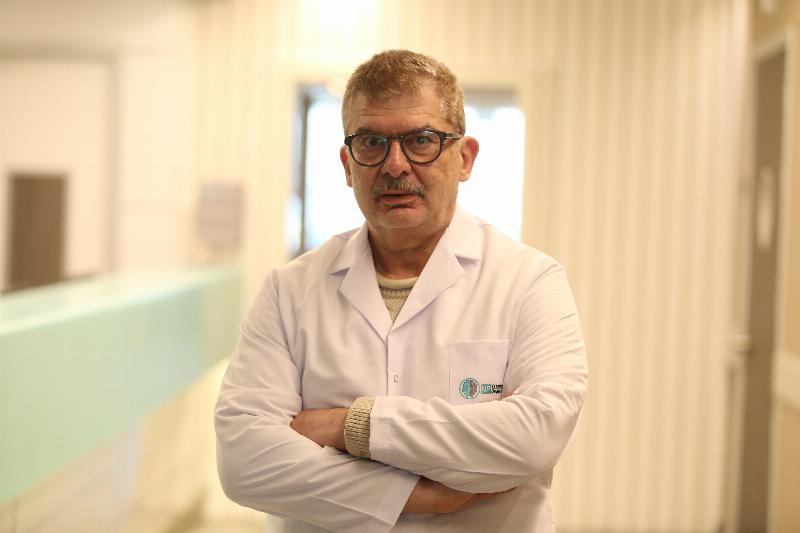
In his article published on bianet.org, Prof. Dr. Mehmet Baltalı stated, "I am a healthcare worker who has received the fourth dose of the vaccine. I am a medical doctor and an academic. In my profession, I tried to act solely based on scientific data. However, the reason I received the fourth dose vaccine was not the existence of sufficient scientific data, but rather its absence."
Prof. Dr. Mehmet Baltalı's article published on bianet.org is as follows:
On the morning of August 16, 2021, healthcare workers were informed that a fourth dose vaccine would be administered. Following this, serious criticism began on social media. Tweets like "Did we get the Sinovac vaccine for nothing?" were posted.
Infection disease specialists, as well as the Turkish Society of Clinical Microbiology and Infectious Diseases (KLİMİK), stated that the priority was to vaccinate all of Turkey, and that a fourth dose vaccine for high-risk individuals was not necessary.
The former president of the Turkish Medical Association (TTB) stated that the fourth dose vaccine application was a scandal and that this decision disgraced Turkey to the world (1,2). It was learned on the same day in the afternoon that the Ministry of Health had withdrawn from this practice. Minister of Health Dr. Fahrettin Koca also used the phrase "There is no additional vaccine requirement other than for special travel requests" in a tweet he wrote in the afternoon.
Subsequently, the Turkish Medical Association issued a press statement (3) indicating that the fourth dose application was not a priority. Everyone was confused. The question of whether a fourth dose of BioNtech was truly necessary for those who had received two doses of Sinovac followed by one dose of BioNtech caused further confusion.
On the morning of August 16, 2021, as soon as I went to the hospital where I work, I received my fourth dose of the vaccine. I am a medical doctor and an academic. I believe people need accurate scientific data, not political comments and inferences. In my profession, I have tried to act purely based on scientific data. However, the reason I received the fourth dose vaccine was not the presence of sufficient scientific data, but rather its absence.
Sinovac
Let's start with Sinovac. It is an inactivated COVID-19 vaccine produced using methods similar to the flu vaccine. It is administered in developing countries like Turkey, Chile, and Brazil. There are no Phase 3 studies, it has efficacy, but it is not clear to what extent it prevents virus transmission to people, hospitalizations, and deaths. The reason for this is that studies conducted in countries like Turkey, Brazil, and Indonesia have yielded very different results. For this reason, it is not recommended by the European Medicines Agency (EMA), and many European countries require two doses of other accepted vaccines for entry, not the Sinovac vaccine. Its effectiveness has been observed in many countries. The complaints of some, such as "Did we get the Sinovac vaccine for nothing?", are truly unfair and baseless. In Turkey, we have witnessed together that the lives of many at-risk individuals, especially hospital staff and the elderly, were saved thanks to Sinovac.
The effect of the Sinovac vaccine on the COVID-19 Delta variant is largely unknown. There is only one study on this, conducted in Thailand, which reports that the antibodies produced by the Sinovac vaccine do not significantly affect the Delta variant (4). Another Phase 1/2 study also showed that antibody levels produced by the Sinovac vaccine dropped below threshold values 6 months after vaccination, and that a third dose vaccine was needed for elderly individuals who had received Sinovac (5).
BioNtech
The BioNtech vaccine, on the other hand, is an mRNA vaccine. Phase 3 studies have proven that it protects people from COVID-19 virus transmission by over 90% initially. It is the only vaccine fully approved for use in the US; at least 60% of the Israeli population has received two doses of the BioNtech vaccine. However, it has been reported that the protective effect of the vaccine against the Delta variant is lower, and its efficacy significantly decreases 6-8 months after the first administration. In parallel, with the proliferation of the Delta variant, a significant increase in cases and hospitalizations is observed in countries like the US, UK, and Israel, where two doses of the vaccine have been administered to most of the population.
This situation led to the administration of an additional third dose of vaccines. This is based on scientific publications showing that third doses significantly increase antibody levels. It has been shown that in individuals who received two doses of Sinovac, the antibody response against the virus significantly increased after a third dose of Sinovac (5). The most important reason for this is considered to be the activation of memory cells formed by the first two vaccine doses. The results of administering a third dose of vaccine to those who received two doses of BioNtech are also encouraging. In Israel, a significant reduction in COVID-19 cases, hospitalizations, and deaths is observed in individuals who received a third dose of BioNtech compared to unvaccinated individuals (6).
Scientific and real-world data, regarding the BioNtech vaccine so far, suggest that individuals who have received two doses should get a third dose of the same type of vaccine for which Phase 3 studies have been conducted. Administering two different vaccines consecutively, such as Astra Zeneca and BioNtech, 15-28 days apart, is similarly effective in producing the initial antibodies in the body (heterologous vaccination) (7), rather than two doses of a single vaccine. There is no clear scientific publication regarding an additional third dose.
Delta Variant Effect
Despite this, for countries like Turkey, where the efficacy of two doses of Sinovac vaccine is unknown, considering the urgency of the situation, it is recommended to administer a proven effective vaccine like BioNtech or Moderna as a third dose, even if its efficacy is unknown (8). In line with the recommendations of KLİMİK and TTB, high-risk individuals in our country who have received two doses of Sinovac rightfully prefer the BioNtech vaccine, rather than Sinovac, for their third dose, six months after their first two vaccinations.
All these publications and inferences were made without taking the Delta variant into account. In other words, it is truly unknown whether a single dose of BioNtech vaccine administered 6 months after two doses of Sinovac in individuals will be effective against the Delta variant even if it produces sufficient antibodies, or if it is necessary to administer BioNtech from scratch with two doses as if no Sinovac vaccine had been given. In this context, the statements by KLİMİK, TTB, and accordingly, the Minister of Health, regarding the fourth dose vaccine as "no additional vaccine requirement," are inferences but lack clear scientific basis.
In Turkey, science and scientific studies are not given due importance, and correct inferences are not made from them in a timely manner. The late start of vaccination, prioritizing a vaccine without Phase 3 studies in the initial vaccine choice, resulting problems in vaccine supply, and the underreporting of pandemic figures, as later confessed, are examples of being detached from scientific data.
Israel
Israel, with its population of 8 million, conducted a vaccination campaign that served as an example to the whole world. It administered the BioNtech vaccine, proven effective and with Phase 3 studies, to 60% of its population. With the observed increase in case numbers due to the Delta variant, it initiated a third dose vaccine in light of scientific data. Now it is reaping the benefits of this. Scientific publications from Israel are being followed and emulated worldwide. What is regrettable here is that Turkey, with a population of over 80 million, hundreds of medical faculties, training and research hospitals, and especially with its Ministry of Health having access to all data, has failed to produce a clear, transparent scientific publication on whether two doses of Sinovac and one dose of BioNtech are sufficient for millions of people, leaving its citizens in a dilemma.
Individual Decision
Autumn is approaching. People will move indoors, schools will open, and public transportation will be packed. There is a high probability of a significant spread of the disease due to the Delta variant. As a high-risk individual in contact with COVID-19 patients, and despite knowing that the body's reaction to a second dose of a different vaccine might be stronger in such an uncertain environment, having experienced no side effects from the first three vaccines, I chose to receive the fourth dose. If asked if I would recommend it to others, I would respond by rephrasing the Minister of Health's words: "There is no evidence as to whether the fourth vaccine is necessary or unnecessary." The decision is up to each individual's discretion.
Source: bianet
Share
Update Date: February 28, 2026
Creation Date: August 27, 2021