

At the conference hosted by Üsküdar Üniversitesi, the Family Institution in Turkic Republics was addressed with the participation of researchers and academics from the Turkic Republics. Üsküdar Üniversitesi Founding Rector Prof. Dr. Nevzat Tarhan also attended the 'International Conference on the Family Institution in Turkic Republics in the Process of Sociocultural Change'. Tarhan used the phrase "Family: The Burning Castle of the West".
Content
Family Institution in Turkic Republics Discussed
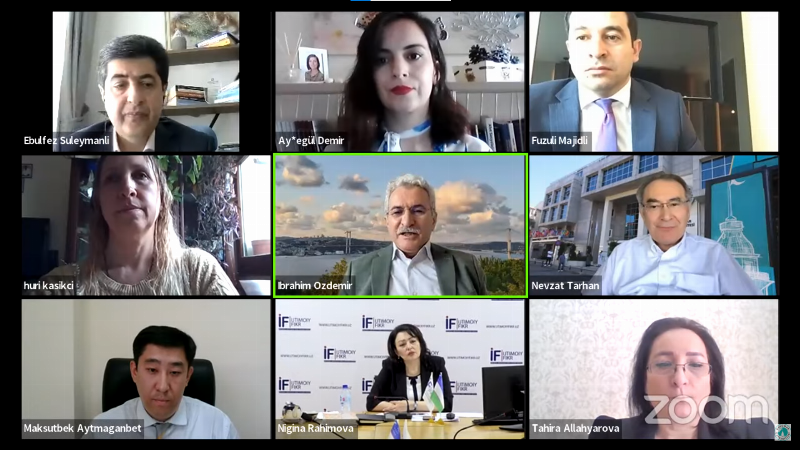
The conference, which was broadcast live on ÜÜ TV and YouTube, was moderated by Prof. Dr. Ebulfez Süleymanlı, Head of Sociology at Üsküdar Üniversitesi. Süleymanlı highlighted the importance of addressing the 'Family Institution' in Turkic Republics within the process of socio-cultural change at this conference, representing Üsküdar Üniversitesi and the International Turkic Academy. Prof. Dr. Süleymanlı noted that their aim was to discuss the family structure in contemporary Turkic societies, existing problems related to the family, and solutions to these problems, through presentations by prominent academics and researchers working in leading Family Research Institutions and Strategy Research Centers in the Turkic Republics.
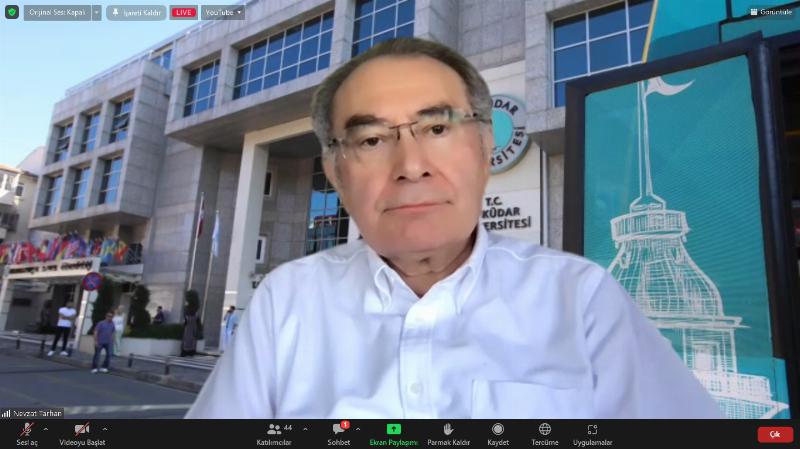
Prof. Dr. Nevzat Tarhan: “The strength of our family ties is something we are proud of right now”
Prof. Dr. Nevzat Tarhan, Founding Rector of Üsküdar Üniversitesi, began his opening speech by thanking everyone who contributed to the realization of the international meeting. Tarhan said; “It brought our blood brothers together. I extend my thanks to everyone who participated from Kyrgyzstan, Kazakhstan, Uzbekistan, and Azerbaijan, and I send my greetings to those regions. This is a week designated as family week in the world. We felt the need to hold this meeting this week. Yesterday, for the first time, a family foundation witnessed developments that could lead us to say, 'Politics in Turkey has become aware of its family responsibilities.' We always have such a beautiful family structure concerning the family. Therefore, we are satisfied. It has been approximately over 10 years. Our family ties are strong, that's true. The strength of our family ties is something we always boast about right now. But we cannot say that it will be the same in 15-20 years. These statistics show that. There are studies on household fragility. In these TÜİK statistics and other statistics on household fragility, the number of single-person households and five-person households are measured. I obtained statistics from 1994 to 2016. During this period, single-person households are rapidly increasing. Five-person households are rapidly decreasing. Furthermore, there are serious household size studies indicating a 20-30% increase in single-person households and a decrease in five-person households within 10 years. In these household size studies, this means that household fragility is increasing.”
“Family is the burning castle of the West, our geography can offer this”
Tarhan stated that the sensitivity of the Turkic geography in family and cultural transmission is not present in other cultures; “Materialism does not explain everything, it says we need a post-materialist science. Just as our understanding of science shifted from an earth-centered universe to a world-centered one, and then from a world-centered one to a sun-centered one, based on the reality that the earth revolves around the sun. It was discovered that the earth revolves around the sun. It was said that reality is the reality of post-materialism. Materialism has collapsed, it is over. In such a situation, we need to offer an alternative to the world. The geography of our Turkic World is an excellent example of this. The Islam of the southern belt does not have the same thing; we lack the same sensitivity, the transmission of family ties. Here, patriarchal culture is much more advanced, Mesopotamian culture is there. The Middle East has currently lost the essence of Islam. There is a culture of oppression, threat, and despotism. Whereas our Northern belt Islamic culture is the culture derived from Maturidism. We benefit from science, and we combine philosophy with science. In this regard, there is equality in women's and men's rights. All this Northern belt Islam is the future of humanity, and we represent it. As Üsküdar Üniversitesi, we need to do some things here. Capitalist ethics have currently gone bankrupt. The biggest reason for the destruction and disintegration of the family is the egocentricity brought about by capitalist ethics.” he said.
Prof. Dr. İbrahim Özdemir: “People have turned family and society into a corner of paradise.”
Another speaker in the opening remarks was Prof. Dr. İbrahim Özdemir, Dean of the Faculty of Humanities and Social Sciences at Üsküdar Üniversitesi. Özdemir touched upon the values acquired in the family. Özdemir said; “We all know that the secret to a society living peacefully, happily, and in harmony depends on the values gained within the family. The solidity of a building is closely related to the strength of its foundations, laid with correct materials, as much as it is to the ground's stability and suitability for construction. The solidity of a society depends on the majority being people who love and respect each other, help each other, are altruistic, tolerant, trustworthy, respectful, keep their word, and do not lie—in short, people of good character. Individuals raised in families built on strong foundations, possessing the positive moral values we listed above, turn family and society into a corner of paradise. Living beings around us also benefit from such people. When I read the books of travelers who visited Istanbul in the 18th and 19th centuries, I see that the Muslim community in Istanbul, in their daily lives and behavior, treated street dogs, cats, seagulls, storks, and birds very well, and these animals benefited from it.” he said.
Dr. Fuzuli Majidli: “We are obliged to carry this value into our present day”
Dr. Fuzuli Majidli, Vice President of the International Turkic Academy, also emphasized the institution of family in his opening speech. Dr. Fuzuli Majidli said; “Starting from the Huns and Göktürks, the 'Family Institution' has held a very important place. Clans and tribes played a crucial role in the establishment of the state, adopting the understanding that 'the family is the foundation of the state,' which we know from law today. In countries like Finland, everything is very good. There is welfare, there is education, but there are still problems, divorces, and various issues emerging. I believe we are very fortunate in this regard; we Turks, considering the value we historically placed on the family institution, and basing it on the education of our society today, if we try to establish a new education system that prioritizes the value of women and family, I think we will largely overcome the problems related to the family. We are obliged to carry this value into our present day. As academics, we need to make a considerable effort to instill this in contemporary societies.”
Assoc. Prof. Dr. Ayşegül Demir: “Turkish society is devoted to its values and culture”
Assoc. Prof. Dr. Ayşegül Demir, who explained marriage decisions by gender in Turkey with statistics, said; “According to the results of a 2021 study on marriage decisions by gender in Turkey, these decisions are predominantly based on arranged marriages and personal choice, with 46.3% of women indicating a stronger preference for arranged marriages. Looking at Turkey, we can interpret that traditionalism still continues in arranged marriages, and the family plays an important role in decision-making. Among individuals who prefer this by their own consent, we can still see how important the family institution is and that individuals take the family institution into account when making these family-supported decisions. In this context, we also see that Turkish society, in its adherence to its values and culture, is also devoted to the family institution.”
Huri Kaşıkçı: “Keeping our values alive must always be a priority for people of faith like us”
Huri Kaşıkçı, General Branch Manager of Women's Status at the Ministry of Family and Social Services, drew attention to the numerous studies being conducted in Turkey by the Ministry of Family and Social Services. Kaşıkçı said; “Keeping the family vibrant, ensuring the integrity of the family. For this, many projects and studies are being carried out in our Ministry of Family. Many studies are being conducted regarding the empowerment of women, action plans for empowering the disabled, and the empowerment of our children, victimized children, and martyrs and veterans. We, who are shaped by Turkish family traditions and customs stemming from a large family culture consisting of mothers, fathers, children, and elders, have, as our professor said, begun to lose some of our values over time. Of course, keeping these values alive must always be a priority for people of faith like us, who carry this love in their hearts. We must strive for this and truly play a very active role in transmitting these to our new, upcoming generation. Over time, perhaps only policies have been implemented. Mistakes may have been made. We may have lost some of our essence in terms of keeping this alive. But now we are in an age of awakening. Most people now realize what is wrong and what needs to be done. They are also striving for this.”
Prof. Dr. Tahira Allahyarova: “Turkic-speaking states in the Silk Road geography are under the pressure of many values”
Prof. Dr. Tahira Allahyarova, Board Member of the Azerbaijan Social Research Center, said; “In Azerbaijan, there are civil society organizations for the family, but a family practice institution does not yet exist. I was curious to know which Turkic-speaking state has this. I applaud Üsküdar Üniversitesi for drawing attention to this issue. Turkic-speaking states in the Silk Road geography are under the pressure of many values. We have also revealed that the family institution is undergoing profound changes. In modern times, researchers approach the family in two ways. The first is an objective process, like the collapse of the old traditional family. The second is the family crisis in the 21st century, which threatens humanity and has reached the level of complete extinction. I think the second one is correct. Soft power politics has taken root in Turkic-speaking states. Global social movements like feminism, and many family-related models, are gaining ground in the worldview of people and youth.” she stated.
Prof. Dr. Rita Salmorbekova: “74% of young people emphasize that family is the most valuable thing in life”
Prof. Dr. Rita Salmorbekova, explaining the data obtained from the Russian Statistical Committee, said; “We just saw the data obtained from the Russian Statistical Committee. We saw the number of marriages and divorces by year. What is the most valuable thing in these people’s lives? 74% of young people emphasize that family is the most valuable thing in life. For one-fifth of the respondents, family is as valuable as health. 1.6% believe that work and career are more important than family in their lives. The rate of those whose personal interests are higher than family interests is 1.1%, and it is worth noting that less than 1% of respondents stated that family has no value at all. Does a modern person need a family? Most of the respondents, 46%, need family for socialization in life, 31% of the respondents for procreation, and others for economic and moral support. 6% of the respondents said it is possible to live without a family. Many of the interviewed people mentioned love as a reason for marriage. This indicator applies to 76% of participants. For 48% of the respondents, marriage is a motive.”
Prof. Dr. Nigina Rahimova “The concept of family in Uzbekistan in the field of modern values”
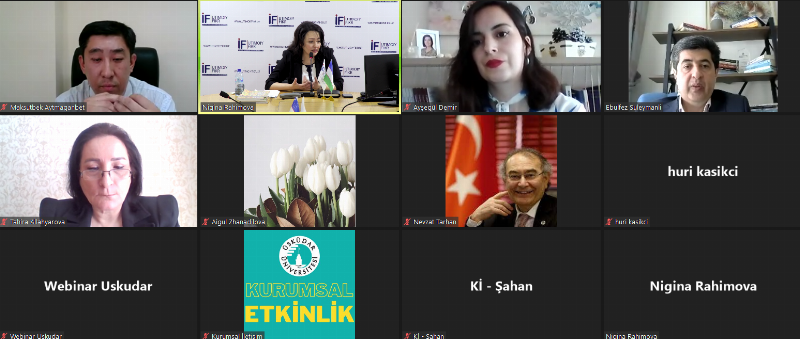
Prof. Dr. Nigina Rahimova, President of Uzbekistan's “Ictimoiy Fikr” Public Opinion Research Center, noted in her presentation titled “Family in Uzbekistan in the Field of Modern Values” that the Republic of Uzbekistan applies a systematic approach in the field of social policy for families. Rahimova stated that improving the legal framework and institutional improvement efforts to support families are priorities in her country's government programs. Prof. Dr. Rahimova, referring to the "Ictimoiy Fikr" Public Opinion Research Center which she presides over, stated that research on family values and family relations in Uzbekistan is conducted periodically and shared the findings of the latest study on the Uzbek people's attitudes towards family. The report included the views and evaluations of Uzbek participants on the role of family and women in society, principles for establishing relationships within the family, and the conditions for a prosperous family.
Maksutbek Aytmaganbet, Member of the Women, Family and Demography Policies Board “Current Problems of the Institution of Fatherhood in Kazakhstan"
The last speaker of the conference was Maksutbek Aytmaganbet, President of the Kazakhstan “Fathers’ Union” Association and Member of the Women, Family and Demography Policies Board of the Presidency of Kazakhstan, who spoke about “Current Problems of the Institution of Fatherhood in Kazakhstan.” Aytmaganbet stated that 30% of fathers in Kazakhstan are deprived of the opportunity to communicate with their children contrary to court decisions, more than 70,000 men raise children alone, and only 6.6% of children under 5 receive support from their fathers during their early education. He noted that only 1 out of every 10 fathers regularly attends parent-teacher meetings in state schools, only 2 out of 10 people know the names of their children's “best friends” at school, and only 2.1% of fathers spend quality time with their children, going for walks and hikes. Maksutbek Aytmaganbet spoke about the activities undertaken by the Kazakhstan “Fathers’ Union” towards solving these problems. Information regarding important events organized for fathers and children to spend enjoyable and meaningful time together attracted the interest of conference participants.
At the end of the presentations, the participants answered questions from the audience. Additionally, as a result of the conference, proposals were put forward for further strengthening family policy in Turkic societies and developing recommendations for the formation of family values, as well as holding a large-scale congress on the problems of the family institution in Turkic Republics. Süleymanlı stated that Üsküdar Üniversitesi could host such a congress.
Moderating the event, Prof. Dr. Ebulfez Süleymanlı stated, “For the family institution to achieve a solid structure in Turkic societies, we need a family philosophy based on our civilization's roots, and we believe that the outcomes of such scientific events will contribute to this process.”
Share
Update Date: February 28, 2026
Creation Date: May 17, 2022
Request a Call
Other News
- Experts warn: 'Instead of memorizing letters, teach pencil grip, scissor use, and coloring'
- School fear and school love both start in the family!
- Family is not merely transforming, it is being battered under a serious assault
- Artificial intelligence opens the door to early diagnosis in autism!
- Artificial intelligence doesn't end engineering, it transforms it!