

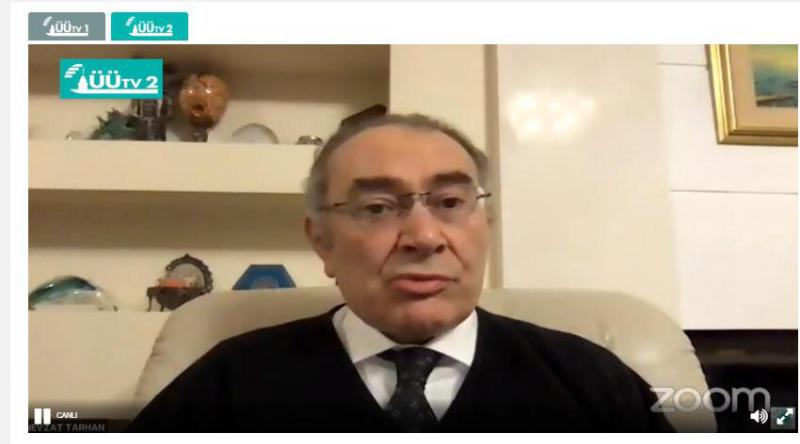
Üsküdar Üniversitesi and NPİSTANBUL Beyin Hastanesi's 'Families at University' Project, carried out in cooperation, is also being implemented in Gaziantep. The first lecture of the project, carried out within the scope of cooperation between Gaziantep Metropolitan Municipality, Üsküdar Üniversitesi and NPİSTANBUL Beyin Hastanesi with the support of Gaziantep Governorship, was given by Prof. Dr. Nevzat Tarhan. Prof. Dr. Nevzat Tarhan, noting that there is a global civilization crisis as well as another crisis brought by the pandemic, said, “Crises are like a chain. The strongest link in the chain is its weakest link. This weak link currently appears to be the family globally. Both of these crises seem to harm the family. If we strengthen the weak link, we will take precautions against the damages caused by the crisis.”
Content
'Families at University' project started in Gaziantep
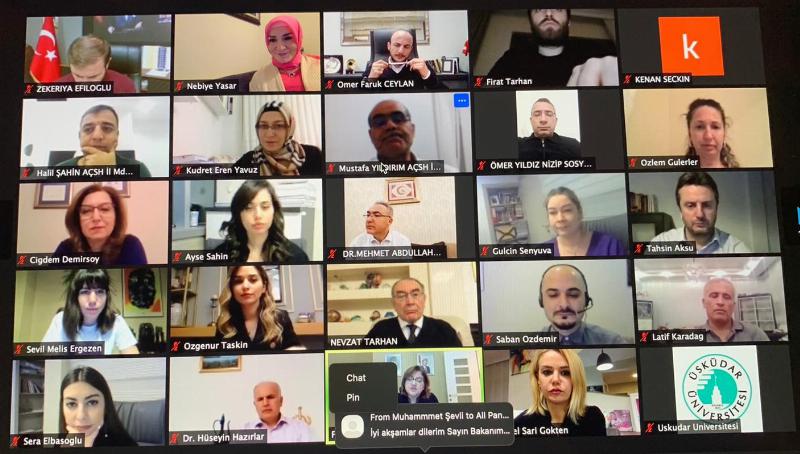
The 'Families at University' Project, initially launched in Istanbul in cooperation with Üsküdar Üniversitesi and NPİSTANBUL Beyin Hastanesi with the support of the Istanbul Governorship, has now started to be implemented in Gaziantep. Within the scope of the project, launched with a protocol signed with Gaziantep Metropolitan Municipality with the support of Gaziantep Governorship, education has begun to be provided to young people in need, couples preparing for married life, and families in Gaziantep.
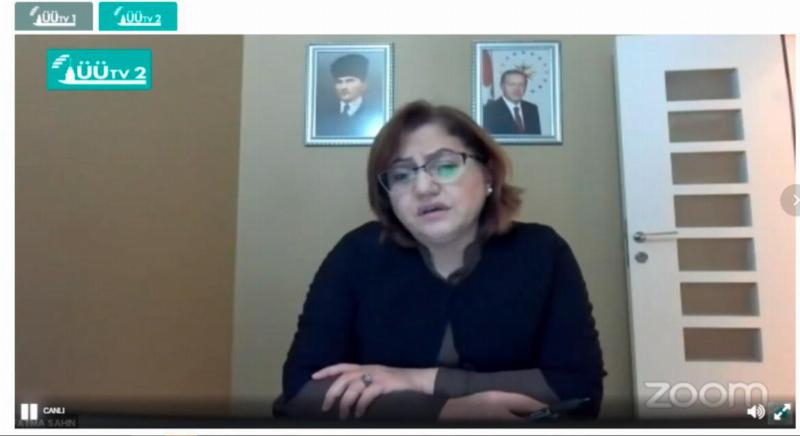
Mayor Fatma Şahin: “The spirit of the times affects family and family values the most”
Gaziantep Metropolitan Municipality Mayor Fatma Şahin, who made the opening speech of the program held online due to pandemic measures, reminded that a great globalization is being faced and said, “The spirit of the times affects the family and family values the most. Sociological changes such as digitalization and migration are also changing the problem areas of the family. We are facing a serious problem that needs to be managed, and if it is not managed, we see that we are facing a major social problem. In fact, even the title expresses everything. Because a conscious individual is the beginning of everything. Here, education is essential to raise awareness in individuals, and trainer training is essential. Information from experts showing where this work is going is very important. Because when an individual becomes conscious, they turn into a healthy family.” Thanking everyone who contributed to the project, Fatma Şahin said, “This work requires volunteering, effort, expertise, and endeavor. If you have a problem, you deal with these things. What could be better for humanity and for us than to be with those who have this problem, to touch a family, a person, to touch their heart, to find a solution to their problem, to empathize with their problem. That's why I am grateful to each of you.”
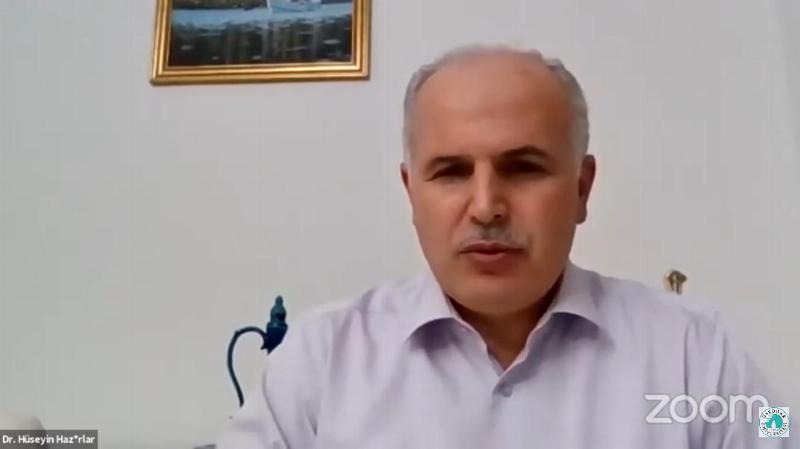
Dr. Hüseyin Hazırlar: “Family is the cornerstone of our society”
Gaziantep Mufti Dr. Hüseyin Hazırlar also stated that the project is very important, saying, “Our safest refuge as a nation and as a society is undoubtedly the family. Because, as you know, the family is in a sense the nucleus of our civilization, the cornerstone of our society. Therefore, the fundamental values we need for a better life are primarily acquired in the family; our fundamental values come to life there. Thus, the love and affection we receive from there will spread peace to the whole society and the world. Therefore, strengthening the family and raising its awareness through these trainings is extremely important. I wholeheartedly thank our esteemed minister for their sensitivity, support, and awareness on this issue. Today, we are also extremely happy to listen to our very valuable rector and for their partnership in this project.”
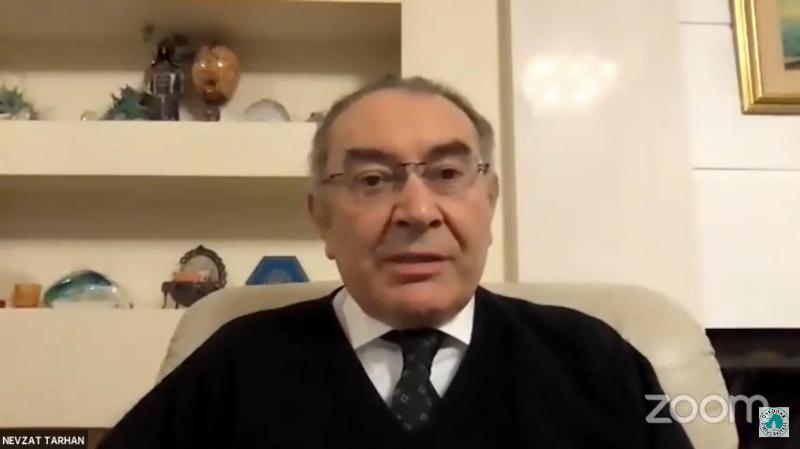
First lecture from Prof. Dr. Nevzat Tarhan: “Family in Hard Times”
At the seminar, which saw intense participation from all over Turkey and even from abroad, Üsküdar Üniversitesi Founding Rector and Psychiatrist Prof. Dr. Nevzat Tarhan gave the first lecture titled “Family in Hard Times.”
Starting the lecture with a brief opening speech, Prof. Dr. Nevzat Tarhan said, “As our esteemed minister said, why did we care so much about this issue? We really did care, and our staff is working with such excitement and enthusiasm to touch people's problems. We are currently continuing the second phase of the project in Istanbul with governorships and district governorships. There was much better participation than we expected. We did not expect children under 18 in the white group to follow with such interest and attention. We saw that participants in the pink group (pre-marriage), the orange group (experiencing minor marriage-related problems), and the red group (who had reached a clinical case point and needed couple therapy) listened with great excitement and attention. We felt that we touched their souls and saw that it was very beneficial. This also increased our motivation.”
Prof. Dr. Nevzat Tarhan: “We've moved beyond the medium and long term; there are things that need to be done in the short term!”
“This issue is truly a need of our era,” said Prof. Dr. Nevzat Tarhan. “Where is the world heading? As those working in the field, we are seeing the precursors of a crisis. We are getting some signs of it; a storm is coming. I will present what we can do without being hopeless or pessimistic about this. What do we understand by a difficult day? There are two kinds of difficult days. A rapid global transformation in family-related values. The family is a sociological structure, so transformations are usually slow. However, looking after the 60s, there has been very rapid change. Changes that would normally not happen in 300 years happened in 30-40 years. We are in such a period. Something needs to be done about it. We have now moved beyond the medium and long term; things need to be done in the short term. We realized this and that's why we are focusing on it. The second difficult day is the pandemic. The two came together.”
Prof. Dr. Nevzat Tarhan: “Globally, the family appears to be the weakest link”
Stating that two crises are effective in the world, Prof. Dr. Nevzat Tarhan noted that the family institution would be most affected by these crises, saying: “There is a global civilization crisis. The other is the crisis brought by the pandemic. Crises are like a chain. The strongest link in the chain is actually its weakest link. This weak link currently appears to be the family globally. Both of these crises seem to harm the family. If we strengthen the weak link, we will take precautions against the damages caused by the crisis. An epidemiological study was conducted in Turkey showing the number of marriages between 2001 and 2018. There were 544,000 married couples in 2001 and 553,000 in 2018. There was only a 1.6% increase in 17 years. In the same period, divorces increased by 54%. Another statistic provided information on household size from 1994 to 2016. Striking changes in family structure, an increase in single-person households and single-parent families, a decrease in household size, and an increase in the number of fragile households were highlighted in the statistics. Single-person families steadily increased from 1994 to 2016. After that, 2, 3, and 4-person families increased. A decrease is observed in 5-person families. Approximately 50 out of a hundred families were 5-person families thirty years ago. But now, only 25% are 5-person families. The concepts of single, two, and three-person families emerged. Two-person families largely became broken families. We can say that one-third of society is currently experiencing such a problem.”
Prof. Dr. Nevzat Tarhan: “Loneliness, the nightmare of modernism”
Referring to Manchester University's 2018 loneliness study, Tarhan said, “A surprising result emerged from this study. 40% of young people aged 16-24 feel lonely. 27% of elderly people over 75 feel lonely. In 2018, the prime minister’s office made a statement about establishing a ministry responsible for loneliness because 8.5 million Britons live alone at home. Loneliness appears as the nightmare of modernism. This also shows that family ties are weakening.
Prof. Dr. Nevzat Tarhan: “Children are no longer interacting with each other”
Tarhan noted that in the US, levels of happiness and average per capita income increase were measured from 1950 to 2000, with income increase at 20 points in the 1950s rising to 35 points in 2000, adding, “If we consider 2020, we can say it has risen significantly. We also see that the happiness score has decreased. Despite the rise in material welfare, psychological and spiritual welfare are not increasing. Another statistic identified the time adolescents spent with each other. Data from the 80s to 2015 was presented. In the 90s, 50% of young people needed friends, while in 2015, this need decreased to 15-20%. This is also a very serious problem. Children are no longer interacting with each other.” Tarhan warned, “As a result of digital becoming the sole form of communication, children come with problems.” He added, “Families say their children are lonely and have no friends. When we examine it, the child is not genetically problematic, but these kinds of problems occur due to upbringing errors. We are entering a period where the development of these skills is at risk. The rate of young people seeing each other has dropped to 20%.”
Tarhan: “Turkey ranks first in violence against women…”
Prof. Dr. Nevzat Tarhan, also referring to the recent discussions on femicides, stated that Turkey ranks first in the OECD's 2019 statistics on domestic violence faced by people living in the same household, saying, “Among OECD countries, we are the country with the highest rate of violence against women. This is the 2019 statistic. We attach so much importance to combating violence against women. Society cares, the state cares, many laws have been enacted, electronic ankle monitors have been introduced. But why are we first in the world in this field? The lifetime prevalence of physical, sexual violence and violence among intimate partners. In Turkey's statistics, 38 out of 100 people have been victims of violence at least once in their lifetime. In America it's 36, New Zealand 35, then 32, 32, England 29.”
Prof. Dr. Nevzat Tarhan: “We also frequently encounter the Western civilization crisis”
Prof. Dr. Nevzat Tarhan stated that the California syndrome experienced by Western civilization is now also seen in our country, saying, “This syndrome has four characteristics. The first is hedonism, which means seeing the philosophy of pleasure as the reason for living. The second is egocentrism, the personality form of which is narcissism. That is, the person sees themselves as special, important, superior, and at the center of the world. Only they are the most important, and they say, 'I am important, my family is not important.' 'My children are not important, my spouse is not important. I am important,' they say. If there is such a prioritization in their mental map, this person is egocentric, and if it has even become a personality trait, this person is a narcissist. Third, loneliness and alienation emerge. Finally, unhappiness and depression are observed.”
Prof. Dr. Nevzat Tarhan noted that giving hedonism as a life goal to young people and individuals has great harms for humanity, saying, “The world is globally experiencing the difficulties of hedonism. This is not sustainable. Choosing hedonism as a life philosophy is a historical fallacy of modernism.”
Prof. Dr. Nevzat Tarhan: “A happy family has three characteristics”
Prof. Dr. Nevzat Tarhan stated that the pandemic offered five characteristics and three opportunities, noting that happy families have three characteristics: “It disrupted our psychological well-being, our freedom, and our physical comfort. Our human relationships and family life were negatively affected. We felt that death was near, but the pandemic gave us three gifts. It gave us free time. Spending time together as a family. This was something we always recommended for families. A study by the University of Nebraska identified three characteristics of happy families. First, spending time together; second, frequent use of words of appreciation, praise, and approval; and third, having common cultural values. Families with these three characteristics were found to be happy.”
Prof. Dr. Nevzat Tarhan: “The pandemic offers an opportunity for the reconstruction of human values”
Prof. Dr. Nevzat Tarhan noted that the pandemic process has effects on psychological resilience and maturation, saying, “The pandemic provides an opportunity for the reconstruction of universal and human values that we have abandoned. If we use these opportunities, the pandemic can turn into a gain. If we don't, the damages for us from the pandemic will be greater. It will pass sooner or later, but how can we get through it in the healthiest way?”
Prof. Dr. Nevzat Tarhan: “The pandemic increased psychological maturity”
Tarhan stated that at the beginning of the Covid-19 pandemic, Üsküdar Üniversitesi Master's students conducted a research study in 81 provinces with the participation of 6,318 people, and noted that they examined psychological processes, perceptions, anxieties, fears, as well as maturity. Prof. Dr. Nevzat Tarhan said, “In terms of maturity, we had 6 questions taken from the Post-Traumatic Growth Inventory. Perceptions, anxieties, fears, and maturity were grouped under one heading. Some results from this research showed that 59% of respondents stated that the priority order of things they valued in life changed. 49% said their interest in spiritual matters increased, 56% understood that they could cope with difficulties, and 56% stated that they could accept events as they are. 48% started putting more effort into their relationships, and 74% said they understood the value of what they had better. These six questions are the basic needs for a person to be happy and peaceful, to empathize in life, and to spend more time with family members.”
Prof. Dr. Nevzat Tarhan: “The family is very important because a child learns life in the family”
“Let’s definitely not fall into despair and pessimism here,” said Prof. Dr. Tarhan. “If we take the right position, we will find ways to make ourselves, our children, and our loved ones happy. The family is alive. In organizational psychology, an individual is a small family, and society is a large individual. Family culture is a set of shared values, life scenarios experienced, norms, assumptions, rituals, narratives, belief systems, language, and role models. Why is a family so important in a person's developing life? Because a child learns life in the family. Shared values are there, life scenarios are there. If there is time spent together in the family, stories emerge, narratives emerge. Values emerge. The child develops this in their future life,” he said. Prof. Dr. Nevzat Tarhan finally stated that children should be taught to be good people as an ego ideal, adding, “We should not only want a child to be intelligent and hardworking. Children follow in our footsteps. We need to teach children to be good, honest people who keep their promises.”
Tarhan: “The value of empathy should be revived in society…”
Prof. Dr. Nevzat Tarhan, who also answered participants' questions during the program broadcast live on Üsküdar Üniversitesi Television's ÜÜTV Channel 2, stated that marriages with love, goodwill, and effort thrive. Tarhan underlined that the value of empathy should be revived in the family and society, and also emphasized that children must be given love and that this love should be shown in the family environment, saying, “One should be generous with love towards children. Unless love is given to a child, love cannot be received from them. The value of empathy must be taught and revived in society.”
Share
Request a Call
Other News
- The book that read today's digital threats in 2014: Being a Conscious Family
- Experts warn: 'Instead of memorizing letters, teach pencil grip, scissor use, and coloring'
- School fear and school love both start in the family!
- Family is not merely transforming, it is being battered under a serious assault
- Artificial intelligence opens the door to early diagnosis in autism!