

Experts, drawing attention to the fact that news regarding the war between Russia and Ukraine can negatively affect children, warn that children may express these effects through certain behaviors. Experts state that behaviors such as nocturnal awakenings, crying and entering into tantrums without an apparent reason, and asking questions about war may be observed in children. Experts advise against letting children watch war news, recommending that their questions be answered clearly and that anxiety-inducing expressions be avoided.
Content
Experts warn! Do not let children watch war news, avoid anxiety-inducing expressions…
Early childhood adversities lead to lifelong effects!
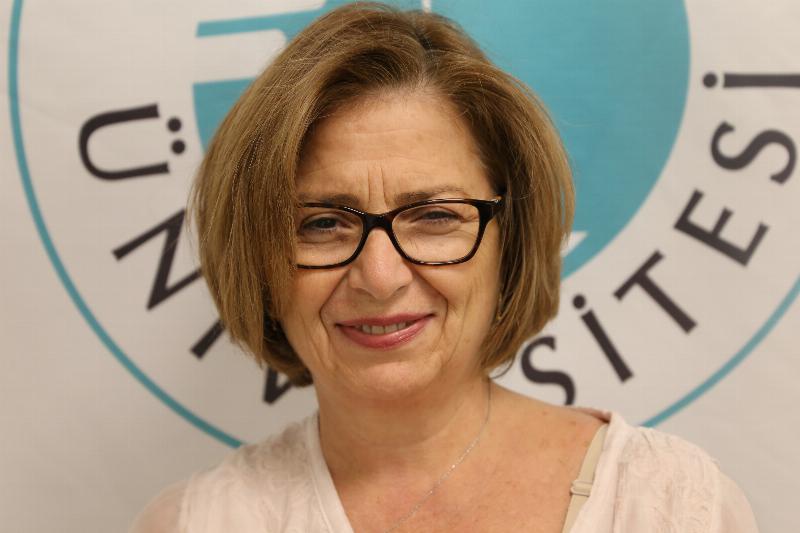
Prof. Dr. Nurper Ülküer stated that while millions of children worldwide face war, violence, illness, and death, the number of children who do not experience these problems but learn about their peers' helplessness through mass media and their parents' conversations has increased tens of times over. Prof. Dr. Nurper Ülküer said, “Children, with their boundless imaginations, turn these into a part of their own worlds and can experience the same adversities in their own worlds. The anxiety and fear created by adversities bring with them psycho-somatic problems in a child's development, as if they had experienced the event themselves, which are significant, quite difficult to reverse, and will remain with them throughout their lives. In the field of child development, particularly neuroscientific studies emphasize that early childhood adversities can lead to lifelong physical and psychological problems. For this reason, both groups of children need and have the right to be protected and to be in safer environments.”
Witnessing violence leads to psycho-somatic problems!
Prof. Dr. Nurper Ülküer noted that the traumas experienced by children living through war and witnessing violence lead to psycho-somatic problems that are very difficult to reverse and can last a lifetime. She stated, “The effects of such traumas and adversities on children's development vary according to their age and environment. For example, babies and young children, due to their close bond with their primary caregiver, may be more affected by adversities as a result of the disruption of their secure interactions with their caregivers. If there is one thing to remember, it is that parents and caregivers are also affected by the same adverse situations, experiencing difficulties in terms of physical and mental health, and may not be able to provide their children with the necessary attention and love. This, in turn, increases the risk of neglect and abuse for children. In other words, the most important way to protect young children, in particular, from the devastating effects of war and other adversities is for parents to be strong enough to keep themselves away from the effects of such adversities and not be affected by such events.”
Children thought to be safe, experience fears virtually
Prof. Dr. Nurper Ülküer pointed out that children who watch news and adversities such as war, violence, floods, and fires through media like newspapers, television, and social media are also negatively affected by these reports. She said: “Such news has become a part of our daily lives. The number of studies indicating that this situation, which affects not only children but also adults, negatively impacts a child's development, especially their social and emotional development, is increasing. In other words, our children, whom we consider to be 'safe,' can suddenly find themselves in the middle of a war, at a funeral where children are crying, or at the bedsides of patients in hospitals, right in their living rooms, and with the help of their imaginations, they can pass into these 'dimensions' they witness. They can virtually experience fears, losses, and anxieties in their homes where they sit and feel safest.”
Pay attention to these symptoms!
Prof. Dr. Nurper Ülküer noted that a child being affected by traumatic events like war can be understood through certain behaviors. She warned, “Parents can recognize this from the questions children ask, nocturnal awakenings, unwillingness to turn off the lights, clinging to parents, crying and entering into tantrums without an apparent reason, and similar behaviors. In more intense situations, bedwetting, silence, hyperactivity, or withdrawal may also be observed.”
War news should not be shown to children
Ülküer stated that the greatest duty of parents is to prevent children from watching such news as much as possible. She added, “However, considering that this may not be fully achievable under today's conditions, they should explain what children see in a language they can understand and try to alleviate the child's fears.”
Questions should be answered truthfully and consistently
Prof. Dr. Nurper Ülküer stated that it is important to give accurate and consistent answers to children's questions. She said, “Children ask questions to understand what they see. For example, they might ask questions like, 'Why are these children crying? Why are the forests burning? Why are these people fleeing? Will they come to us too?' While answering these questions is quite difficult, it is best to explain the facts and reasons with simple, sincere, and understandable sentences. However, it is also of particular importance for parents to be careful about their conversations regarding the topic when their children are present. Because if what parents tell their children differs from the sentences they use in general conversations, this further increases the question marks in the children's minds.”
Fear should not be used as a disciplinary method!
Prof. Dr. Nurper Ülküer also emphasized that such adversities should never be used in child discipline. She warned, “Unfortunately, there is a method of 'discipline through fear' that parents sometimes resort to quite innocently. Highly dangerous expressions such as 'They became like this because they were naughty. If you are naughty too, you will become like them' or 'I will send you to them' should never be used. Such rhetoric serves no purpose other than increasing children's anxiety.”
It can be an opportunity to develop a child's empathy and compassion
Prof. Dr. Nurper Ülküer also stated that children should be helped to develop feelings of awareness, empathy, and compassion. She said, “Children ask these questions when they see the real traumas experienced by their peers. Instead of adopting an attitude of 'Nothing will happen to us, don't worry,' when talking to them, it is necessary to explain the sorrows of these children and what can be done for them. Likewise, it is necessary to avoid portraying one side as right and the other as wrong in events, and to steer clear of expressions that would lead to discrimination and prejudice. It is important to experience and foster the feelings of empathy and compassion, which we all need, together with children. Perhaps this could be the most positive outcome of these adversities.”
Share
Update Date: February 28, 2026
Creation Date: February 28, 2022
Request a Call
Other News
- Social responsibility courses moved to the field
- Erasmus+ Orientation Week completed at Üsküdar
- Prof. Nevzat Tarhan: “Brain secretes ‘dark glue’ in social media lynchers!”
- Prof. Nevzat Tarhan: “Every segment of society should be able to say, ‘This constitution is my constitution!’”
- OHS releases guide for safe operation of industrial robots