

While the loss of lives of people, trees, and living beings in fires across various regions of the country deeply affected everyone, it also brought the issue of eco-anxiety to the agenda. Defining 'eco-anxiety as environmental disasters causing worry in people,' Üsküdar Üniversitesi Founding Rector and Psychiatrist Prof. Dr. Nevzat Tarhan stated that anxiety is increasing globally, especially among individuals with environmental awareness.
Content
Expert Warned: Global Eco-Anxiety Increased
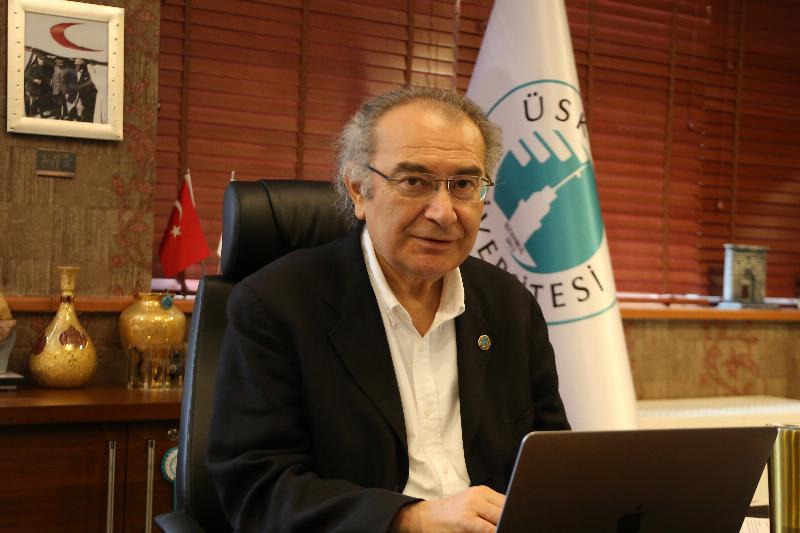
Prof. Dr. Tarhan said, "Because humans also have the characteristic of predictability. Unlike other living beings, no non-human creature has the ability to predict and foresee. For this reason, while humans are an abstract concept, they hear from the press, from hearsay, about severe floods above climate averages, fires, increasing natural disasters, and some unseen things... For example, trees bloom, but their fruit-bearing rates decrease. What is this? The decrease in bees, the reduction in the bee population. All of these are serious scientific predictions. It seems that the world is deteriorating environmentally. Thus, the emergence of environmental anxiety is very natural. Because we are talking about a syndrome called the 'bad world syndrome.' From time to time, individuals who felt insecure about their future would usually attribute it to political reasons. There are things related to the environment that humans cannot control. These uncontrollable things also involve uncertainty."
Social Media Impact
Tarhan stated, "If a normal person is to think three times (1-2-3) about information on social media before believing it, then in such situations, we can all fall into the trap of social media. We are human after all. But the formation of culture from social media information is also a time-consuming process. From the perspective of eco-anxiety, social media is truly a field with the potential to be useful. Because people can easily express disrespect towards living beings and animals in their environment. In such situations, this becomes a shared experience, and positive things are also shared through it. For instance, help for a turtle is shared. A dog's leg being put in a cast is shared. Social media can also share these good aspects. For this reason, social media itself is neutral. If directed towards good, it does good things; if directed towards wrong, it does wrong. There is more need than ever for its social anxiety and contribution to increase the culture of social environment in society. Because the world is not getting better in terms of nature; it's getting worse."
"The Way to Manage Anxiety; Making a Mental Plan for Anxiety"
Tarhan said, "To manage this anxiety process, it must first be acknowledged within ourselves that this issue is a legitimate concern. If a person especially wants to leave a better world for their young children and grandchildren, this anxiety is a justified anxiety. Therefore, they need to express serious counter-opinions against political attitudes that disregard this issue. If they express views free from prejudice and take concrete steps regarding this, anxiety can be managed. But there are some people who complain a lot. They always grumble but do nothing. The anxiety of these individuals increasingly grows. The way to manage anxiety is to make a mental plan related to anxiety, take steps in that regard, try to develop environmental culture, educate children, and support it with stories and books. This anxiety is even more pronounced in children; the emergence of concern for the future is very important for the formation of environmental awareness. Children and young people generally look to adults and take their positions accordingly. To be a good example, the media also needs to act responsibly in this matter. Social media is an unplanned, disorganized medium, but planned media also needs to create plans and projects that will contribute to environmental awareness in this regard. Even TÜBİTAK should undertake projects on this topic. Development agencies should undertake projects. Issues related to animals need to be supported to protect that habitat. We need environmental awareness more than ever."
Source: Star Newspaper
Share
Update Date: February 27, 2026
Creation Date: August 09, 2021
Request a Call
Other News
- Social responsibility courses moved to the field
- Erasmus+ Orientation Week completed at Üsküdar
- Prof. Nevzat Tarhan: “Brain secretes ‘dark glue’ in social media lynchers!”
- Prof. Nevzat Tarhan: “Every segment of society should be able to say, ‘This constitution is my constitution!’”
- OHS releases guide for safe operation of industrial robots