

Prof. Dr. İbrahim Özdemir, who addresses the environmental problem through Islamic philosophy, says, “The owner of the Qur'an and the owner of the book of the universe are the same,” and adds: “Islamic morality requires respect for the environment, just as it requires respect for the Qur'an.” Özdemir discusses a compassion-based morality, evaluating the issue from an Islamic perspective, which is conscious of its responsibility towards all living beings.
Content
Environmental Sensitivity is Islamic Morality
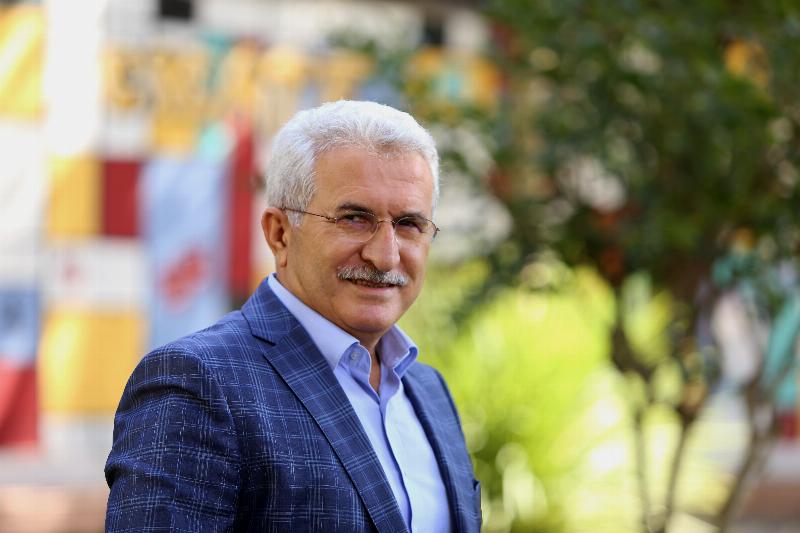
We spoke with Prof. Dr. İbrahim Özdemir, Head of the Philosophy Department at Üsküdar Üniversitesi and author of the book 'Environment, Human, and Our Responsibilities,' about environmental awareness and human responsibilities. Özdemir discusses a compassion-based morality, evaluating the issue from an Islamic perspective, which is conscious of its responsibility towards all living beings. Özdemir points out that as society becomes more aware, environmental sensitivity also increases, and draws attention to the philosophical dimension of environmental sensitivity.
The environment is a setting in which humanity creates itself. Protecting ourselves is only possible by also protecting our environment. According to our faith, protecting our environment is a duty. However, looking at today, we are not acting that way at all. How did humanity get here, and what can we do at this hour?
The concept of environment is often defined incompletely. As a result, our responsibility towards the environment cannot be understood. That is why my new book is titled: 'Environment, Human, and Our Responsibilities.' We were born into an environment. Let's remember Prophet Abraham (Hz. İbrahim). In his debate with Nimrod (Nemrut), he first drew attention to the concept of the Lord. The relationship between the Lord and the universe (Rabb-alem) is the cornerstone of Muslim environmental awareness.
Don't waste your breath on trivial matters
We learned the value of the environment after destroying and polluting it. From this polluted environment, all kinds of food brought this contamination back to us. For we are a part of nature; we are not its master or ruler.
Today, the last message from a friend who passed away from the pandemic was: “Man's most valuable asset is breath. Don't waste it on trivial matters.” I hope this pandemic makes everyone deeply understand the phenomenon we live within and call the environment. Just as those who understand the danger of the pandemic adhere to all kinds of precautions and warn those who do not; they will protect the environment once they realize that the environment is us; that is, life itself. This is the whole point. It is certainly understandable for the leaders of Muslim countries to utilize the blessings that Allah created, which we now call natural resources, to solve the economic problems of their people. This is one of their most important duties. What is unnatural is their failure to consider the “sensitive balances” (mizan) that Allah created in nature and warned us to protect when using these resources. What falls to us is to develop our own development and education models in the light of the Qur'an's teachings, also benefiting from the accumulated knowledge of humanity.
A strong understanding of education
Technology is advancing rapidly, and as we strive to make our lives easier and more luxurious, we remain indifferent to the ruthlessness of capitalism, which sees nothing but profit. Can there not be a middle ground? Is it possible to benefit from technological advancements by curbing capitalism?
This is a very serious and equally difficult question. One of the first to realize the danger that modern technology posed to our lives and freedom was the German Philosopher Heidegger. As early as the 1930s, he wrote a small book titled 'The Question Concerning Technology.' He was concerned that technology would virtually take over our souls and destroy our freedom. The problems we face today have gone far beyond Heidegger's imagination. Weapons produced with nuclear technology have long crossed the threshold to blow up the entire world. If people could understand the problem, they could also find a solution. We can only cope with the destructive effects of technology and globalization through a strong understanding of education. I am talking about strong individuals who possess moral values and virtues; who know themselves and can make their own decisions. As Muslim societies, we need to decide whether or not to make the moral ideals of the Qur'an the dynamic force of education. Here, I take morality in its broadest sense. I am talking about a compassion-based morality that is conscious of its responsibility towards all living beings.
Environmental awareness begins at home
Our education system is far from instilling environmental awareness in educated people. Considering that education begins in schools, what can be done about this?
My opinion is that education should begin at home. It should sprout in kindergarten, and develop and branch out throughout high school and university life. Universities should not only aim to provide the workforce demanded by global markets; but also to raise individuals who possess fundamental values related to society and the planet; who are sensitive and conscious of responsibility. By responsibility, I mean that they should consider their actions and deeds not only from the perspective of their narrow self-interests; but also based on the consequences for other people and living beings. How can the integrity of environment, religion, and philosophy be achieved? Where can religion be placed here? What can the philosophy of environmental protection be correctly built upon?
Environmental problems began to be felt in the 1960s. Rachel Carson's book 'Silent Spring' was very influential in this regard. In the 1970s, institutionalization began on this issue, and environmental legislation started to form. This was followed by the establishment of Ministries of Environment. However, we understood something a bit late. Laws can protect the environment up to a point. Only sensitive people can protect the environment. It is precisely at this point that the religious and philosophical dimension of the environment came to the fore. In the 1970s, philosophers who broke away from mainstream philosophy and defined themselves as environmental philosophers emerged. Over time, their views became an inspiration for many environmental movements.
Prof. Henryk Skolimowski is known as the first deep ecological philosopher. Skolimowski, coming from the tradition of analytical philosophy, was horrified by the environmental disasters occurring all over the world and made a serious self-criticism.
This was followed by religions showing interest in the environment. For a large portion of the world's population belonged to a religion. The total population of Christians and Muslims alone was almost half of the world's population. As Gary Gardner stated, it became clear that religious institutions and leaders could make at least five significant contributions to efforts to protect the environment and create a sustainable world: capacity to shape worldview, moral authority, a broad community base, significant material resources, and capacity to build community. In the last twenty years, a substantial body of knowledge has accumulated on the subject of religion and the environment.
We are passengers on the same ship
When we say environment, we always think of marginal left-wing groups. Yet, Islam is a religion that views protecting the environment as protecting humanity and upholding faith. How can we explain our being so far removed from this and marginal groups taking ownership of these issues?
Frankly, I have also been searching for the answer to this question for years. I find it difficult to answer.
The owner of the Qur'an and the owner of the book of the universe are the same. When there is even the slightest insult or disrespect to the Qur'an, there is a strong reaction. However, I find it difficult to understand the indifference of Muslims when the book of nature, which Allah created and entrusted to us, is being polluted, animals are being slaughtered as sport; and many of their species are becoming extinct. As for the environmentalism of left-wingers, it is not surprising that urban, educated social democratic and left-wing groups champion the environment. All over the world, educated people react to the destruction of the only world they live in. They are rightly worried about their children and grandchildren. They are not fatalistic. Muslims seem to defer the reckoning of some matters to the hereafter. As the Prophet Muhammad said, “we are passengers on the same ship.” If this ship sinks, we all sink. For this reason, I see the environment and cultural richness, as much as biological richness, as common values that we must show sensitivity towards and protect together.
We must remind ourselves that nature is entrusted to us
What is the level of academic and societal sensitivity regarding environmentalism? What is the general picture on this issue in the Islamic world, including Turkey?
Topics such as environment, climate change, and sustainable development have begun to enter university curricula. Scandinavian countries and American universities play a more pioneering role in this regard. Many universities have abandoned fossil fuels and turned to alternative energy. Environmentalist students were influential in these decisions. Looking at the Islamic world and Turkey, we still have a lot to do. First of all, the environment should be seen not just as a subject, but as a fundamental value of general education. In short, I would like to say this: Higher education institutions in Muslim countries must be aware that Allah created nature and everything within it and entrusted it to us; and that when drinking its water, breathing its air, and benefiting from its blessings, we must first respond with gratitude. Love and compassion protect the environment and future generations.
An understanding that says “After me, the deluge” has nothing to offer us. Therefore, we must first green our hearts with love. The rest is easy.
Share
Update Date: February 27, 2026
Creation Date: January 04, 2021
Request a Call
Other News
- The book that read today's digital threats in 2014: Being a Conscious Family
- Experts warn: 'Instead of memorizing letters, teach pencil grip, scissor use, and coloring'
- School fear and school love both start in the family!
- Family is not merely transforming, it is being battered under a serious assault
- Artificial intelligence opens the door to early diagnosis in autism!