

Üsküdar Üniversitesi's Electromagnetic Radiation Exposure Perception (ERMA) Research drew attention with its interesting results. In the study conducted with 1187 people aged between 18 and 72, Generation Z, referred to as the “social media generation,” showed low perception of electromagnetic radiation and exposure to it. While awareness, consciousness, anxiety levels, and the perception of taking precautions against it increased with age, the social media generation was found to be the least concerned, with their perception levels for taking precautions lower than other generations. Experts urge young people to be careful about electromagnetic radiation emitted by technological devices they frequently use, such as mobile phones and AirPods headphones.
Content
Electromagnetic radiation does not concern Gen Z…

Üsküdar Üniversitesi's Electromagnetic Radiation Exposure Perception (ERMA) Research drew attention with its interesting results
Üsküdar Üniversitesi conducted a “Perception of Electromagnetic Radiation Exposure” study with 1187 participants in Turkey. The research was carried out by Prof. Dr. Osman Çerezci, Dean of the Faculty of Engineering and Natural Sciences at Üsküdar Üniversitesi, and Assoc. Prof. Dr. Aylin Tutgun Ünal, Faculty Member of the New Media and Journalism Department at the Faculty of Communication and Scale Development Coordinator.
1187 people participated in the study
Data for the study was collected using the “Electromagnetic Radiation Exposure Perception Scale (ERMA-Ö)”. Based on the principle of voluntariness, 1,187 individuals aged between 18-72, selected via random sampling, participated in the study electronically.
The perception level of the younger generation was found to be low
Prof. Dr. Osman Çerezci, Dean of the Faculty of Engineering and Natural Sciences at Üsküdar Üniversitesi, stated that the research was analyzed with the thematic meanings of “awareness,” “consciousness,” and “anxiety,” adding, “The research report revealed different EMR exposure perceptions, especially according to age and education level. The low perception level of the younger generation regarding electromagnetic radiation exposure is particularly noteworthy.”
Prof. Dr. Osman Çerezci: “Electromagnetic radiation pollution threatens humanity”
Prof. Dr. Osman Çerezci noted that technological advancements have made people dependent on many electronic devices due to the conveniences they provide, stating, “Electromagnetic radiation pollution emitted into the environment when using electrical devices is rising to become a new environmental problem that can affect human health. Depending on the frequency of use of mobile phones, base stations, and other communication tools, people enter the atmosphere of electromagnetic pollution, which is the environmental waste of the digital world.”
Prof. Dr. Osman Çerezci: “A pandemic spreading from the digital world”
Prof. Dr. Osman Çerezci also noted that countries applying limit values against electromagnetic field pollution have different sensitivity approaches, stating, “It is debatable whether electromagnetic radiation exposure limits can provide the same level of safety to all segments of society. The World Health Organization has classified electromagnetic fields as Group 2B carcinogens. To avoid health problems caused by long-term electromagnetic radiation exposure, it is important to be a conscious technology user, meaning taking individual precautions. It should not be forgotten that electromagnetic pollution is a pandemic spreading from the digital world.”
Prof. Dr. Osman Çerezci: Awareness campaigns should be carried out for the younger generation
Prof. Dr. Osman Çerezci emphasized that as technology develops very rapidly, the younger generation will be exposed to more EMA throughout their lives, which is a risk that should be considered for our young people of school age. He said, “Therefore, it is important to conduct awareness campaigns for our children of school age. This survey can be considered a call for cooperation with the Ministry of National Education (MEB) to contribute to the upbringing of healthy generations. Where is EMR? At school, at home, or in our office? EMR is everywhere. Now is the time to become aware of EMA exposure, to realize it to protect ourselves and our families' health, and to take appropriate practical precautions.”
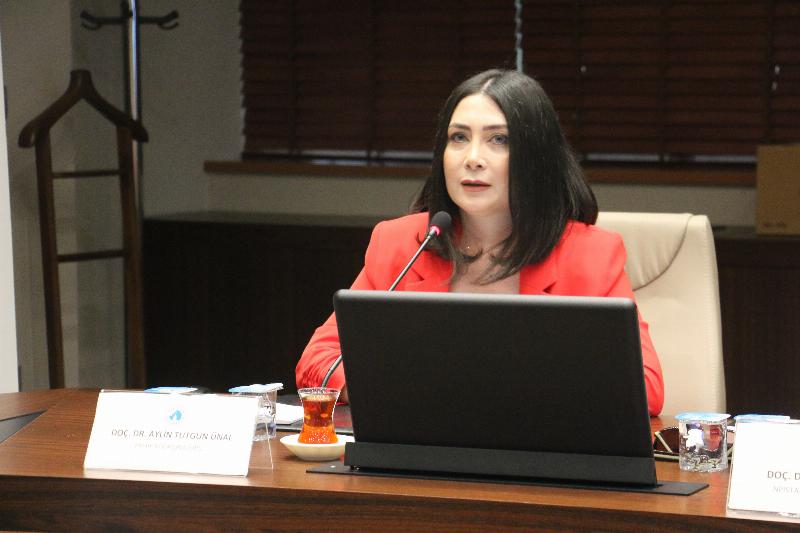
Assoc. Prof. Dr. Aylin Tutgun Ünal:
Assoc. Prof. Dr. Aylin Tutgun Ünal, a faculty member in the New Media and Journalism Department at the Faculty of Communication, stated that until now, they have addressed topics such as the use of digital technologies, mobile phone usage habits, and the effects of social media from the perspectives of disciplines like communication, sociology, and psychology, adding:
“This perception study, which examines communication technologies in terms of electromagnetic radiation exposure, was an important step in raising awareness. Within the scope of this research, in collaboration between social sciences and engineering science, we developed a valid and reliable ERMA Scale that can measure the Perception of Electromagnetic Radiation Exposure. The finding that Generation Z, which we call the social media generation, has low perceptions of electromagnetic radiation and exposure in this study, indicates that young people should be careful about the electromagnetic radiation emitted by technological devices they frequently use, such as mobile phones and AirPods headphones. Furthermore, the research data can provide a roadmap for new studies to be conducted.”
The average age of participants in the study was 29.6
1,187 people participated in the study, comprising 61.1% women (725 people) and 38.6% men (458 people). The average age of participants, ranging from 18 to 72, was 29.6. Of the participants, 31.5% were married and 67.8% were single. Their educational backgrounds were determined as 62.8% university, 0.5% postgraduate, 0.4% vocational school, 5.1% high school, and 1.6% primary education.
Questions about technology use were asked
In addition to the ERMA Scale developed for the study, demographic questions, as well as questions about mobile phone usage purposes, usage habits of mobile phones, headphones and other electronic devices, time spent on social media, and awareness of electromagnetic radiation were also asked.
The average score of participants was 34.9
The average score obtained by 1,187 participants from the “Electromagnetic Radiation Exposure Perception Scale” used in the study was found to be 34.9. Scores from the scale are evaluated as “Low Level” in the 11-25 range, “Medium Level” in the 26-40 range, and “High Level” in the 41-55 score range. Accordingly, the score of 34.9 obtained in the study indicated a “medium level” of perception.
When the scores obtained from the dimensions of the scale were examined, the average score from the “Awareness” dimension, consisting of four items, was found to be 13.23. The average score from the “Consciousness” dimension, consisting of another four items, was found to be 13.57. The score range for both dimensions is evaluated as “Low Level” in the 4-9 range, “Medium Level” in the 10-15 range, and “High Level” in the 16-20 range. Accordingly, the awareness of the 1,187 participants in the study regarding electromagnetic radiation exposure was at a medium level; their consciousness was determined to be at a medium level.
Participants were asked how they felt about base stations
When the awareness-related items in the scale were examined; statements such as “I think electromagnetic radiation emitted from base stations near my home will affect my family,” “I would worry if there was a high-voltage power line very close to my home,” “Electromagnetic pollution is an environmental problem I always worry about,” and “I stay as far away as possible from devices emitting electromagnetic radiation” were included in the scale.
Medium level of concern was detected
When the consciousness-related items in the scale were examined; statements such as “I think children should not play in parks where there are high-voltage power lines, base stations, and transformers,” “I use a hairdryer less to protect myself from electromagnetic radiation,” “I would not want to buy or rent a house near high-voltage power lines and base stations,” and “I prefer wired headphones instead of AirPods (wireless) on my mobile phone” were included in the scale. On the other hand, the average score obtained from the “Anxiety” dimension was 8.15. Accordingly, scores in the 3-6 range are evaluated as “Low Level,” 7-11 as “Medium Level,” and 12-15 as “High Level.” Thus, the score of 8.15 obtained from the anxiety dimension in the study indicated a medium level of anxiety and a medium level of perception towards taking precautions due to this anxiety.
Women were found to be more conscious, men more anxious
Electromagnetic Radiation Exposure Perception was also examined according to various variables. In the examination by gender, women's consciousness scores were found to be higher than men's. Accordingly, women were found to be more conscious of electromagnetic radiation exposure than men. However, in terms of the anxiety dimension, men were found to be more anxious than women, and their perception towards taking precautions was higher. It was observed that women had higher electromagnetic awareness, consciousness, and overall perception levels than men, while anxiety and perception towards taking precautions were higher in men.
Perception level increases with age
In the examination by age; participants were divided into three generations for comparison: 18-29 (Social media generation); 30-45 (Television generation); 45-72 (Radio generation). It was revealed that the electromagnetic radiation exposure perception level increased with age. In the comparison, the generation with the highest perception level was found to be individuals over 45, referred to as the radio generation. Subsequently, the perception level of the television generation, i.e., individuals aged 30-45, was found to be high.
Gen Z is not concerned
The generation with the lowest Electromagnetic Radiation Exposure Perception level was the social media generation (18-29 years old). It was observed that as age increased, electromagnetic radiation exposure awareness, consciousness, anxiety level, and the perception of taking precautions increased. Since the social media generation was the least concerned generation, their perception levels for taking precautions were lower than other generations.
Exposure perception increased with higher education
According to educational status, electromagnetic radiation exposure perception (ERMA) was found to be highest among participants with postgraduate education. A difference was detected when comparing participants with university and postgraduate education levels, with individuals at the postgraduate level showing higher awareness and perception levels than those at university. In the ranking, the highest ERMA level was postgraduate, followed by high school in second place, and vocational school in third. University students were determined to be in last place in terms of ERMA level.
Most participants keep their mobile phones by their bedside
In the study where the question “Do you keep your mobile phone by your bedside when sleeping?” was asked, more than half of the 1,187 participants (55.8%) answered “frequently.” 29.7% said “sometimes,” and 0.2% said “never.” In the comparison made according to the scale, as the frequency of keeping a mobile phone by the bedside while sleeping increased, the perception of electromagnetic radiation exposure decreased. It was observed that individuals with the highest perception level, meaning those with awareness, consciousness, and anxiety, answered “never” to this question.
Wireless headphone usage was also asked
To the question “Do you use AirPods (wireless) headphones with your mobile phone?”, 31.1% of the 1,187 participants said “frequently.” 27.6% said “sometimes,” and 41.1% said “never.” In the comparison made according to the scale, those who used wired headphones with their mobile phones had the highest ERMA perception level, and accordingly, higher awareness, consciousness, and perception of taking precautions due to anxiety, while those who preferred AirPods (wireless) had lower levels.
To the question “Is there a high-voltage power line very close to your home?”, the most common answer, at 47.2%, was “I don't know.” In second place, 44% said “no.” 8.5% said “yes.” In the comparison made according to the scale, those who stated there was no high-voltage power line near their home had high awareness. The awareness, consciousness, and anxiety levels of those who said “I don't know” or “yes” were found to be significantly lower.
Half of the participants unplug devices when leaving home
To the question “Do you unplug electronic devices when you go out?”, 51.1% of participants said “yes.” 28% said “sometimes,” and 20.8% said “no.” In the comparison made according to the scale, it was observed that the level of awareness increased as the frequency of unplugging electronic devices when going out increased. Compared to those who said “yes” and “sometimes,” those who said “no” had lower levels of awareness, consciousness, and anxiety.
Participants experiencing headaches showed low exposure perception
To the question “How often do you get headaches?”, 67.6% of participants said “sometimes.” 16.3% answered “frequently.” Accordingly, the proportion of participants who experienced headaches (sometimes and frequently) was 83.9%. Only 0.2% of participants said “never.” It was determined that those who frequently had headaches had the lowest scores on the scale, meaning their electromagnetic radiation exposure perceptions were lower. Especially in the anxiety dimension; those who frequently had headaches had low scores, meaning their anxiety was low, and their perception towards taking precautions was also low. On the other hand, those who answered “never” to headache frequency had a high level in the anxiety dimension and high precaution perceptions.
Half of the study participants spend 1-3 hours on social media daily
To the question “How long do you spend on social media per day?”, 49.2% said 1-3 hours. Those who connected for 4-6 hours a day were 28.2%, and those who connected for less than 1 hour were 0.5%. Those who connected for more than 7 hours a day were 6.8%. In the comparison made according to the scale, as the daily social media usage time increased, the electromagnetic radiation exposure perception level decreased. Those who used it for less than 1 hour a day had the highest awareness, consciousness, and precaution perceptions related to anxiety. The lowest awareness, consciousness, and anxiety levels were observed in those who used it for more than 7 hours. This was followed by 4-6 hours.
Social media is accessed via mobile phone
When asked which device they use to connect to social media, the highest percentage (92.9%) said mobile phone. Only 4.4% responded portable computer and 2.2% responded desktop computer. Mobile phones were found to be the most preferred device for connecting to social media.
What is the mobile phone used for?
The frequency and purposes of mobile phone use were also examined. Frequency of making calls; 62.2% frequently; 25.6% sometimes; 7.6% rarely; 3.5% never.
Frequency of texting; 57.9% frequently; 20.1% sometimes; 0.8% rarely; 4.2% never.
Frequency of taking photos; 41.5% frequently; 33.9% sometimes; 0.3% rarely; 3.5% never.
Frequency of taking videos; 33.7% rarely; 29.1% sometimes; 26.1% frequently; 4.8% never.
Frequency of listening to music; 51% frequently; 21.3% sometimes; 0.1% rarely; 7.2% never.
Frequency of watching movies; 27.9% rarely; 23% frequently; 22.2% sometimes; 0.2% never.
Frequency of attending online meetings; 35.4% rarely; 22.7% sometimes; 21.8% never; 9.2% frequently.
Frequency of messaging/video calling on WhatsApp; 55.8% frequently; 25.3% sometimes; 0.8% rarely; 4.2% never.
Frequency of using social media applications; 65.4% frequently; 20.6% sometimes; 7% rarely; 4.6% never.
Frequency of setting alarms (Alarm clock); 62.5% frequently; 0.1% sometimes; 9.1% rarely; 6.1% never.
Frequency of using email; 42% frequently; 25.5% sometimes; 0.3% rarely; 8.1% never.
Thus, it was determined that mobile phones are frequently used for basic purposes (making calls, texting) as well as for listening to music, messaging/video calling on WhatsApp, using social media applications, and using alarm clock applications.
Research details
The Electromagnetic Radiation Exposure Perception Scale (ERMA-Ö) is an 11-item, 3-factor valid and reliable scale developed by researchers. Scores between 11 and 55 can be obtained from the scale. Accordingly, as the score increases, the perception of electromagnetic radiation exposure risk also rises. The first four items in the scale measure the perception level in the “Awareness” dimension, the next four items in the “Consciousness” dimension, and the last three items in the “Anxiety” dimension. Thus, the ERMA Scale, which can be used to determine the level of perception regarding awareness, consciousness, and anxiety, was developed for the first time in Turkey through the integration of Engineering and Social Sciences, and has been added to the literature as a scale capable of measuring the risk perception of electromagnetic radiation exposure.
Share
Request a Call
Other News
- Social responsibility courses moved to the field
- Erasmus+ Orientation Week completed at Üsküdar
- Prof. Nevzat Tarhan: “Brain secretes ‘dark glue’ in social media lynchers!”
- Prof. Nevzat Tarhan: “Every segment of society should be able to say, ‘This constitution is my constitution!’”
- OHS releases guide for safe operation of industrial robots