

On the 23rd anniversary of the Marmara earthquake, experts issue warnings to minimize potential loss of life and property in possible earthquakes. Stating that earthquake perception has rapidly decreased and disappeared within the last 23 years, Dr. Lecturer Rüştü Uçan expresses that high-rise buildings constructed in stream beds and on sea beaches, especially in Istanbul, are alarming. Uçan also points out that earthquake assembly areas have been sacrificed due to improper construction and recommends preparing an intervention plan and a Disaster Emergency Bag before a disaster. Dr. Lecturer Rüştü Uçan emphasizes that the first 72 hours are crucial for rescuing people trapped under rubble after an earthquake.
Content
Earthquake perception rapidly decreased and disappeared within 23 years!
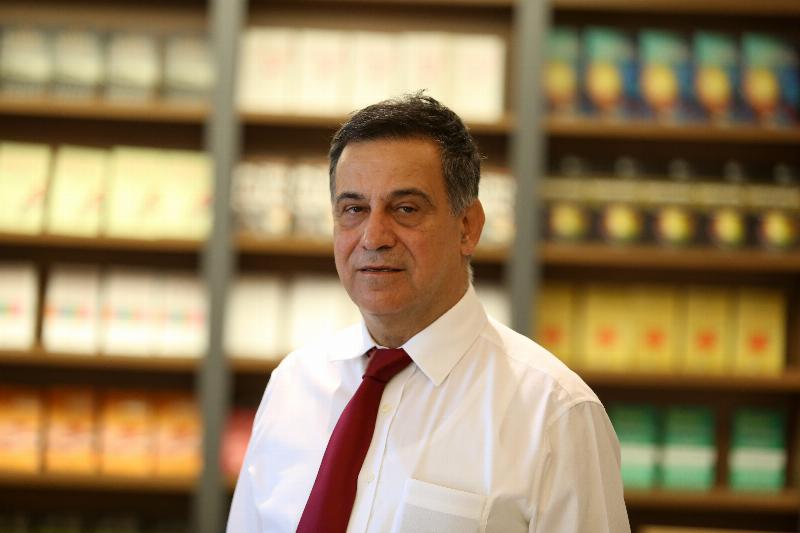
The first 72 hours after an earthquake are vitally important…
Üsküdar Üniversitesi Faculty of Health Sciences, Head of Occupational Health and Safety Department, Dr. Lecturer Rüştü Uçan, shared important information and recommendations on measures to be taken against possible earthquakes on the 23rd anniversary of the Marmara earthquake.
Earthquake assembly areas were sacrificed
Emphasizing that earthquake perception has rapidly decreased and disappeared within the 23 years since the Marmara earthquake, Dr. Lecturer Rüştü Uçan said, “All kinds of wrongdoings that should not be done are being done across Istanbul and the entire country, and the speed of their implementation has increased. Earthquake assembly areas were sacrificed for construction. 20-story buildings were built on sea beaches. One of Turkey's tallest buildings, 287 meters high, was constructed in stream beds. We can multiply these examples. It is even frightening to think about the zoning problems in these areas where there is normally no zoning. These buildings are designed to withstand a 9.0 magnitude earthquake, and the control of these projects is carried out only by their respective municipalities. They are not controlled by a separate authority. The control of these structures is the same as the control of a 4-story building.”
Lack of a damping system creates a disadvantage
Stating that high-rise buildings are constructed in Japan and are genuinely resistant to 8.0 magnitude earthquakes, Dr. Lecturer Rüştü Uçan said, “All building foundations have a vibration damping system. Additionally, trial runs are conducted beforehand by performing building earthquake modeling. Manufacturing is carried out with very strict control. Since our buildings generally lack a damping system, they will shake considerably during an earthquake. This will create great fear even if the building is not damaged in the earthquake. Buildings should definitely not be constructed on sea beaches and in stream beds. Furthermore, the craze for constructing high-rise buildings should also be abandoned.”
Lack of a damping system creates a disadvantage
Stating that the risk of fire should be considered and precautions taken against this risk, Dr. Lecturer Rüştü Uçan said, “The natural gas valve and mains electricity should be automatically shut off with an earthquake tremor sensor. Considering the possibility of numerous fires, facilities should be created for the public to extinguish fires themselves, taking into account that the fire department may be insufficient. Stoves and heating appliances must be fixed. Systems should be developed in industrial facilities to automatically stop combustion processes during an earthquake tremor.”
A Family Disaster Response Plan must be prepared
Pointing out the importance of family members planning together in preparation for unexpected natural disasters such as earthquakes and floods, Dr. Lecturer Rüştü Uçan said, “In any disaster situation, all family members may be together, or some or all may not be together due to living conditions. A plan must be made for family members to act without panic during an earthquake. This plan is a very important requirement for conscious living, and in fact, living a planned life regarding all aspects of life is one of the most fundamental conditions for happiness.”
How should a Family Disaster Response Plan be?
Dr. Lecturer Rüştü Uçan provided the following information regarding the points that should be included in a Family Disaster Response Plan:
In-city/out-of-city contact information through which family members can be reached directly or indirectly,
Where and how best to reunite if located in separate places,
What should be done if reunification is not possible,
Personal information of family members (chronic illness, disability, pregnancy, etc.),
Knowledge of the technical specifications of communication devices used to enable more effective communication,
Designation of two responsible persons,
Inclusion of information for individuals related to the family such as cleaners, babysitters, guests, and similar persons, just as for family members,
Inclusion of information regarding adopted pets,
Designation of a second responsible person, considering that the primary responsible person may be in difficult circumstances, and outlining what is necessary for them to act exactly like the primary responsible person when needed,
Planning for the golden hours/periods,
The plan being primarily determined according to the 72 hours after the disaster, referred to as the golden hours,
Identification of the safest and riskiest places in living areas (home, workplace) considering structural and non-structural hazards,
Drawing a sketch of living areas, specifically indicating places that could be a 'triangle of life'/where a disaster and emergency bag can be placed, potentially dangerous spots, and alternative exit/escape routes,
The sketch should indicate the locations of main electricity, natural gas, and water valves/switches, the first aid cabinet, the fire extinguisher, chemical/hazardous materials if any, flashlights, and similar items in living areas.
72 hours after an earthquake are crucial
Stating that the disaster and emergency bag will make a significant contribution to sustaining life during an earthquake, Üsküdar Üniversitesi Faculty of Health Sciences, Head of Occupational Health and Safety Department, Dr. Lecturer Rüştü Uçan, continued his words as follows:
“In addition to the state, assuming that private institutions and organizations may not be able to reach, a disaster and emergency bag containing supplies should be prepared to meet needs at least during this period. The 72-hour golden period, referred to as the “golden hours” immediately after an earthquake, should be well utilized. The 72-hour period is very important for fundamental issues such as being able to make oneself heard, communication, heating, satisfying food and drink needs, and getting reliable information, whether the person remains under rubble or is rescued. It is a set measuring 40 cm x 32 cm x 10 cm, containing a wide variety of products and first aid materials that meet people's living needs during natural disasters such as earthquakes, floods, and fires. The set bag should be made of waterproof fabric. It should be suitable for carrying by hand, on the shoulder, and on the back.”
What should be in the Disaster and Emergency Bag?
Dr. Lecturer Rüştü Uçan listed the items that should be in the bag as follows:
“The bag should contain a flashlight, a multi-purpose folding fork-spoon set, radio, batteries, plastic whistle, work gloves, raincoat, water, protective blanket, mask, bandages, instant cold compress, warning vest, fleece blanket, spare keys (home, workplace, vehicle), thermos or canteen, dry food (such as nuts, chocolate, fruit leather), canned food, photocopies of official documents (can also be uploaded to the cloud of mobile devices: identity card, driver's license, passport, vehicle registration, property title deed, health-home-workplace-vehicle insurance policies photocopies), cash, current photos of family members, a list of medications used and relevant medical information, a local map, and a visual representation of the family members' meeting point.”
Pay attention to the expiration dates of materials!
- Reminding that attention should be paid to the expiration dates of the materials in the bag, Dr. Lecturer Rüştü Uçan said, “Materials should be determined according to the characteristics of the people who will use them, such as infants, children, elderly, disabled, pregnant, sick, or pets. Materials should be placed in a way that they can be easily accessed and used, and positioned so that they do not negatively affect each other. The earthquake bag should be kept in the place we consider as a shelter area at home.”
Share
Update Date: March 01, 2026
Creation Date: August 17, 2022