

Üsküdar Üniversitesi Founder Rector, Psychiatrist Prof. Dr. Nevzat Tarhan, was a live guest on ATV Sabah Kahvaltı Haberleri news bulletin regarding the earthquake disaster that affected 10 provinces and plunged all of Turkey into mourning. Tarhan, stating that the faster the normalization, the quicker mental health recovers, warned that when trauma is not resolved, the grief experienced can turn into 'complicated grief'.
Content
Earthquake can turn into 'complicated grief'!
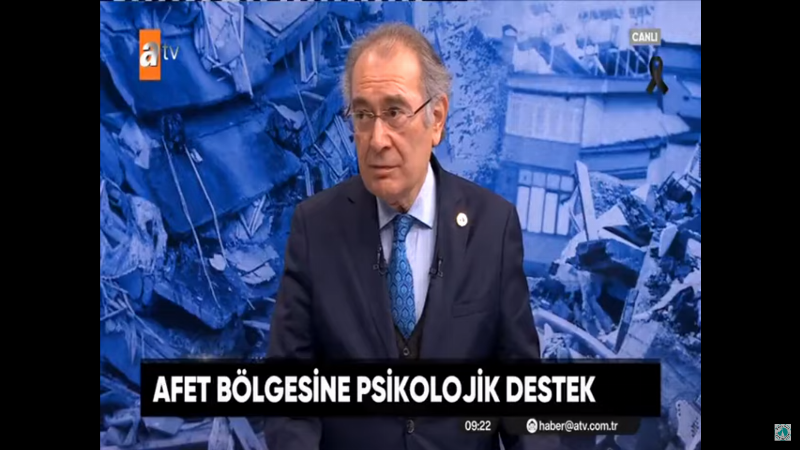
"As a country, we experienced different levels of trauma after the earthquake"
Drawing attention to the fact that the earthquake, which plunged all of Turkey into mourning and affected 10 provinces, could cause trauma, Tarhan emphasized that pain diminishes when shared. Tarhan; “In the 1st region affected by the earthquake, 13 million people experienced primary trauma. Those who followed the earthquake moment by moment through live broadcasts in Turkey and even in many parts of the world experienced secondary trauma. Because they followed the earthquake as if they had experienced it themselves and felt the sadness and pressure of not being able to do anything. This caused unavoidable pain; we experienced one of life's bitter realities. Life does not continue on the same trajectory like a flat line; there are always ups and downs. This earthquake was scientifically expected; the first 7-14 days after the earthquake constitute the shock period. Acute stress disorder occurs; some people wander aimlessly, some become aggressive, hostile, and act absurdly. Some people withdraw and become silent, but outsiders help them recover. We did not encounter many major cases during the shock period. Shock periods are when psychiatry intervenes. If it lasts longer than 3 days, intervention is provided, and recovery is very quick because if the person feels alone, this condition worsens. If the person does not feel alone and has a sense of security, they recover very quickly. People lit fires and waited around them in the earthquake zones; they did not leave the people living in that region alone. In this way, the pain of trauma decreased. Pain decreases when shared.” he said.
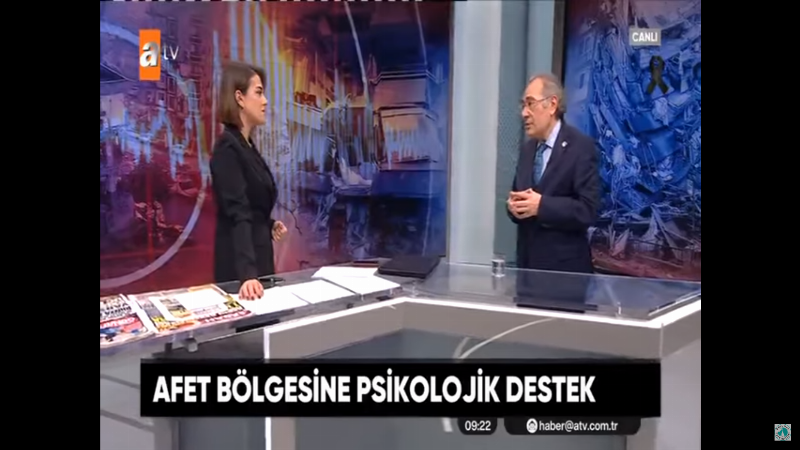
"We recommend normalization after 7-14 days"
Tarhan also shared information regarding the normalization process after the earthquake; “We now recommend moving towards normalization after 7-14 days. The faster the normalization, the quicker mental health recovers. When trauma is not resolved, the grief experienced turns into 'complicated grief'. To resolve it, the mourning reaction needs to be placed within a logical framework. An earthquake occurred, but there are things a person can control and things they cannot, things within their power and things beyond it. If a person sits and thinks about what they cannot control, they suffer. If they think, 'Why did something beyond my power happen?', they suffer. When something happens to a person, when they are saddened by something, if there is a solution, they look for it; it's not worth being sad. If there is no solution, it's no longer worth being sad because the outcome won't change even if they grieve. From now on, they should say 'I had to experience this' and approach it with the 'accept, manage' method. Saying 'I had to experience the event, there was no other option for me, it had to happen' and viewing the earthquake as an enemy are old therapy methods. This method temporarily relieves the person, seemingly ignoring the event and releasing anger, but in the long term, it prolongs the trauma and turns it into complicated grief.” he stated.
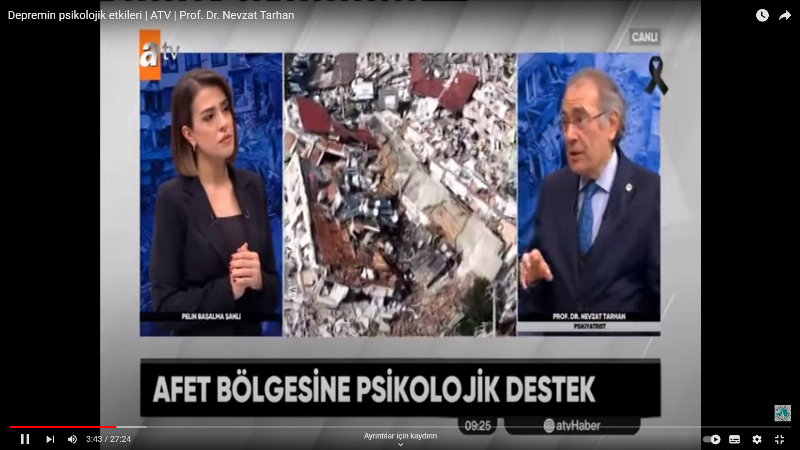
"Psychological first aid should be provided to earthquake victims"
Speaking about the importance and stages of psychological first aid, Tarhan emphasized the need not to trigger the traumas of those affected by the earthquake. Tarhan; “When talking to earthquake victims, due to our curiosity, we often scratch at the trauma more. If the person doesn't want to talk, they shouldn't be made to. If they want to, let them speak, but if not, continuous, detailed questions should not be asked. Trying to make sense of a person's trauma by interrogating them to resolve it is something only experts can do; when a random person does it, you make them feel worse. When it's said 'I wish you had stood like this, I wish you had covered yourself, I wish you had crouched down,' it's already done; there's no point in saying it. There is a psychological first aid booklet, called PDR, which can be easily found online. In psychological first aid, there's an initial shock period, followed by a period of passivity. Some people experience a protest period, and then a recovery period. Psychological first aid is administered during the period of acute stress reaction. It's necessary to hold that person's hand, make them feel you are there, and meet their basic needs. Psychosocial support specialists are also establishing Psychosocial support units for this. Sometimes people enter acute depression, and they definitely need intervention. In psychological first aid, it's very important to give the person a sense of being safe and to make them feel that help has arrived. We rapidly tried to provide this after the 2nd and 3rd day of the earthquake.” he stated.
"Secure attachment must be established with children who experienced the earthquake and lost relatives"
Tarhan spoke about the importance of forming bonds with children who lost their families after the disaster, touching upon attachment types and noting that this situation carries significant risks. Tarhan; “Establishing a bond with people who experienced the earthquake is very important. Especially in children, a child who has lost their mother and father might be left alone, but if a secure bond is formed, that attachment keeps the child connected to life and reduces their hopelessness. This is a very risky situation. If there is a necessity for the attachment figure to leave after the child forms a bond, it's important to make an agreement with the child, saying 'we will be together for 1 year, then you will leave,' and to say goodbye when separating. Being left unexpectedly creates a feeling in the child that 'life is not safe'. In fact, we tell working mothers to say goodbye to their children in the morning when leaving for work. If they leave by sneaking away, the child's trust in the mother weakens, and when she returns in the evening, the child tries to compensate for it. When separating, and even during some long separations, saying goodbye and making amends strengthens the bond and creates 'secure attachment'. Otherwise, it becomes 'avoidant/anxious attachment', and the person cannot feel safe.” he said.
"By turning the earthquake into an opportunity, instructive training can be provided in schools"
Emphasizing the need to turn the earthquake disaster into an opportunity, Tarhan stated that instructive training on this topic could be provided in schools, provided it is not too long. Tarhan; “Actually, it is possible to turn this earthquake disaster into an opportunity for children, through schools. There was suffering in the earthquake; there is great pain in that region of Turkey, and we all feel that pain as if it were our own. While recovering from the emergency there, the first lesson for children in primary schools, middle schools, and high schools will be an earthquake lesson. It's a good idea, but it shouldn't be discussed every day. The thing to do here is to do it on the first day, then continue with normalization, and to draw lessons from that initial discussion, to definitely work on what this taught us. We call this 'developmental trauma.' A trauma, a life event, something unavoidable happens. Being able to think about what such an event taught us becomes developmental trauma. There are post-traumatic growth and maturation scales. There are outcomes such as 'I now treat my friends and spouse better, I have started to understand the value of many things I have in life'; such disasters make a person realize things, adding more meaning to their life. Someone who is selfish and self-serving becomes more sharing in such situations.” he stated.
Share
Update Date: March 01, 2026
Creation Date: February 17, 2023
Request a Call
Other News
- The book that read today's digital threats in 2014: Being a Conscious Family
- Experts warn: 'Instead of memorizing letters, teach pencil grip, scissor use, and coloring'
- School fear and school love both start in the family!
- Family is not merely transforming, it is being battered under a serious assault
- Artificial intelligence opens the door to early diagnosis in autism!