

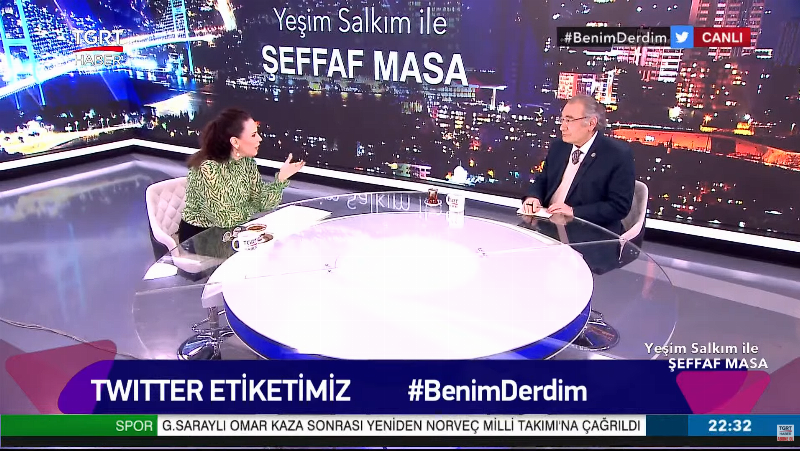
Psychiatrist Prof. Dr. Nevzat Tarhan, Founding Rector of Üsküdar Üniversitesi, was a guest on the ‘Yeşim Salkım ile Şeffaf Masa’ program broadcast on TGRT Haber. In the program where dozens of questions were answered, such as ‘How should family communication be, why have divorces increased, why do we get depressed, how to manage stress and anxiety, how to cope with obsessions and anxieties?’, Prof. Dr. Nevzat Tarhan emphasized that depression and a depressive mood are two different states in a person. Tarhan said; “A depressive mood is different from depression. We all experience depressive moods from time to time. If it lasts longer than three days, expert help is recommended, but if it lasts longer than fifteen days, medication is probably needed. It is important not to confuse depression with a depressive mood. Everyone experiences it from time to time, but unhappiness is not depression.”
Content
Does Unhappiness Mean Depression?
“Currently, mental strength, not physical strength, is at the forefront”
Being Yeşim Salkım's live guest on TGRT Haber, Tarhan spoke about violence, pressure, and threat being a Mesopotamian culture and added: “The violence in the Middle East actually stems from Mesopotamian culture. In the first 50 years after the birth of Islam, no violence was experienced. There was no violence in the life of Prophet Muhammad, not even raising one's voice. But after that period, Mesopotamian culture dominated. We, too, turn it into our tradition, our culture. Actually, this was not in our culture. For example, it's not in Central Asia either. They called women there the 'sultans of the house.' These are entirely Mesopotamian culture's use of violence, pressure, and threat as a problem-solving method. For them, what the powerful one says is important. Physical strength is at the forefront. Since men are physically superior, their dominance has persisted until now. But currently, mental strength, not physical strength, is at the forefront. The male mind also cannot accept this. Because there, women and men are equal. We are not biologically equal, but we are equal in fundamental rights and opportunities; this perspective creates resistance within them. Most of it already arises with 'How dare you say this to me, how dare you object to me, how dare you say no to me?'”
“A person who only pursues pleasure cannot develop”
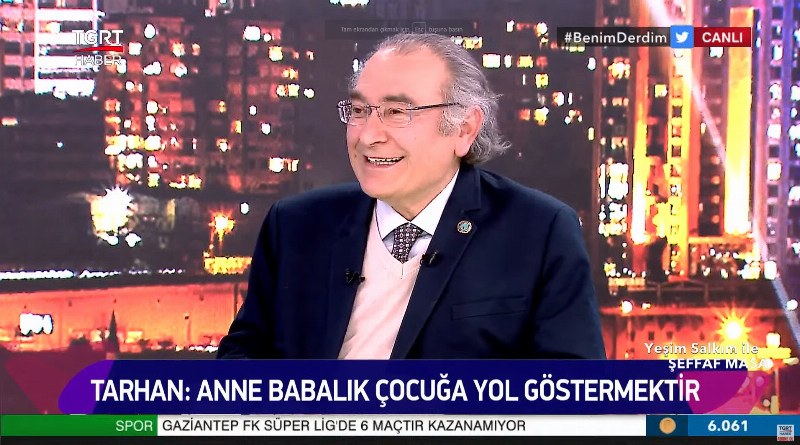
Prof. Dr. Nevzat Tarhan stated that comfortism and egoism are becoming widespread in Generation Z; “As a society, our protectiveness in family structures is high. Older generations matured by growing up amidst greater difficulties, but the current generation matures in prosperity. Parents say, based on their own experiences, 'We suffered, let them not suffer,' and are very giving to their children. Among the observed family pathologies, there are mostly children who grew up by easily obtaining things. Generation Z is a generation where comfortism and egoism are widespread, but they are also very likable. At this point, a person who only pursues pleasure cannot develop. That's why, since ancient times, the happiness of the era of Socrates, Aristotle, Plato, and Thales was not pleasure-happiness, but meaning-happiness. They recommended meaning-happiness. But later, pleasure-happiness was introduced. The path carved by Socrates at the very beginning of antiquity was also meaning-happiness. Now we have forgotten that.”
“Because Turkey is accustomed to crises, it somehow overcomes and progresses”
Prof. Dr. Nevzat Tarhan, speaking about the investment patterns of high and low-trust societies; “Fukuyama has a book called ‘Trust’. In it, he divides society into two: high-trust societies and low-trust societies. In high-trust societies, long-term investment is easier. In low-trust societies, because people cannot predict their future, investment stops. People spend all their energy on defense. They spend short-term. They do not engage in medium and long-term investments. That's why growth stops. We are currently a low-trust society. We were not like that in the early 2000s. We could see medium and long-term. But because people always think short-term, when various crises and reasons occur, the economy inevitably contracts. Investment power weakens in that regard. Because Turkey is accustomed to crises, it somehow overcomes and progresses.”
“An addicted person merges their identity and personality with the object they are attached to”
Prof. Dr. Nevzat Tarhan explained the difference between attachment and addiction with examples; “Why would a happy person turn to substances? When you are unhappy, serotonin in the brain decreases. The person tries to relieve themselves. If the person has no education about this, they fall into a pleasure trap. They temporarily feel relieved, and when the effect wears off, they take it again, then the dose they take becomes insufficient, and they increase the dose. In this way, the end goes badly. The difference between attachment and addiction is very well explained in an experiment conducted on rats. They make rats addicted to substances. The rat drinks the substance until it dies. It presses the pedal and drinks, presses the pedal and drinks. Later, they take the substance-addicted rat and put it in its natural social environment, and it gives up its substance addiction. There is no need for treatment. This means that when it is alone, it is unhappy. It turns to whatever eliminates its unhappiness. But if it has a natural environment and can receive social support, it does not turn to substances. It is satisfied in its natural environment. So, if it's like this even in animals, it's also like this in humans. Between addiction and attachment, an addicted person merges their identity and personality with the object they are attached to. But an attached person becomes 'us' while remaining 'me', not changing their own identity. They protect their own boundaries and can say no to a loved one without hurting them, if necessary. They have their own truths and boundaries. In such situations, a person is open to criticism.”
“Unhappiness is not depression”
Prof. Dr. Nevzat Tarhan drew attention to the differences between depression and a depressive mood experienced by an individual; “A depressive mood is different from depression. A depressive mood occurs in almost all of us from time to time. If it lasts longer than three days, expert help is recommended in such situations, but if it lasts longer than fifteen days, medication is probably needed. It is important not to confuse depression with a depressive mood. Everyone experiences it from time to time, but unhappiness is not depression. For example, unhappiness results from loneliness. This is a global epidemic. People feel lonely, and when they feel lonely, this situation ranges from substance use to excessive shopping. Addiction in the brain is called ‘Reward Deficiency Syndrome’. The brain never gets satisfied. The more you take, the more mistakes you make, and then you regret it. You buy things for your home, and your home is full of unopened packages, like a boutique. People learn many things by trial and error. In fact, these are human relaxation techniques. There is no need for them in mild stresses. Therefore, controllable stress is beneficial, uncontrollable stress is harmful.”
“Being 'us' while remaining 'me' is important in this regard”
Prof. Dr. Nevzat Tarhan emphasized that marriage is a team effort; “Marriage has 3 terms. Every marriage has a romantic period. The first is the honeymoon period. It lasts a few months and then passes. That period evaporates within 6 months or a maximum of 2 years. After that, power struggles or personality clashes occur. If individuals are lucky or can find wise solutions, they can overcome those power conflicts, identity, and personality clash days. After that, a period of positivity begins, and lifelong loves emerge this way. The formula for this is love plus cooperation. Therefore, what is important in marriage is being a team. In marriage, there is no single boss in the home. What is important is being a team, teamwork. That's why being 'us' while remaining 'me' is important in this regard.”
“If parents are at ease, children imitate them in such situations”
Prof. Dr. Nevzat Tarhan, addressing the effects of war psychology on children, explained how adults should behave in such situations. Prof. Dr. Nevzat Tarhan; “In war psychology, children look to their parents. It is the same in situations like earthquakes and disasters. This varies according to the age group. Children under ten years old are generally not fully successful in the path of individuation. But children around twelve years old, before what we call pre-adolescence or early adolescence, look to their parents. If parents are at ease, children imitate them in such situations. Some people remove the child in such situations. This is very wrong. In such situations, it is more important for the child to be with a parent or a family member. It is a different situation if both parents have passed away. It is ideal for the child to be with a person they trust and can establish a secure relationship with. That's why if parents emerge calmly from that war, children do too. There is no need to worry too much about children in war situations. There is a general, human-made disaster, a catastrophe. Children cannot understand it. This is according to their age. They ask, ‘Why is it happening, why are they doing it?’ For example, it happened in Syria, it happened here too. The words children say are similar. For example, a Syrian child said, ‘I will complain about you to Allah.’ Many things like this happened.”
Share
Request a Call
Other News
- Experts warn: 'Instead of memorizing letters, teach pencil grip, scissor use, and coloring'
- School fear and school love both start in the family!
- Family is not merely transforming, it is being battered under a serious assault
- Artificial intelligence opens the door to early diagnosis in autism!
- Artificial intelligence doesn't end engineering, it transforms it!