

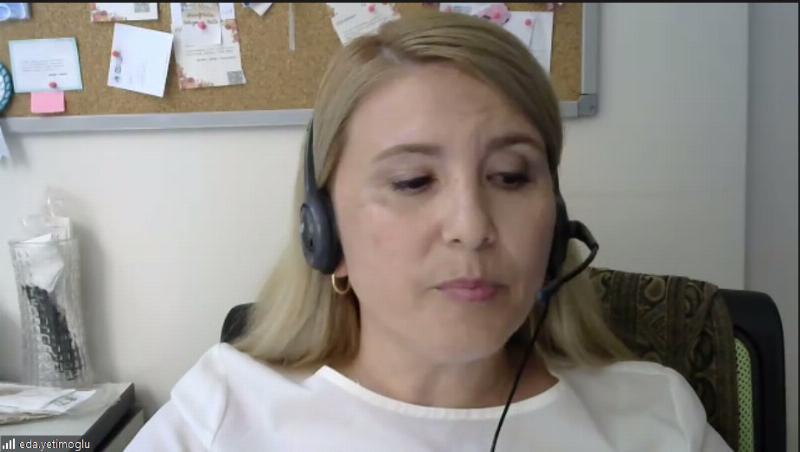
Instructor Eda Yetimoğlu, Head of the Pathology Laboratory Techniques Program at Üsküdar Üniversitesi Vocational School of Health Sciences, making statements about digital pathology, said, “Scanning a slide for examination, obtaining a high-resolution digital image, displaying it on a computer screen, accessing it from remote and different centers, marking and archiving the images is called digital pathology.”
Content
Digitalization in Pathology Applications Discussed
“Pathology means the science of disease”
Yetimoğlu, defining pathology, said, “Pathology is derived from the Greek words “Pathos” (disease) and “logos” (science) and means “the science of disease”. Pathology is the science that investigates the causes of diseases, the mechanisms of their formation, morphological changes, and the relationship of these changes with clinical practice. One side of the field of pathology consists of the laboratory section, where answers to the questions of why and how are sought, while the other side consists of clinical sciences that diagnose and guide treatment in hospitals. In pathology, all kinds of tissue and organ samples, as well as fluid and smear samples taken from the patient, are examined. While the examined tissue and organ materials are called biopsies, smear and fluid samples are called cytological materials.”
“Digital pathology can bring various advantages to pathology applications”
Yetimoğlu, addressing digital pathology applications, stated, “Digital pathology can bring a wide variety of advantages to pathology applications. For example, digital slides are easier to transport and retrieve from archives than physical slides. Many people can view and evaluate images simultaneously via a computer network. Multiple images can be placed side-by-side on the screen and examined and compared simultaneously. Digital pathology can provide time and cost savings compared to the traditional microscope approach.”
“The standardization issue must be resolved”
Yetimoğlu, speaking about the disadvantages of artificial intelligence in pathology, used the expressions, “There is a need for collecting large and well-labeled, relevant data, and there may be difficulties in licensing. The financial and economic aspects of artificial intelligence should be taken into account. The standardization issue must be resolved. There might be a lack of computational pathology experience among pathology specialists.”
Share
Update Date: March 01, 2026
Creation Date: May 26, 2022
Request a Call
Other News
- The book that read today's digital threats in 2014: Being a Conscious Family
- Experts warn: 'Instead of memorizing letters, teach pencil grip, scissor use, and coloring'
- School fear and school love both start in the family!
- Family is not merely transforming, it is being battered under a serious assault
- Artificial intelligence opens the door to early diagnosis in autism!