

The Digital Media and Children Symposium, organized by Üsküdar University Faculty of Communication, Journalism Department and İLİMER (Human-Centered Communication Application and Research Center), was held online. In the symposium, moderated by Üsküdar University Faculty of Communication, Head of Journalism Department Prof. Dr. Süleyman İrvan and Assoc. Prof. Dr. Gül Esra Atalay, Lawyer Berrin Sevil Kazancı, Digital Dad Orhan Toker, Assoc. Prof. Dr. Derya Gül Ünlü, Prof. Dr. Emel Baştürk, Assist. Prof. Dr. Sinan Aşçı, and Journalist Esra Öz shared their knowledge on the topic.
Content
'Digital Media and Children' Discussed
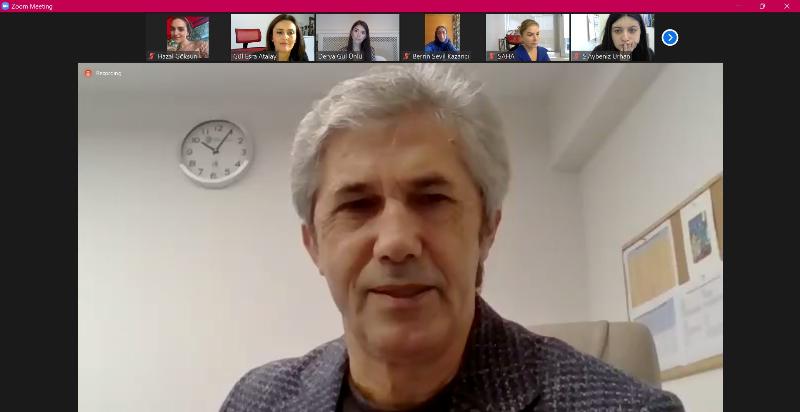
“Our children are at risk of suffering much neglect and abuse in this digital environment”
Lawyer Berrin Sevil Kazancı, Head of Protective and Preventive Services Department at the Ministry of Family and Social Services, Directorate General of Child Services, first spoke about the directorate's services: “Stemming from the Convention on the Rights of the Child, we provide protective and preventive services in a way that is compatible with our social and cultural values. Digital media is an area where children face risks. We should not keep our children away from technological developments, but our children are at risk of suffering much neglect and abuse in this digital environment. The most important studies on digital addiction are about children drifting away from the real world. We decided to carry out real-life activities within the scope of the digital addiction campaign. Routine trainings were provided to foster families. A digital addiction module was included in these trainings. Nearly 160 academic, scientific, and cultural events were organized. In terms of digital transformation, we raised awareness about the need to consider the negatives when creating digital fictions for the future. You can directly report content that you deem harmful for children on social media to internet service providers, inform BTK (Information and Communication Technologies Authority), report to Alo 183, and apply to our WhatsApp helpline at 0539 918 1117.”
“Technology has many positive contributions to children”
Digital Dad Orhan Toker said that conscious families can protect children from online dangers: “We started being online 7 times more than 2 years ago. More than half a million internet predators are also online daily, and their targets are not adults, but children. Children are vulnerable in this regard. Technology has many positive contributions to children. I am trying to raise awareness among families so they can protect them from its harms.”
“The digital environment opened the issue of parenting for discussion”
Assoc. Prof. Dr. Derya Gül Ünlü from Istanbul University Faculty of Communication spoke about the concept of ‘parenting in digital media’: “Parenting was timeless. It transformed into something that doesn't end when the child sleeps or goes to school, but continues in the digital environment. The digital environment opened the issue of parenting, which we previously learned through interpersonal communication, for discussion. Users share their experiences, perhaps negotiate, or watch those who are negotiating. It is a tool that provides information about parents' daily practices. It provides quick information, whether right or wrong. We can discuss its accuracy or inaccuracy, but it is undoubtedly true that traditional parenting is undergoing a transformation.”
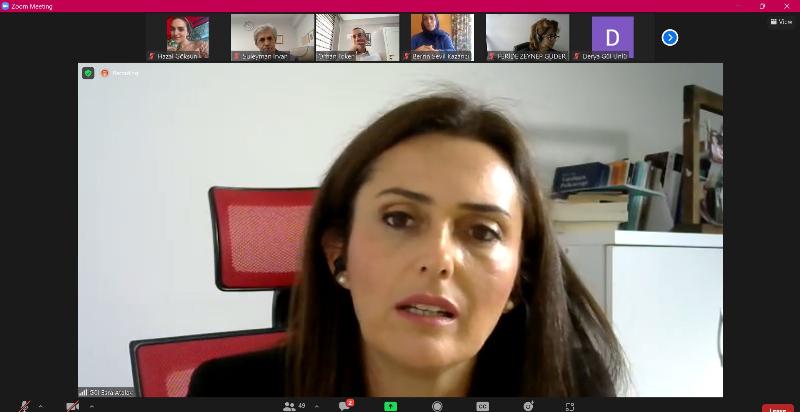
“It is children's right to access content safely.”
Prof. Dr. Emel Baştürk from Kocaeli University Faculty of Communication noted that overly protective parenting is debatable: “First, let's question childhood. There is a problem with how we view children: first, is a child constantly an object we need to protect and supervise, or a subject? Of course, a subject. When we conducted a project on cyberbullying with TÜBİTAK 7-8 years ago, we had no data. This was why we started writing the TÜBİTAK Project. In our focus group interviews with children, a large number of children suffered from parents being overly protective. Now, children's access to the internet is defined as a right. A child does not have to use the internet or social networks from the moment they reach school age. When we give technology to children too late, they think just browsing TikTok is using the internet. It is children's right to access content safely. Children should decide what content to watch and what not to watch as critical citizens.”
“Instead of panicking, it might be better to support their skills”
Assist. Prof. Dr. Sinan Aşçı from Bahçeşehir University Faculty of Communication, New Media Department, pointed out that parents' concerns can be transformed: “What you have emphasized so far leads to a situation that greatly fuels moral panic. We don't feel the need to look from another perspective. Instead of panicking with ‘My child wants to be a YouTuber,’ it might be better to support their skills such as the ability to edit the video they shot, find a title for it, or have the creative writing talent to summarize it in one sentence.”
“They turned motherhood into a profession and their children into sources of income”
Journalist Esra Öz made evaluations regarding the need for everyone, including children, to be informed and added: “We need to teach children how to use digital media correctly, but before conveying this to children, it needs to be conveyed to teachers, parents, and academia. Many have turned motherhood into a profession and their children into sources of income. They need to learn that a child's privacy has limits, that the child is not their property, and cannot be used as a tool.”
Share
Update Date: February 28, 2026
Creation Date: November 03, 2021
Request a Call
Other News
- Prof. Nevzat Tarhan: “Protecting a child is not just about putting an obstacle in front of them on the screen!”
- Prof. Deniz Ülke Kaynak: “We are still in the conflict management phase!”
- Residual current device saved a life!
- Can violence be prevented in schools?
- Is our thinking ability weakening with artificial intelligence?