

Üsküdar Üniversitesi Faculty of Communication's Visual Communication Design Department organized the 'Design Talks-Digital Arts' event. Bager Akbay, Candaş Şişman, Esra Özkan, Ethem Cem, and Mert Kızılay participated in the panel as speakers. The panel on Digital Arts was moderated by Prof. Dr. Hatice Öz Pektaş, Head of the Visual Communication Design Department, and Lecturer Dr. Sadi Kerim Dündar from the Cartoon and Animation Department.
Content
Digital Arts Explored from Every Angle!
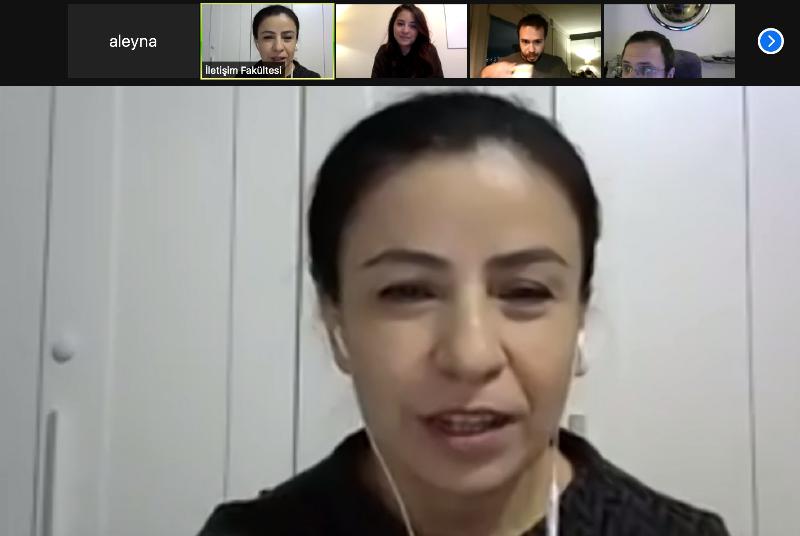
Important evaluations were made about digital design and digital arts in the program held via Zoom.
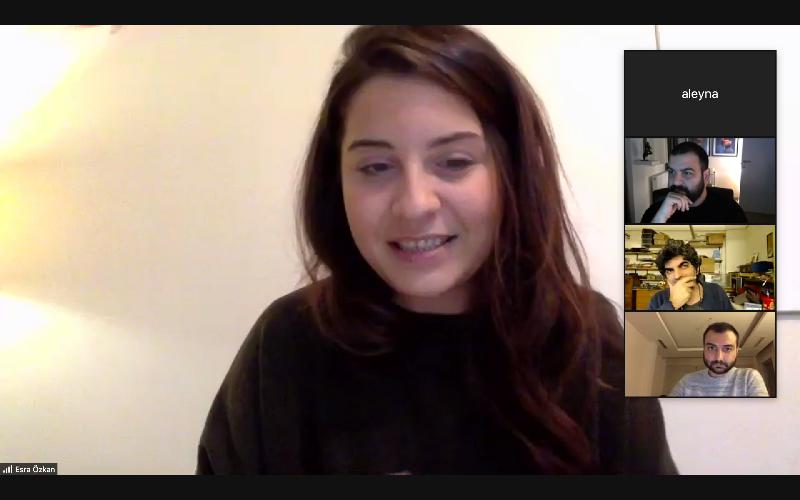
Esra Özkan: “Our main goal in digital arts is for it to enter everyone's home”
Addressing the topic of digital art, Esra Özkan stated: “I decided to leave everything plastic behind and switch to digital. It was a big change for me. For the past year, I made this decision and immediately took action. My path crossed with a company, and we started this journey with them. We were exhibiting works in new media, kinetic art, and data art. We created the Design Think project, which was very important. We turned the world into an open market. Because we knew there were issues in the field of digital arts. Finding a budget was an issue, customs were an issue, etc. It had many difficulties within itself. We reached 500 artists and conducted surveys. Finally, we reached the correct figures. We created a report with the survey results. We held a workshop for this report, the Akbank Sanat Workshop. With the participation of artists, we started producing solutions. 14 ideas emerged, some of which were brought to life. In March, we started a project with the intention that all digital arts would come together and generate income, allowing digital arts to start making money in some way. An angel investor supported us. Our main goal is for digital art to enter everyone's home. For this, there are different membership models, and we are connecting digital art with these models.”
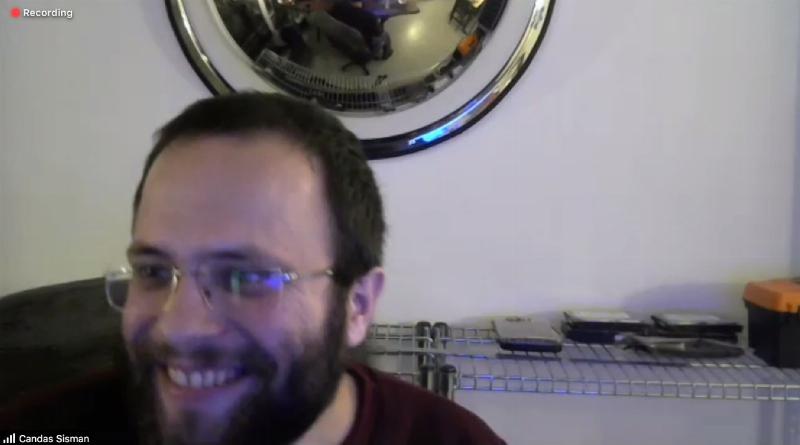
Candaş Şişman: “Our methods of perceiving the world with five senses do not fully reflect reality”
Candaş Şişman, speaking about the new world's methods of perception, said: “Firstly, my focus is on human perceptions, because we can see how much human perception changes the reality we live in. Our methods of perceiving the world with our five senses do not fully reflect reality, and we mistakenly believe this manipulated reality to be true reality. Scientifically, we can only see a certain frequency range and hear a certain frequency range. To claim that what we can perceive now is the absolute reality would be a bit of an overstatement. Our mentality, at some point, needs to be this: if we change our ways of seeing each other to perceive the world, what we see also changes. Therefore, knowing that our perceptions are limited, we should think about how we can develop them. There is a perspective on how we can perceive reality. This opens up many possibilities for designing ourselves. We have the opportunity to combine different senses with different perspectives. Especially due to advancements in both developing technology and biotechnology, we have the opportunity to integrate ourselves with different senses, and this will continue to increase.”
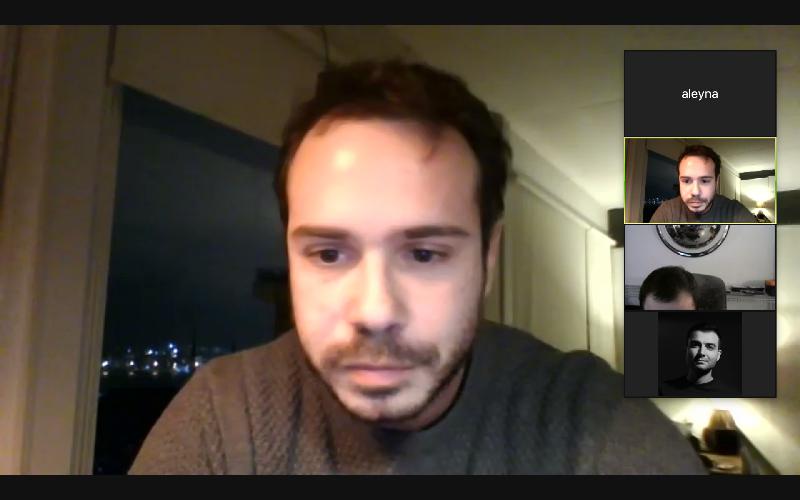
Mert Kızılay: “There was an immature sector in Turkey”
Mert Kızılay, addressing the topic of Title Design, stated: “After school, I felt like I had dipped into many things – design, digital, traditional, etc. Making concept-based short films excited me a lot. I realized I would enjoy producing stories the most. After dabbling in small-scale art projects, I went abroad. There was an immature sector in Turkey. Since I enjoyed making short films and building art based on fantasy, I was thinking about how to keep that alive and earn money at the same time. This pushed me abroad. We don't have much of it here, it's just starting to emerge: Title Design. It's a very active sector now. I worked in this field for about 4 years, doing graphics, design, etc. Then I became a creative director. Since TV series and films generally always have a meaning, the design and visualization I created always had to carry a certain meaning; it had to serve an idea. Our sector is digitally oriented, but the reason I love it most is that the concept of what style it will be is decided first.”
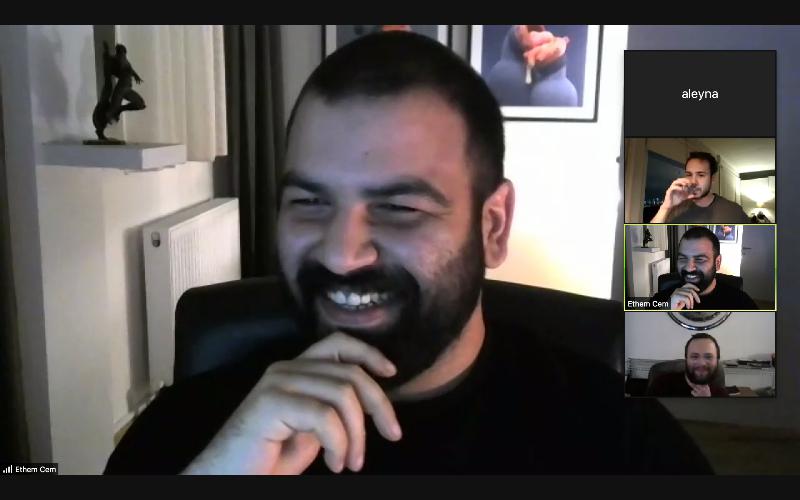
Ethem Cem: “I combined Architecture with Visual Design”
Ethem Cem, speaking about his experiences in Title Design, stated: “I went abroad to study architecture. I lived there for 4 years and came back to Turkey without finishing the department. I didn't want to be an architect; I wanted to pursue things I was creating myself. I had a long period of drawing education. When I returned, I continued that and started in the Visual Communication Design department in Istanbul. I began attempting to combine the physical medium I learned in architecture with the digital medium I learned in visual communication design. In the field of motion graphics, we weren't doing title sequences back then. We really wanted to, and we always complained about it. Then we got a project. They reached out to us for the title sequence of the series 'Şahsiyet'. When we first met, both the screenwriter and the director conveyed their ideas. Also, there was something about the series; the main character was very important. His sitting place, the objects he used, and the things he did were also very important. The entire script revolved around him. We produced several different things. Those ideas were mixed, and something like this emerged. While studying architecture, I wanted to combine what I learned there with what I learned in visual communication design. This project was actually my first experience in this regard.”
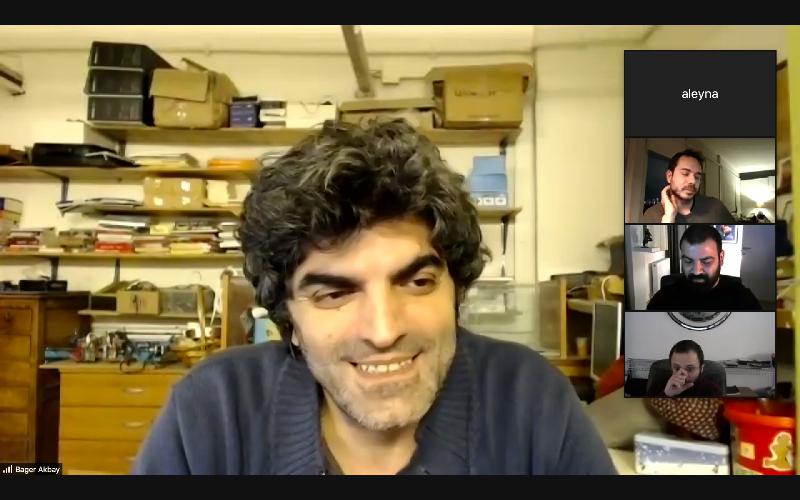
Bager Akbay: “These works start with the Ars Electronica Festival”
Bager Akbay, addressing the topic of design and art, stated: “There are a few fundamental things we can see in this field globally. These works, for example, begin with the Ars Electronica Festival. Those interested can look at the archive of the Ars Electronica Festival. It is an important archive. The festival has been running since '79. The competition starts 7-8 years later. It also comes with Transmediale in Germany. Those interested in the more theoretical side of Transmediale should look there, while Ars Electronica is stronger on the more playful technology, lights, etc., side. Both have two sides, but there is this small distinction between them. There are also such works in Turkey. But things exactly similar to this field are quite interesting, because it emerges with design. It coincided with a period when coding was democratized. There were also rumors about the future of 3D printers. There was a project called Reprap, etc. The Amber Festival was the second thing that brought us together. I think the concept of social media existed back then too, but platforms like Twitter, Instagram, TikTok actually enabled their complete democratization. In a way, everyone now shoots videos, everyone takes photos. It has become very normal. We need to look at this general transformation. It brings a different perception.”
Share
Update Date: February 26, 2026
Creation Date: December 01, 2020
Request a Call
Other News
- Experts warn: 'Instead of memorizing letters, teach pencil grip, scissor use, and coloring'
- School fear and school love both start in the family!
- Family is not merely transforming, it is being battered under a serious assault
- Artificial intelligence opens the door to early diagnosis in autism!
- Artificial intelligence doesn't end engineering, it transforms it!