

Digisexuality, defined as “the tendency to be attracted to robots,” is drawing attention as a trend spreading worldwide. Experts point out that the most dangerous aspect of this is that such tendencies are found attractive by young people, especially those experiencing problems in relationships and loneliness, and are gaining more and more followers. They stress that this new trend threatens the concept of family, and that state institutions and NGOs should develop supportive and protective policies for the family in cooperation.
Content
Digisexuality Threatens the Family Institution
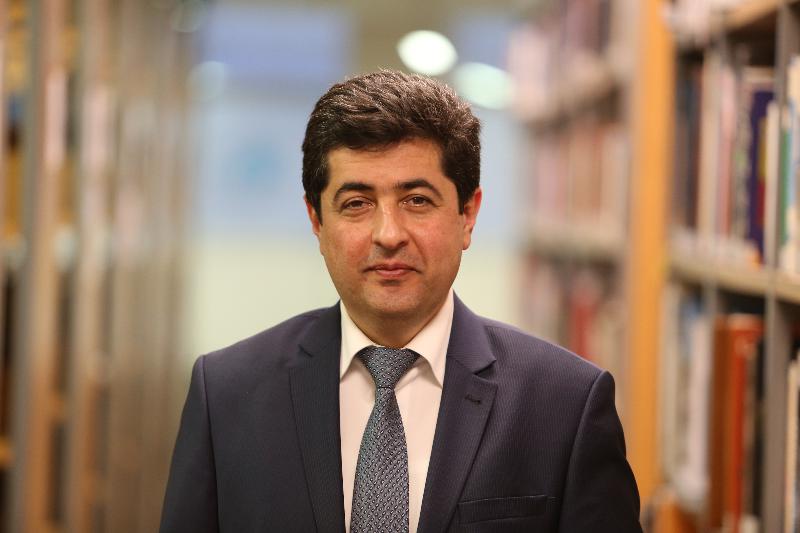
Üsküdar Üniversitesi Sociology Department Head, Prof. Dr. Ebulfez Süleymanlı, made statements regarding digisexuality, a new trend that could pose a serious threat to the family and marriage institution in the near future.
The concept of family is changing
Prof. Dr. Ebulfez Süleymanlı stated that the position of the family is rapidly changing in today's world, emphasizing that roles, functions, and structural factors are being reconstructed. Prof. Dr. Ebulfez Süleymanlı said, “In this process of change, the institution of family, experiencing serious problems regarding balance and stability, leads to some marriages ending in divorce or changes in perceptions of marriage in many societies. Among the issues threatening the family and especially the institution of marriage are the increasing preference for individual lives, defined by the concept of “solo living,” over family life, or the proliferation of single-parent families.”
The name for desiring robots: Digisexuality
Prof. Dr. Ebulfez Süleymanlı, defining digisexuality as “people preferring to form relationships with robots by having sexual and communicative desires towards them rather than their own species,” stated that the terms “digisexual” or “robosexual” are used in literature for such people. Prof. Dr. Ebulfez Süleymanlı said that British artificial intelligence expert David Levy, in his book “Love and Sex with Robots” published in 2007, predicted that the first marriage with robots could take place in 2050.
Some fall in love with robots, some even marry them
Prof. Dr. Ebulfez Süleymanlı stated that examples related to David Levy's prediction are now being seen in some countries, giving the following examples: “In 2016, a French woman named Lilly expressed her love for her robot, named InMoovator and produced via a 3D printer, and stated her desire to marry it. A year later, a Chinese artificial intelligence expert named Jiajia Zheng held a religious wedding ceremony with a robot he built himself, inviting his family and friends to the ceremony. According to statements, the young man resorted to such an act because he had given up hope of finding a suitable woman and was tired of his family's pressures. In 2018, Akihiko Kondo, a school administrator working in Tokyo, the capital of Japan, married a 16-year-old singer hologram, Hatsune Miku, from the virtual world, even buying a ring from a jeweler and creating a marriage certificate, which is another similar example that caused outrage worldwide. As understood from the examples, such relationships are seen or presented as an alternative option for lonely people and those who struggle to form relationships, whose numbers are increasing worldwide, under the name “digisexual revolution.”
Is human-robot marriage possible?
Prof. Dr. Ebulfez Süleymanlı stated that a man or woman preferring a robot over a human for sexual relations and emotional fulfillment necessitates the redefinition of many concepts, emphasizing that the family is at the forefront of these concepts.
Noting that this situation could lead to significant problems in the future, Prof. Dr. Ebulfez Süleymanlı continued: “Is marriage between a human and a robot possible? How should their desire to adopt with this marriage be addressed? Or will robot children be manufactured? On the other hand, can it be thought that a robot parent can meet the emotional needs of a child? Perhaps most importantly, will a mother or father who prefers a relationship with a robot rather than a human be able to establish a healthy relationship with their child? How will our identity change in this process, and what will be the new ethics and norms of morality? Can we speak of a new corporeality built upon the objectification of the human body, ignoring the integrity of the human soul, body, and emotions?”
The exploited can become the exploiters
Prof. Dr. Ebulfez Süleymanlı stated that legal, religious, and philosophical inquiries into this situation, which poses a great danger to the future of humanity in demographic, ethical, and many other respects, have begun today, and underlined that most of the discussions focus on points where robots would be lacking.
Prof. Dr. Süleymanlı continued by explaining how human beings approach even this situation with an arrogant and entitled perspective: “Until now, in the minds of users, robot partners are seen as being used or exploited by them, and robots are always considered to be in a secondary position. However, as we know from history, the exploited can eventually become the exploiters. We can observe this from how ordinary objects like computers and smartphones have become indispensable devices in our lives today. Indeed, nowadays, the feeling of inability to stay away from such smart devices creates a psychological discomfort in people, where the fear of communication breakdown when away from them can become a problem. A new type of addiction has emerged. Perhaps soon, there will be many people among us who become mentally dependent on robots. It should not be forgotten that in this era where humans are attempted to be made to resemble robots, human characteristics are also being tried to be loaded onto robots.”
Supportive and protective policies for the family should be developed
Prof. Dr. Ebulfez Süleymanlı stated that the most dangerous aspect of this is that such tendencies are found attractive by young people, especially those experiencing problems in relationships and loneliness, and are gaining more and more followers, and offered the following recommendations:
“Companies that produce such robots are also expanding the area of attraction by designing new AI-focused products. To prevent such tendencies that threaten the institution of family and marriage, and even the future of humanity in many ways, it is extremely important for sociologists, state institutions, and NGOs to cooperate in developing supportive and protective policies for the family, for the sake of humanity's future.”
Share
Update Date: February 27, 2026
Creation Date: June 01, 2021
Request a Call
Other News
- Social responsibility courses moved to the field
- Erasmus+ Orientation Week completed at Üsküdar
- Prof. Nevzat Tarhan: “Brain secretes ‘dark glue’ in social media lynchers!”
- Prof. Nevzat Tarhan: “Every segment of society should be able to say, ‘This constitution is my constitution!’”
- OHS releases guide for safe operation of industrial robots