

We encounter more examples of Metaverse applications in our daily lives, as it is one of the most talked-about concepts of recent days. With Metaverse, real-world behaviors such as daily life, financial systems, and education, along with social media applications, online games, augmented reality, and digital currencies operating on independent platforms, are being transferred to the virtual universe using augmented reality technology. Experts state that millions of dollars are being invested in Metaverse applications and point out that significant employment opportunities are also being created in this field.
Content
Decentralized Center: Metaverse
Virtual living medium Metaverse offers a new world
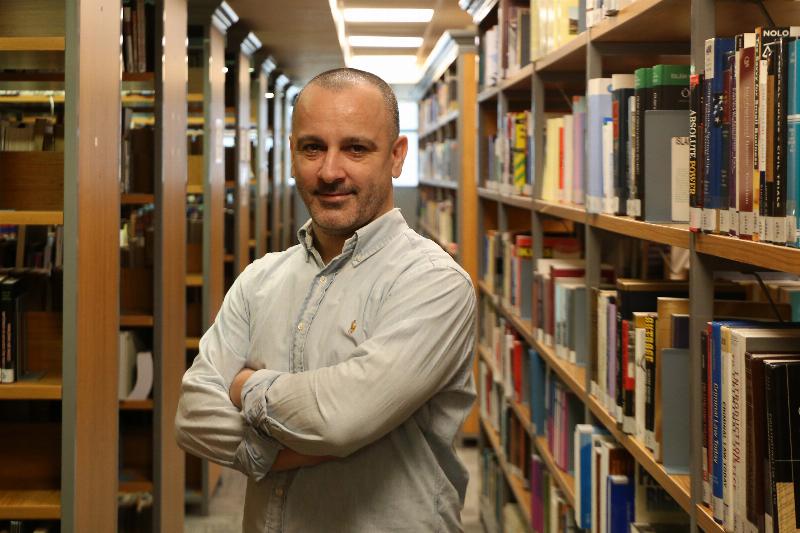
Head of the Software Engineering Department at Üsküdar Üniversitesi Faculty of Engineering and Natural Sciences, Assoc. Prof. Dr. Türker Tekin Ergüzel, made an assessment regarding the concept of the virtual universe “Metaverse”.
Assoc. Prof. Dr. Türker Tekin Ergüzel defined the concept of “virtual universe,” which we frequently hear nowadays as “meta-verse” or “beyond universe,” as “a virtual living medium that aims to enable us to experience our real-world behaviors such as living, earning, working, and purchasing through augmented reality technology, by bringing together social media applications, online games, augmented reality, and digital currencies operating on independent platforms, and that distinguishes itself from our real world with its own virtual elements.”
Assoc. Prof. Dr. Türker Tekin Ergüzel stated that in virtual universes with transitions between them, real virtual money can be earned and spent using tokens like Mana (Decentraland), Sand (Sandbox), AXS (Axie Infinity), and ENJ (Enjin Coin), which utilize the Ethereum blockchain on crypto universes.
First appeared in 1992
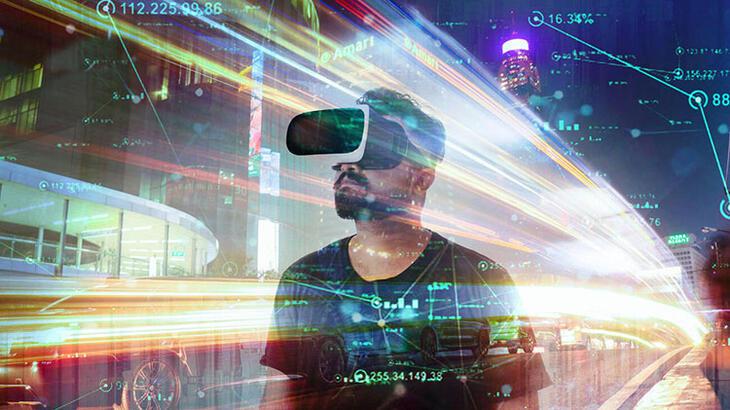
Assoc. Prof. Dr. Türker Tekin Ergüzel stated that the concept of “Metaverse” first appeared in Neal Stephenson's 1992 cyberpunk science fiction novel Snow Crash, which deals with future urban societies dominated by computer technology such as artificial intelligence and cybernetics. He continued:
“In the book, the Metaverse is described as a shared 'virtual universe' presented to society via a 'worldwide fiber optic network' and projected onto augmented reality glasses. Within the Metaverse (virtual universe), which is a new, interactive, and realistic form of the internet medium where we currently participate only as visitors, application developers can build all objects, habits, stores, and daily life rules belonging to real life. As of November 16, 2021, Barbados aims to develop cultural and international diplomacy through technology diplomacy, as they state, by opening an embassy on the Metaverse.”
Metaverse: The “embodied” form of the Internet
Assoc. Prof. Dr. Türker Tekin Ergüzel stated that this new virtual world is actually “the embodied form of the Internet,” as defined by Zuckerberg, the founder of Facebook, formerly known as Meta. He said, “While our user definition was previously defined by concepts such as username and profile picture and static objects, in the virtual universe, each user can be defined as a customizable avatar that can speak and move. The same user, with this new visual “identity,” will live on virtual streets in the virtual universe, be able to shop, open stores where they can earn real virtual money, receive education, and even handle visa procedures, as mentioned above.”
Assoc. Prof. Dr. Türker Tekin Ergüzel said, “In an ideal virtual universe, every user will be able to buy, create, sell, and trade objects that are their own, distinct, and permanent across transitions between virtual universes. These digital assets (NFTs, non-fungible tokens) will be an important market for virtual universe investors and content creators.”
What is NFT?
Addressing the concept of NFT, Assoc. Prof. Dr. Türker Tekin Ergüzel said, “An NFT is a unit of data that uses blockchain to certify that a digital asset is unique and therefore not interchangeable. This data can be used to represent items such as our avatars, digital land, streets, stores, homes, video, audio, or any other type of digital file. However, access to any copy of the original file is not limited to the buyer of the NFT. Anyone can acquire these digital items, and ownership information for NFT objects is stored with blockchains. We can actually express this as follows: in daily life, similar or even identical assets belonging to us can be owned by others, and we sometimes use or carry them. However, in the virtual universe, the ownership and usage rights information for NFT assets, which we cannot physically carry with us, is protected by the blockchain.”
This universe will not have a single owner
Assoc. Prof. Dr. Türker Tekin Ergüzel also stated that there is curiosity about who owns this virtual universe:
“The question, ‘So, who owns the Metaverse?’ asked for the virtual universe, in which leading technology figures like Mark Zuckerberg and Epic Games CEO Tim Sweeney are investing, actually means seeking an answer to the ownership question of a large virtual universe that will host infinite virtual universes. Therefore, there will not be a single owner for a large virtual universe where companies will be present with their services. We can say that the owners of these increasingly growing and potentially infinitely large virtual universes are actually the users with their accounts, owned objects, all assets, and investors with the policies they will shape through their investments.
Meta executives Andrew Bosworth and Nick Clegg's statement about the Metaverse: “We are working to ensure that the terms of use, privacy controls, and security measures are appropriate for new technologies and keep people safe. No single company will do this alone. It will require collaboration across the industry with experts, governments, and regulators to get it right.” This statement actually predicts that transitions between different virtual universes will be possible for users with an 'A Metaverse' architecture, rather than 'The Metaverse,' regarding the ownership or management of the metaverse concept.”
Investments are being made in digital copies of the real world
Assoc. Prof. Dr. Türker Tekin Ergüzel stated that along with Meta and Epic Games, the 3D development platform Unity is also investing in “digital twins,” digital copies of the real world, and the graphics company Nvidia has developed a platform called “Omniverse,” which connects 3D virtual worlds. Assoc. Prof. Dr. Türker Tekin Ergüzel said, “Here, along with the virtual universe development process, Meta acquired Oculus for 2 billion dollars to enable user experiences in the Metaverse through virtual and augmented reality, planning to achieve its widespread usage goal in this field within 5-10 years.”
Millions of dollars in investments are being made
Assoc. Prof. Dr. Türker Tekin Ergüzel gave examples of investments made in this virtual universe:
“In the virtual universe, which largely began with ‘real estate’ investments, a user recently paid 650,000 dollars (149 Ethereum) for a digital yacht developed by Republic Realm in The Sandbox. Similarly, in the Decentraland virtual universe, a Canadian-based investment company paid 618,000 MANA (2.43 million dollars) for a 600 square meter plot consisting of 116 parcels. Although the investment, corresponding to approximately 4,000 dollars per square meter, is quite ambitious, shopping and living centers are planned to be built on the land. In November, sales exceeding 106 million dollars were realized in 4 major virtual universe projects such as Decentraland, The Sandbox, CryptoVoxels, and Somnium Space, with over 6,000 investors acquiring new NFT assets. We can say that the high transaction volume and investor interest will contribute to the cryptocurrency market, which has been experiencing trust issues, gaining confidence and becoming more widespread. New regulations from China and the US regarding cryptocurrency markets and miners are also very important for virtual universe asset financing. Countries that ensure sufficient and secure supply will financially reap the rewards of these investments in the coming years, but they will also have to make regulations concerning the high carbon emissions caused by cryptocurrency mining.”
Offers employment opportunities
Assoc. Prof. Dr. Türker Tekin Ergüzel said, “Meta's Reality Labs division has over 10,000 employees working on augmented and virtual reality projects, and it plans to hire another 10,000 people in Europe soon. Meta announced it would spend 10 billion dollars on investments, primarily in start-ups.”
Key areas of focus grouped under 5 headings
Assoc. Prof. Dr. Türker Tekin Ergüzel stated that with the “Metaverse,” the key working and focus areas for technology industry representatives and application developers can be grouped under five headings:
- Feature sets overlapping with traditional web services or real-world activities,
- Real-time 3D computer graphics and personalized avatars,
- Socially interactive, less competitive but goal-oriented games, rather than conventional games,
- User support for creating their own virtual items and environments, and
- Interaction with external and real economic systems to allow people to profit from virtual products.
Product development process to begin within 2-5 years
Assoc. Prof. Dr. Türker Tekin Ergüzel stated that Gartner, a research company known for its highly predictive work, announced in its August 2021 Hype Cycle for Emerging Technologies that augmented reality, virtual reality, NFTs, decentralized identity, and artificial intelligence are the research and investment areas with the highest expectations, and products in these areas are projected to begin their development process within 2-5 years.
Decentralized identities will also be used in metaverses
Assoc. Prof. Dr. Türker Tekin Ergüzel concluded his words by saying: “With the claim that the current centralized physical and digital identity ecosystem will be completely restructured into a decentralized and democratic architecture, Microsoft is offering its users a trust framework architecture through Decentralized Digital Identity (DDID) investments, where identifiers such as usernames can be replaced with independent identities, enabling data exchange with blockchain and distributed ledger technology to protect both privacy and transactions. In the near future, we will also see decentralized identities being used in metaverses, alongside decentralized (crypto) currencies.”
Source: Gazete Vatan
Share
Update Date: February 28, 2026
Creation Date: December 08, 2021