

If your child still says 'tefon' instead of 'telefon' (phone), 'tuş' instead of 'kuş' (bird), 'aba' instead of 'araba' (car), 'şu,' or 'du' instead of 'su' (water), 'kakı, tapı, papı' instead of 'kapı' (door), etc., after a certain age, be careful! Experts warn. When a child reaches three years old, at least half of what they say should be understood correctly. Assist. Prof. Dr. Özlem Oğuz emphasizes that a child who has completed 4 years of age should be able to produce the sounds in their native language correctly and their speech should be understandable, drawing attention to the importance of early intervention in speech sound disorders for later ages.
Content
Critical Age '4' for Language Learning
If at least half of what they say is not understood correctly, be careful!
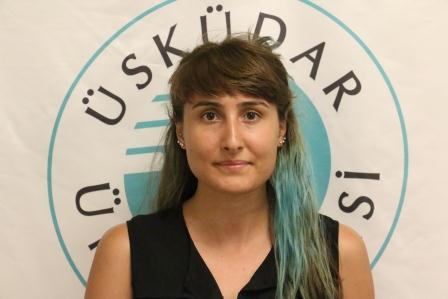
Assist. Prof. Dr. Özlem Oğuz, Assistant Head of the Department of Speech and Language Therapy, Faculty of Health Sciences, Üsküdar Üniversitesi, made evaluations and shared her recommendations regarding the causes of speech sound disorders that start in childhood and can also be observed in later ages.
Struggling is a part of the learning process
Dr. Oğuz stated that it is normal for young children learning language skills to have some difficulty pronouncing words correctly. She said, “This is part of the learning process, and speech skills develop over time. They master certain sounds and words at each age. However, some children may experience difficulties with intelligibility or make some speech sound errors during speech. This means that children struggle to pronounce certain sounds and words beyond the expected age.”
Disorders can continue into adulthood
Dr. Özlem Oğuz stated that speech sound disorders are a general term given to a child’s difficulty in learning, expressing, or using the sounds/sound patterns in their own language. She said, “Errors in children’s speech production can be noticed by parents, other adults, and even children themselves, and may cause concern. These difficulties are usually evident when compared to the communication abilities of children in the same age group, and these difficulties we observe in children can continue into adulthood depending on the cause and nature of the disorder.”
Can stem from structural causes
Dr. Özlem Oğuz emphasized that children with speech sound disorders experience problems with speech production performance and that intelligibility is affected. She stated, “This diagnosis can manifest differently depending on the cause and severity of the disorder. We can say that there are types of speech sound disorders accompanied by conditions such as articulation disorder, phonological disorder, childhood apraxia of speech, cleft lip and palate, hearing impairment, Down syndrome, autism spectrum disorder, and cerebral palsy. Speech sound disorder can arise due to structural reasons or a ‘causeless’ delay in a child’s learning of the phonological rules of the language they are acquiring.”
Family history can also be a factor
Dr. Özlem Oğuz stated that the suspicion of a speech sound disorder in a child and the likelihood of diagnosis increase when certain conditions are present. She said, “Any history of language and speech disorders in the family, pre-natal, peri-natal, or post-natal conditions, differences in oral motor structures (cleft lip and palate, tongue-tie, dental deviations, orofacial myofunctional disorders), history of middle ear infection, hearing impairment, and neurological pathologies are among the conditions that can increase the risk of diagnosis.”
Intervention should not be based on hearsay
Contrary to popular belief, Dr. Özlem Oğuz emphasized that tongue-tie, defined as ankyloglossia, does not always and definitively lead to speech sound disorder. She said, “In some cases, it can cause problems with feeding, oral hygiene, and speech production, but we can say that it is not possible for everyone with ankyloglossia to experience problems. After an opinion from a specialist physician and a speech-language therapist, the necessary intervention for ankyloglossia can be carried out. Intervention should not be based on hearsay or non-expert opinions. In case of incorrect intervention, much greater problems related to voice, speech, and swallowing may be encountered.”
Critical Age '4'
Dr. Özlem Oğuz stated that 'a child not saying a sound in a word, adding a non-existent sound to a word, changing sounds in a word, producing them differently, not always being able to produce sounds correctly, and having low intelligibility' bring to mind the diagnosis of a speech sound disorder, and she continued:
“It is an unexpected situation for a child, after a certain age, to make productions such as 'tefon' instead of 'telefon' (phone), 'tuş' instead of 'kuş' (bird), 'aba' instead of 'araba' (car), 'şu,' or 'du' instead of 'su' (water), 'lılan' instead of 'yılan' (snake), 'kakı, tapı, papı' instead of 'kapı' (door), 'şakba' instead of 'şapka' (hat). When a child reaches three years old, at least half of what they say should be understood correctly. A child who has completed 4 years of age should be able to produce the sounds in their native language correctly, and their speech should be understandable by individuals other than family members. A child with a speech sound disorder will continue to struggle to pronounce words even if they pass the expected age, and will exhibit errors similar to the examples given. In such a case, it is recommended to visit a speech-language therapist for evaluation. The speech-language therapist will apply the appropriate evaluation procedure for the speech sound disorder and then begin the intervention process by selecting the therapy method suitable for the child.”
Early intervention is very important for later ages
Dr. Özlem Oğuz emphasized that it should be understood that working on blowing, balloon inflation, and lip movements, which are called oral-motor exercises in speech and language therapies, is incorrect, and that distancing oneself from individuals who claim to provide therapy with such practices is a necessary step for the child. She said, “Therefore, the diploma and educational qualifications of the specialist from whom speech and language therapy will be received must definitely be questioned. Early intervention in speech sound disorders is crucial for later ages. It should be taken into consideration that children with speech sound disorders in the preschool period may struggle during the reading and writing learning process in school, and the possibility of spontaneous improvement should not be relied upon.”
Share
Update Date: March 01, 2026
Creation Date: September 19, 2022
Request a Call
Other News
- Prof. Nevzat Tarhan: “Protecting a child is not just about putting an obstacle in front of them on the screen!”
- Prof. Deniz Ülke Kaynak: “We are still in the conflict management phase!”
- Residual current device saved a life!
- Can violence be prevented in schools?
- Is our thinking ability weakening with artificial intelligence?