

An online event titled 'Crime and Black Figures' was organized by Üsküdar University Vocational School of Health Services. Lecturer Ümit Ertem from the Faculty of Health Sciences, Child Development Department, attended as a guest speaker at the event, which was organized by the Autopsy Assistantship Program. Ertem defined black figures as crimes and criminals not reflected in statistics.
Content
Crimes and Criminals Unseen in Statistics; ‘Black Figures’
'Social order is established by illuminating crimes and isolating people who commit crimes in the community.'
The event, held under the 'University Culture' course and moderated by Lecturer Duygu Yavuz Kılıçaslan, Head of the Autopsy Assistantship Program at Üsküdar University Vocational School of Health Services, featured Lecturer Ümit Ertem, who emphasized the importance of solving a crime for both the state and individuals' self-control. Ertem stated, 'Since humankind was born and existed in the world, it has protected itself to overcome its fears. Throughout all this time, it takes personal precautions to feel good. After a while, we see that these precautions, with the formation of social order, are now taken over by states, and people strive to feel safe under their roof. Thus, fighting crime becomes one of the primary duties of all states. Social order is established by illuminating crimes and isolating people who commit crimes in the community, keeping them in a separate place. In this way, people feel safer living in this community.'
'Unsolved crimes are expected to be illuminated.'
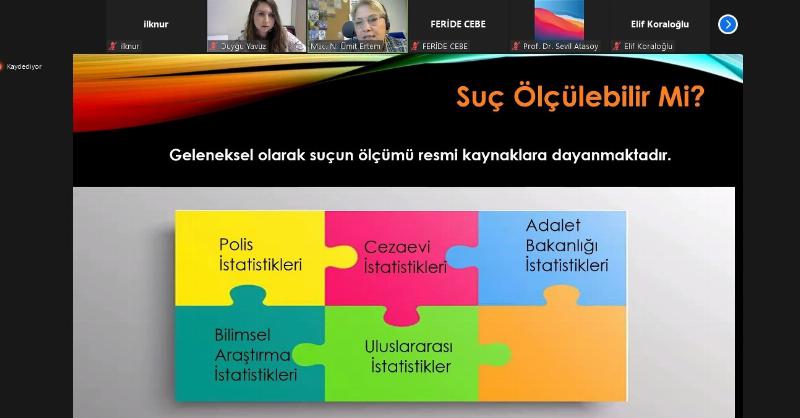
Lecturer Ümit Ertem, explaining the concept of black figures for crimes and criminals not recorded in statistics, said, 'Statistics not reflected in official statistics, unfortunately, appear as figures close to the reflected statistics. Crime statistics, such as those from the Ministry of Justice or prisons regarding arrests, are perhaps a very classic example. That is, it's the visible part of the iceberg. The truly existing crime statistics are far beyond this. We call this difference 'Black Figures'. Unsolved crimes are expected to be illuminated, and if we do not know what these crime groups or their numbers are in this part, then the measures we take remain inadequate. Black figures are a concept we can then explain. In a community where issues like car theft, robbery, and home burglary are frequently reported, we must look at why bribery or fraud are reported so rarely, and of course, what unperceived crimes take away from society's life.'
'Traditional patterns cause women to tolerate domestic violence.'
Lecturer Ümit Ertem, mentioning that the underlying dynamics of victims not reporting crimes are much more numerous than those considered by official authorities, stated, 'Firstly, these are situations such as the victim not having conditions to identify the perpetrator, the victim being an accomplice to the crime in some way, the crime occurring within the family, being subjected to blackmail, or one party being economically dependent on the other. For example, a woman being a victim of violence within the family but not wanting to be taken back by her family due to traditional reasons. The belief, from a traditional perspective, that she can only leave the house she entered with a wedding dress in a shroud. Traditional patterns cause women to tolerate domestic violence, just as women's economic inadequacy and inability to gain independence on their own cause them to continue to be victims of that torment and abuse.'
'We must keep crime statistics in the light.'
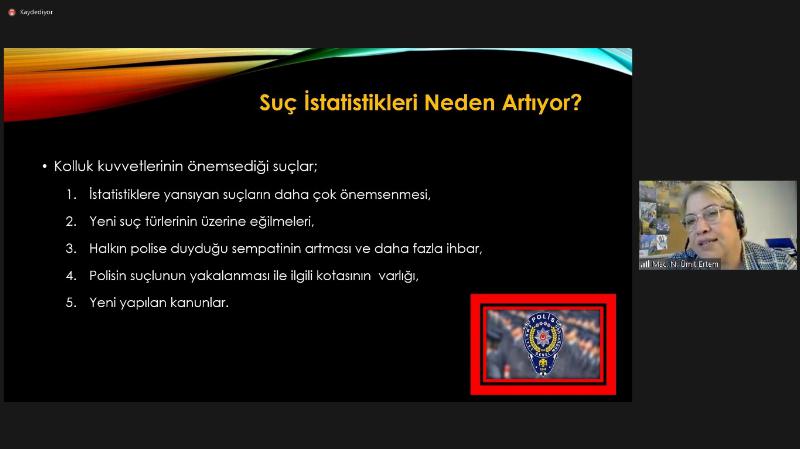
Lecturer Ümit Ertem, offering solutions for illuminating the parts unseen in statistics, said, 'The more official crime statistics from the Ministry of Justice, prison statistics, or other international statistics are produced, the more the unseen parts are illuminated, and real criminality approaches each other. As we move away, our interventions in society for crime resemble drawing pictures around a shadow. We must keep crime statistics in the light. Because the dark area of unknown crimes reduces the value of crime statistics. If crime statistics are produced in a clear area, we will make the right decision on which one to intervene first in prevention efforts. If rehabilitation of the offender or victim is necessary—and in new generation crimes, rehabilitation paths for both victim and perpetrator have become more important than just keeping the person in prison. Ways to reintegrate the person into society have become more important. In such a situation, as society and professional groups, we can reach a much better situation regarding decisions on how rehabilitation should be planned, what its scope should be, and which one is correct and effective.'
Share
Update Date: February 28, 2026
Creation Date: May 18, 2022
Request a Call
Other News
- Prof. Nevzat Tarhan Appointed as SEDEF Federation President
- Prof. İbrahim Özdemir: “We Cannot Close Our Eyes to the Climate Crisis”
- Tarhan visited Gaziantep University Kahraman Eruslu Kidney Transplant Hospital
- Üsküdar AFAD Support volunteers participated in post-flood efforts in Ayazağa
- Industrial Engineering Students Learn ERP Applications Through Industry Experience