

The "Conflict Management in Healthcare Institutions" seminar was held, moderated by Lecturer Ömer Faruk Okuyucu, Head of the Occupational Health and Safety Opticianry Program at Üsküdar Üniversitesi Vocational School of Health Services. Dr. Lecturer Gamze Kağan, Head of the Üsküdar Üniversitesi Vocational School of Health Services Occupational Health and Safety Program, participated as a guest in the seminar held within the scope of the University Culture course.
Content
'Conflict Management in Healthcare Institutions' Discussed…
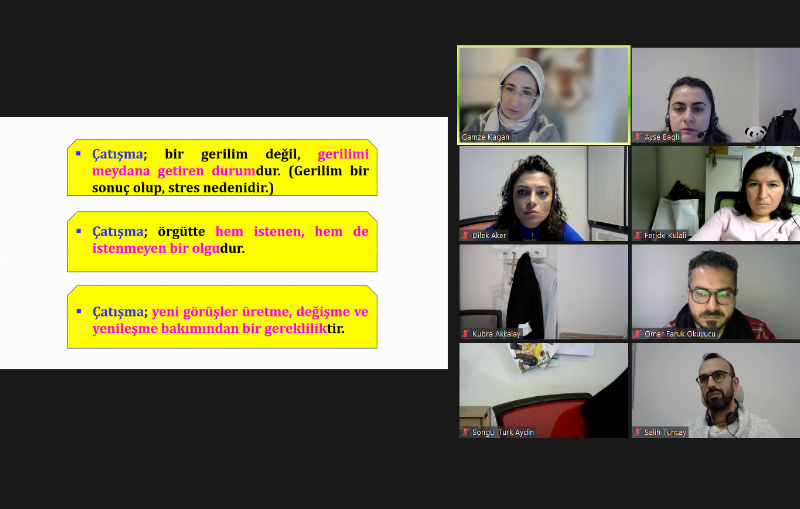
“Tension is an outcome, and stress is the cause”
Addressing the positive and negative aspects of conflict and emphasizing the importance of a human model that ensures consensus in conflict management, Kağan stated: "When we examine incidents of violence, conflict is one of the most closely related factors. While conflicts are defined as disagreements between individuals, workplace violence is explained as an event resulting from conflicts. Conflict is a phenomenon we encounter in every aspect of our lives. The process where parties experience disagreement during a certain interaction is defined as conflict. In some cases, conflicts are viewed not as negative but as positive situations. Conflict is not a tension; it is a situation that generates tension. Tension is an outcome, and stress is the cause. Sometimes it brings the unseen into visibility. To effectively manage existing and potential conflicts, and to resolve problems arising from them, the first step is to thoroughly understand the causes of conflict. Non-violent communication is a method based on language and communication skills that empower individuals to act humanely even under challenging circumstances. To navigate conflict, the priority is to identify and understand it. 'What is our disagreement about?' This question must be asked. The final stage is to find a common solution. If emotions are directed appropriately, a correct approach can be achieved. Individuals with self-leadership skills engage in collaboration through a consensus approach."
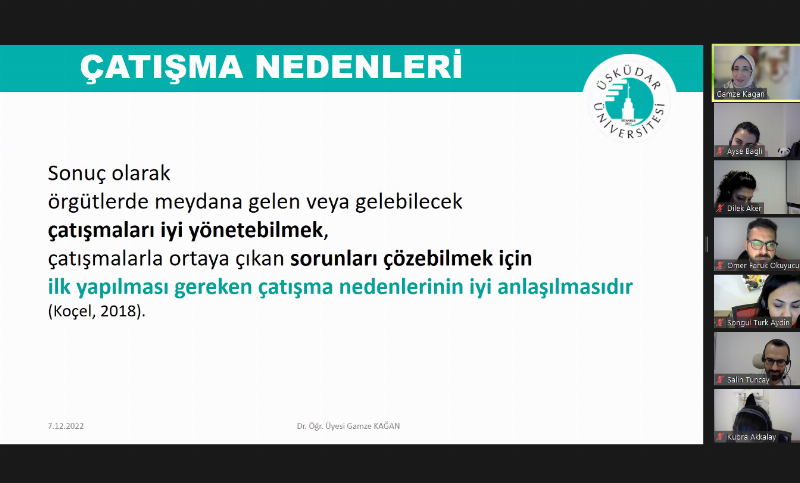
“Competition and avoidance are the situations most likely to lead to violence”
Kağan highlighted that competition and avoidance, which are commonly preferred conflict management styles in healthcare institutions, are most prevalent among physicians and nurses. She stated, "My research indicates that competition and avoidance are significant contributors to violence. When we question why violence is so common in the healthcare sector, the preference of healthcare personnel for conflict management styles that can lead to violence emerges as another reason. Physicians engage in discussions to negotiate decision-making and problem-solving processes. However, when negotiating with a patient, the approach taken is often the opposite. In such scenarios, if the outcome is unfavorable to the patient, the patient blames the physician, and the conflict can escalate into violence. For instance, if a nurse avoids a doctor or head nurse due to a conflict, miscommunication arises. This can lead to the nurse failing to convey the patient's condition, potentially causing the patient's condition to worsen or even resulting in death. This situation, in turn, precipitates more serious incidents of violence."
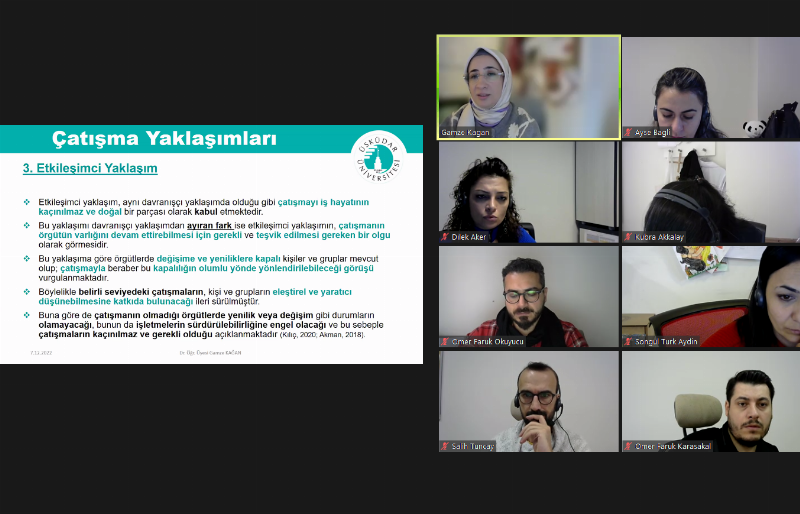
The event concluded after participants' questions were answered.
Share
Update Date: February 26, 2026
Creation Date: December 09, 2022
Request a Call
Other News
- The book that read today's digital threats in 2014: Being a Conscious Family
- Experts warn: 'Instead of memorizing letters, teach pencil grip, scissor use, and coloring'
- School fear and school love both start in the family!
- Family is not merely transforming, it is being battered under a serious assault
- Artificial intelligence opens the door to early diagnosis in autism!