

Emphasizing the importance of emotional intelligence in marriage, Psychiatrist Prof. Dr. Nevzat Tarhan stated that a complementary relationship emerges when emotional intelligence is present. Pointing out that conflicted marriages involve a competitive relationship, Tarhan said, 'Due to a competitive approach, ego wars occur between parties. However, quality marriages have a complementary relationship.'
Content
Complementary Relationships Reveal Quality Marriages
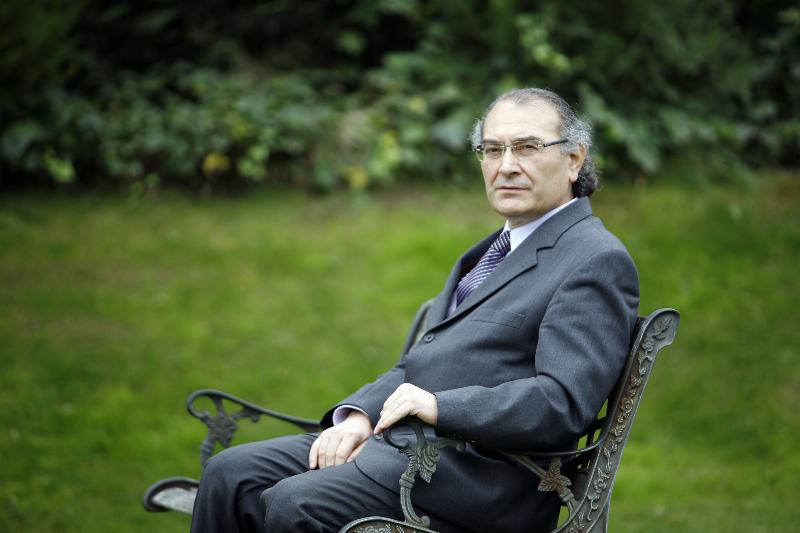
Üsküdar Üniversitesi Founding Rector, Psychiatrist Prof. Dr. Nevzat Tarhan, made evaluations regarding relationships in marriages and relationship styles within relationships during the “Marriage School” program broadcast on Akra FM.
Different behavior can be exhibited at home and outside
Noting that some marriages involve a master-slave relationship, Prof. Dr. Nevzat Tarhan warned, 'In these types of marriages, one party has adopted the role of a slave and is not bothered by it. The other party has established dominance by behaving incompatibly and dominantly. It doesn't matter whether the parties are male or female. Marriage is conducted this way. One side is incompatible and dominant; if the other side were the same, the marriage would end. To avoid ending the marriage, the other side takes on the role of an angel. They create a balance, and it continues like that. They cannot risk destroying the marriage for reasons like children. Such a relationship continues, but in some cases, what is visible is not the same as what is projected outside. For example, a man who acts very rude and hurtful at home acts very polite outside. In such situations, the yielding party usually experiences depression.'
The 'deal with it, my daughter' culture!
Prof. Dr. Nevzat Tarhan noted that women usually experience this situation in marriages, stating, 'Unknowingly, the wife's behavior is enabled. As soon as the partner acts harsh, contrary, and dominant, everything they say is done with a quick 'Oh, let's not cause problems.' When everything the person says is done, they start to take out their external anger at home. This creates such a relationship dynamic. Women tolerate this until a certain age because of children. In our culture, there is a 'manage it, my daughter' culture, which some women experience. Unfortunately, the woman establishes a dominion for the man at home, and the man does not want to give up that dominion.'
Boundaries should be set from the very beginning
Prof. Dr. Nevzat Tarhan stated that in such situations, the woman should take a stance from the very beginning, saying, ''What you're doing is not right, but for the future of our relationship, I'm not saying anything about it right now.' This way, her partner will also know his boundaries. Unfortunately, in some marriages, this situation continues in the form of unwritten rules. One party plays the victim, the other the oppressor, and the relationship continues in this manner. They endure it for the children, but children do not grow up well in such an environment. Therefore, one must set boundaries at the beginning and not allow oneself to be trampled upon.'
We don't put thought into marriage
Prof. Dr. Nevzat Tarhan noted that both parties in a marriage should strive to make the union more pleasant, enjoyable, and happy, saying, 'Of course, over time, marriages can also become routine. But both parties should appreciate what they have. One should focus on what can be done to make the marriage pleasant, attractive, and appealing. Unfortunately, we don't put thought into marriage. We don't invest in marriage. We have personality roles inherited from our families. We try to balance those personality roles. It becomes a relationship plagued by 'man-woman' wars. It breaks at its weakest point. Therefore, investing in marriage is important.'
The Michelangelo phenomenon is observed in quality marriages
Tarhan noted that problems can sometimes arise in marriages, stating that these problems can be overcome with the efforts of both parties:
'Marriage, like other relationships, is a dynamic process. Within this dynamic process, there is a concept called the Michelangelo phenomenon related to relationships and marriages. This concept involves focusing on the positive aspects, beauties, and favorable sides of one's spouse, framing the relationship and communication with these beautiful aspects, and sharing them with the spouse. Research shows that two people who love each other and live in the same house have similar facial lines. Because the facial features, expressions, and gestures of two people who love each other are very similar, their laughing styles are also very similar. In quality marriages, the networks in the brains of both parties have been researched. It has been determined that their brains mirror each other perfectly. The reactions of couples' brains to events are very similar. Both brains give almost the same reactions to fear, love, and trust. There is a special MRI technique used in neurology that maps the brain. It is a device that tries to detect which pathways in the brain are damaged in diseases like MS. Similarities of this type can be detected with this device. It is also sometimes observed in couples who are in love and have been together for many years; when one spouse is thirsty, the other immediately gives water before being asked. The same situation can be observed between a mother and her child. With one or two movements of the child, the mother understands that the child has a stomachache, is hungry, or needs to use the toilet. If you ask her how she knows, she wouldn't know. She learns by mirroring in her brain.'
Emotional intelligence is also important in marriage
Emphasizing the importance of emotional intelligence in marriage, Prof. Dr. Nevzat Tarhan said, 'The importance of emotional intelligence in humans has been discussed for many years. This also applies to marriage. Emotional intelligence is important in marriage. If there is emotional intelligence in marriage, a complementary relationship emerges. In conflicted marriages, there is a competitive relationship. Ego wars are experienced in the form of 'my way, your way, my mother, your mother,' but in quality marriages, there is a complementary relationship.'
Marriage is a relationship of embarking on a journey together
Tarhan noted that couples in a marriage should be 'companions,' saying, 'Relationships with ego wars are not couple relationships. Marriage is a companionship relationship. Marriage is not a relationship of owning or dominating someone. Marriage is a relationship of embarking on a journey together. Our culture has therefore called marriage 'refik-refika.' Refik means male travel companion, refika means female travel companion. It has given marriage such a meaning that it implies relationships that complement each other while going towards a certain goal. There should not only be the leadership of the woman or the man at home, but a co-presidency style leadership model.''
Relationships in marriage are like a barbecue fire
Prof. Dr. Nevzat Tarhan noted that close relationships, especially marriage, are the most difficult to maintain, warning, 'Freud saw the attitudes and course of these relationships as the greatest indicator of mental health. He said, 'Whoever manages a marriage healthily is the person with the highest mental health.' I think he's right. However, this is only possible if both parties invest in the marriage. It happens if effort and struggle are put into marriage. A couple deeply in love gets married, and after a while, the man engrosses himself in work, the woman devotes herself to her children, and the emotional distance between them widens. There is physical proximity, but emotional distance. As the distance lengthens, small problems begin to grow. In fact, nurturing this relationship is like nurturing a barbecue fire. If you stir the barbecue too much, the coals will burn out; if you don't stir enough, it will go out. The relationship in marriage is like the fire in a barbecue. You need to nurture it gently, but not be too clingy. It must be continuously fed and kept alive. It should not be allowed to drift apart and cool down. If love is not sufficiently nurtured for various reasons in the later stages of marriage, coolness, ruptures, and breakdowns occur.'
Mental flexibility is required for harmony in marriage
Prof. Dr. Nevzat Tarhan noted that stubbornness is the greatest enemy of marriage, stating, 'Stubbornness means rigidity of thought. Its opposite means a lack of thought. A person who lacks mental flexibility does not adapt. For example, in marriages, we encounter a new life scenario. In the life scenario before marriage, there are actors like mother, father, and siblings. Both parties must write a new life scenario. A stubborn, egocentric person with rigidity of thought wants their own life scenario to be followed. However, they need to rewrite their scenario according to the new person entering their life. They want to apply their old scenario to the new arrangement. This leads to conflict. To prevent conflicts, mental flexibility, which we call collective flexibility, is required. Individuals with marital maturity possess mental flexibility. Couples with mental flexibility find common ground.'
Share
Update Date: March 01, 2026
Creation Date: June 22, 2022